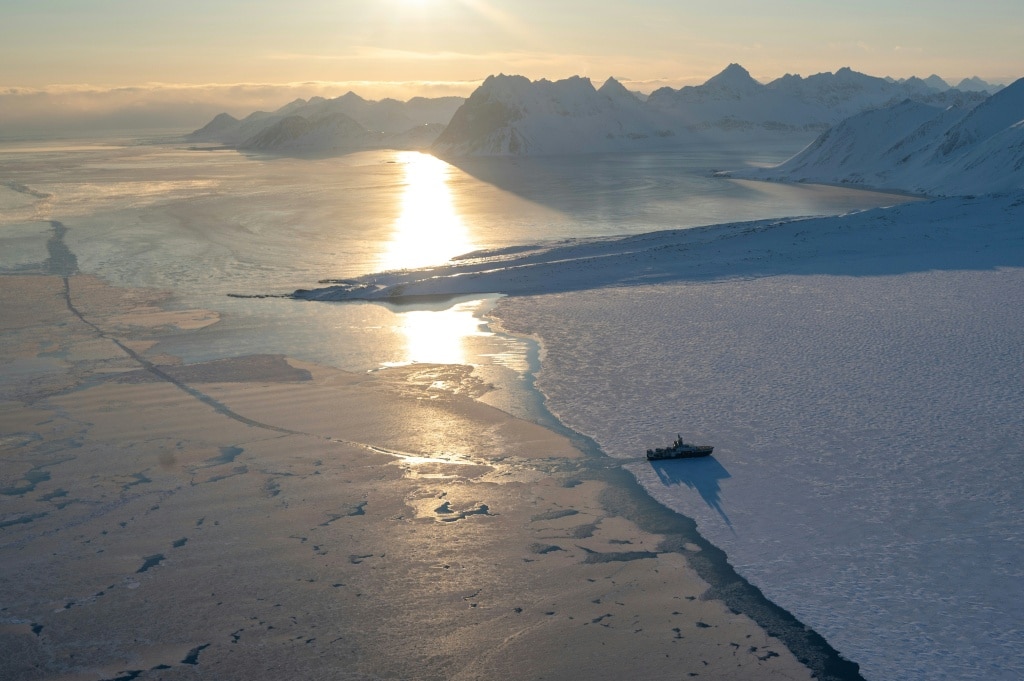
In a stark indicator of climate change’s accelerating impact, Arctic sea ice has reached its lowest winter extent since satellite monitoring began 48 years ago. According to data released by the National Snow and Ice Data Center (NSIDC) in Colorado, the ice cover peaked at just 14.29 million square kilometers on March 15—marking a statistical tie with last year’s record low of 14.31 million square kilometers.
This premature maximum, occurring a full week earlier than in 2022, provides a concerning head start to the spring and summer melt season. Scientists warn that diminished winter ice formation creates conditions for potentially faster and more extensive summer melting—a trend consistently observed since 2016.
The ecological implications are profound. Species including polar bears and emperor penguins rely on stable sea ice for breeding and hunting grounds. Oceanographer Gilles Garric notes that newly exposed ocean surfaces in regions like the Beaufort Sea are absorbing atmospheric heat that would previously have been reflected by ice, creating warming feedback loops.
Beyond environmental consequences, the disappearing ice is transforming geopolitical dynamics. Elizabeth Chalecki, climate security expert, characterizes the increasingly navigable Arctic as ‘the new Mediterranean’—a contested maritime space surrounded by competing nations. This assessment gains relevance amid renewed interest in Arctic shipping routes and mineral resources, including former President Trump’s expressed ambitions regarding Greenland.