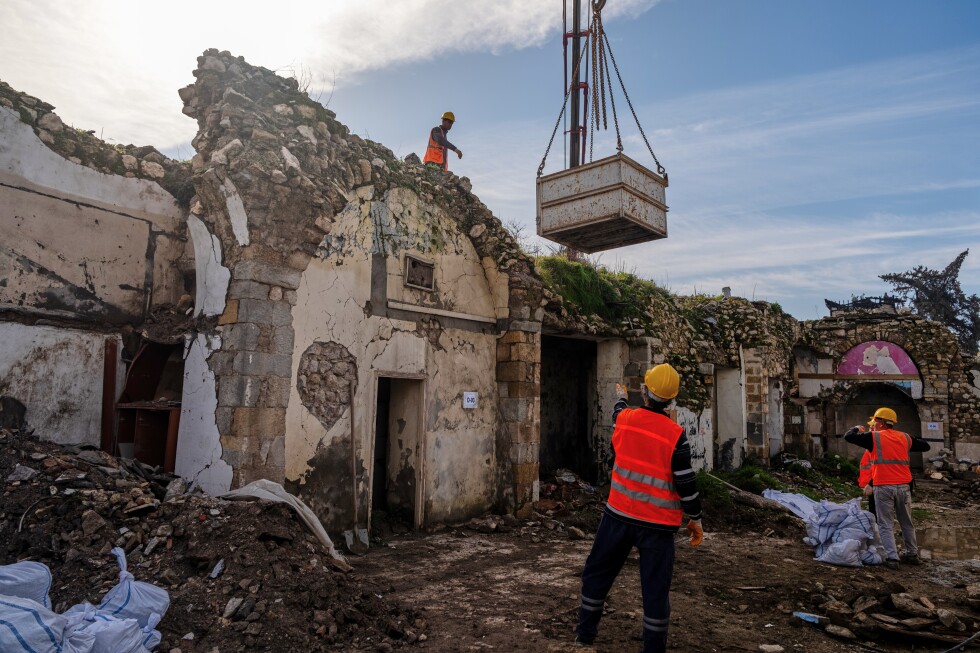
In the aftermath of Turkey’s catastrophic 2023 earthquakes, architect Buse Ceren Gul has embarked on an ambitious mission to resurrect St. Paul’s Church, a 166-year-old Greek Orthodox sanctuary that symbolized Antakya’s multicultural heritage. The magnitude 7.8 tremor that struck southern Turkey three years ago—among the nation’s deadliest disasters—reduced much of the historical city center to ruins, including this architectural treasure.
Gul, a 34-year-old Alevi Muslim, views the church’s restoration as vital for reconnecting residents to their city’s identity. After extensive planning and fundraising efforts, her team recently excavated the structure from rubble piles reaching 5 meters high. The project represents one of few cultural heritage sites with pre-approved architectural drawings, which Gul had ironically been drafting before the disaster under guidance to ‘design as if the church might be demolished.’
Antakya—known historically as Antioch—boasts biblical origins dating to the sixth century BCE. Throughout its layered history encompassing Hellenistic, Roman, and Ottoman influences, the city has withstood at least five major earthquakes since 115 CE. St. Paul’s Church itself was completely rebuilt in 1900 after an 1872 earthquake destruction, standing as part of the Greek Orthodox Patriarchate of Antioch.
The reconstruction faces significant challenges beyond engineering. Fadi Hurigil, president of the Greek Orthodox Church Foundation of Antakya, reveals the organization lost 95% of its income post-earthquake. Previously self-sufficient through tourist-facing shops on Saray Avenue—the multicultural hub where Christians, Muslims, and Jews coexisted—the church now depends on dwindling external aid.
Perhaps the greatest obstacle involves community restoration. Before the quakes, approximately 10,000 Christians inhabited Hatay province, constituting one of Turkey’s largest Christian concentrations outside Istanbul. Now, only about 90 of the 400 Greek Orthodox families have returned to central Antakya, with many displaced due to destroyed homes and absent urban planning.
Longtime residents like church official Dimitri Dogum, whose family lived in Antakya for four centuries, fear extended displacement may irrevocably damage the city’s intercultural harmony. Without the return of diverse religious and ethnic groups, the very culture of coexistence that defined Antakya risks vanishing alongside its physical structures.