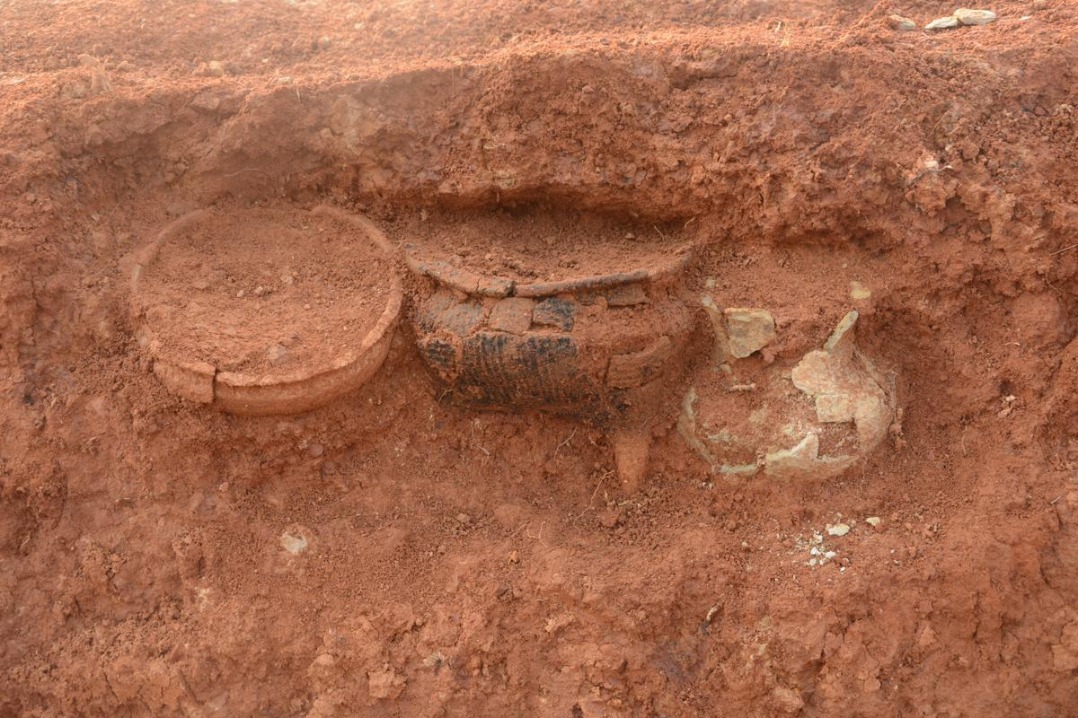
Archaeologists in Changsha, Hunan province, have made a groundbreaking discovery that sheds new light on ancient Chinese civilization. A comprehensive four-month excavation project has revealed an extensive burial complex containing 214 ancient tombs with over 560 cultural artifacts, providing an unprecedented window into regional life spanning more than two thousand years.
The Changsha Institute of Cultural Heritage and Archaeology conducted the meticulous survey across a 160,000-square-meter area in Wangcheng district prior to logistics park construction. What they uncovered represents one of the most significant archaeological finds in recent years, with burial sites dating consecutively from the Western Zhou Dynasty (approximately 11th century-771 BC) through the Qin (221-206 BC) and Han (206 BC-AD 220) periods.
Among the extraordinary findings are bronze weaponry including ceremonial swords and dagger-axes, exquisitely patterned pottery vessels, jade rings of spiritual significance, and early ironware. These artifacts collectively illustrate the sophisticated craftsmanship, material culture, ritual practices, and military traditions that flourished in the region.
This discovery gains additional importance from its connection to previous tomb groups identified along the same mountain range in 2017 and 2024. Together, they establish this area as a persistent burial ground that served a stable, growing community for over a millennium. The continuous chronological sequence offers researchers unparalleled opportunities to study demographic shifts, settlement evolution, and social organization patterns.
Beyond local significance, the findings contribute substantially to understanding how regional cultures in the Yangtze River basin developed and interacted with other ancient Chinese civilizations across different historical periods. The preservation quality and historical range of these tombs make them particularly valuable for archaeological research and cultural heritage studies.