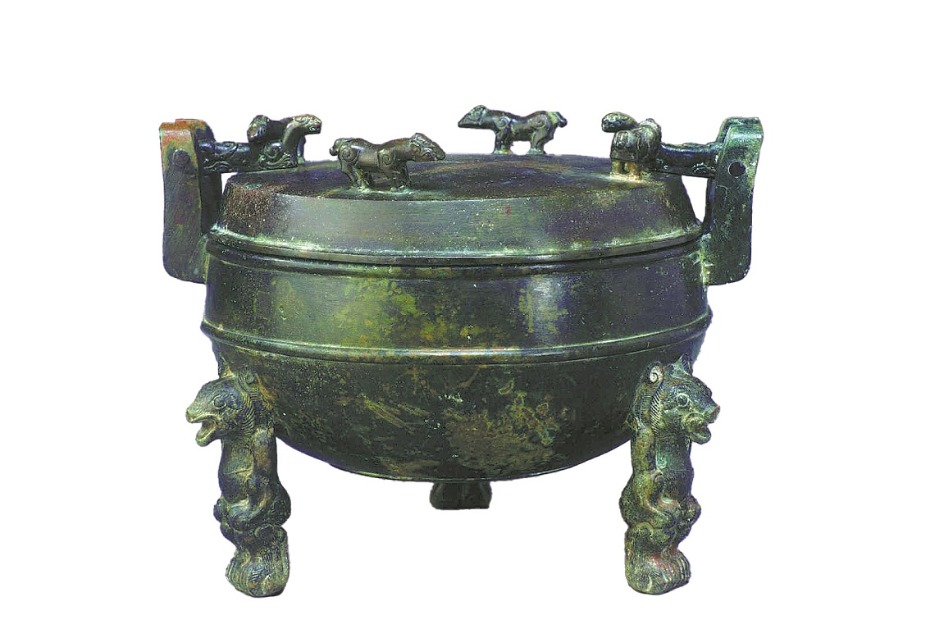
A remarkable archaeological artifact from China’s Western Han Dynasty (206 BC-AD 24) has captured widespread public attention, demonstrating that pressure cooking technology existed more than two millennia before its official invention in the West. The Tripod with Bear-Shaped Feet, currently displayed at Hebei Museum in Shijiazhuang, represents an extraordinary fusion of culinary innovation, artistic craftsmanship, and ancient scientific understanding.
Discovered in 1968 within the tomb of Prince Liu Sheng, this 18.1-centimeter bronze vessel features three distinctive bear-shaped feet that serve both decorative and symbolic purposes. During the Han Dynasty, bears were considered auspicious symbols representing good fortune and protection. Beyond its charming aesthetic, the tripod’s true technological marvel lies in its sophisticated sealing mechanism.
The vessel incorporates an ingenious locking system consisting of flip-down animal-shaped latches attached to dual handles. When the lid is positioned and the latches are engaged with a slight twist, they secure beneath four standing animal figures on the lid’s surface, creating an exceptionally tight seal. This design, enhanced by raised patterns on both the rim and lid, effectively contains steam and increases internal pressure, significantly reducing cooking times while tenderizing ingredients.
Archaeological experts from Peking University’s School of Archaeology and Museology have confirmed the functionality of this ancient pressure cooking system through replica testing. Professor Chen Jianli noted that chicken pieces placed inside a reconstructed model became perfectly tender after merely thirty minutes of cooking—a remarkable efficiency for the period.
The technological sophistication evident in this artifact predates French physicist Denis Papin’s 17th-century “steam digester” by approximately 1,700 years. Museum researcher Chen Jing emphasized that the tripod’s manufacturing required exceptional bronze-casting skills, reflecting the advanced metallurgical capabilities of Han Dynasty craftspeople.
The artifact has generated substantial interest on Chinese social media platforms, with many commentators expressing admiration for their ancestors’ ingenuity. The piece serves as a powerful reminder that innovative thinking transcends historical periods, connecting ancient culinary technology with modern kitchen practices through timeless scientific principles.