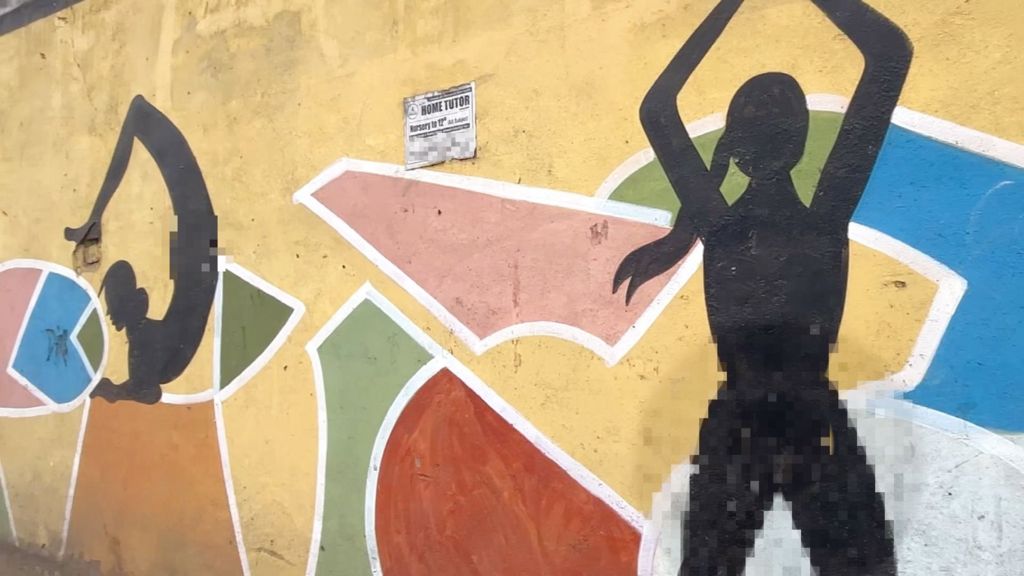
A disturbing incident of public art vandalism in Gwalior, central India, has ignited nationwide conversations about gender-based harassment and women’s safety in public spaces. The controversy began when a school student’s Instagram video revealed deliberately defaced female yoga silhouettes on a city beautification mural, with explicit markings targeting the genital areas of the figures.
The teenage activist expressed profound disappointment in her viral post, stating that witnessing the sexualized defacement of artistic representations filled her with ‘anger and disgust.’ Her documentation triggered substantial social media backlash, with numerous commentators noting that women remain vulnerable ‘even in graffiti.’ National media outlets characterized the incident as both shameful and symptomatic of deeper societal issues.
In response to mounting public pressure, local authorities initiated whitewashing of the affected walls. Municipal spokesman Umesh Gupta attributed the vandalism to unidentified ‘miscreants’ and acknowledged surveillance limitations in the area. The corporation subsequently announced a street art competition focusing on civic themes, though notably excluding yoga motifs from the proposed subjects.
Social activist Kalpana Viswanath of Safetipin contextualized the event within India’s broader challenges regarding women’s access to public spaces. She emphasized that such acts constitute a form of sexual harassment regardless of whether directed at women or their artistic representations. While acknowledging the psychological impact of such incidents on women’s freedom of movement, Viswanath found encouragement in young women’s increasing willingness to challenge patriarchal norms, particularly those from smaller urban centers.
The incident reflects global patterns of gendered interactions with public art, paralleling phenomena like the discolored breasts of bronze statues worldwide due to inappropriate touching. This case underscores the complex intersection of public art, gender politics, and urban space management in contemporary India.