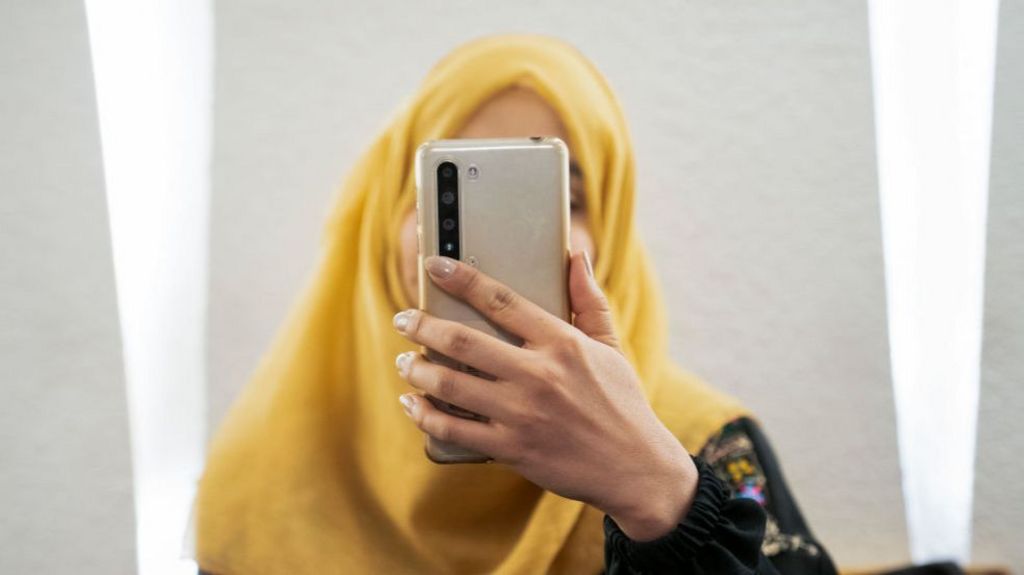
Fahima Noori, a young Afghan woman, once harbored ambitious dreams. After graduating with a law degree, completing a midwifery program, and working in a mental health clinic, her aspirations were shattered when the Taliban regained power in 2021. The militant group banned girls over 12 from attending school, severely limited women’s employment opportunities, and recently removed books authored by women from university curricula. For Fahima, the internet became her sole connection to the outside world—a lifeline that was abruptly severed on Tuesday when the Taliban imposed a nationwide internet shutdown, set to last indefinitely. ‘Our last hope was online learning. Now that dream has been destroyed,’ she lamented. Her identity, along with others interviewed, has been concealed for safety. Over recent weeks, the Taliban began cutting fiber-optic connections across provinces, citing the prevention of immorality. This move culminated in a ‘total internet blackout,’ according to internet watchdog Netblocks, crippling essential services and disrupting mobile internet, satellite TV, and flights from Kabul airport. The shutdown has devastated countless lives. Shakiba, a resident of Tahkar province, shared her despair: ‘We want to study, be educated, and help people in the future. When I heard the internet was cut, the world felt dark.’ Fahima, now feeling ‘helpless,’ described how she and her sisters relied on the internet to study, stay informed, and acquire new skills. ‘We dreamed of finishing our education and helping our father financially, but now we sit at home doing nothing,’ she said. Since 2021, the Taliban have enforced strict interpretations of Islamic Sharia law, including banning books by women and outlawing the teaching of human rights and sexual harassment. Around 140 books, including ‘Safety in the Chemical Laboratory,’ were deemed ‘anti-Sharia.’ The Taliban claim to respect women’s rights within their cultural and religious framework, but their actions tell a different story. The internet shutdown has also impacted teachers like Zabi, who relied on online English classes to support his students preparing for the IELTS exam. ‘Two days ago, 45 of my students were mid-exam when the internet was cut. It was heartbreaking,’ he said. Zabi, like many others, faces an uncertain future. ‘I’ll need to leave the country if the internet isn’t restored soon,’ he admitted. The shutdown has also disrupted businesses, with Anas, a money changer in Takhar, reporting a 90% drop in operations. ‘My brother couldn’t even send an email to a client,’ he said. Anas’s primary concern, however, is his three daughters, who can no longer access online education. ‘Their last opportunity to study is gone. Seeing them so helpless is the hardest thing,’ he said. The Taliban have yet to provide an official reason for the shutdown, leaving millions in limbo.