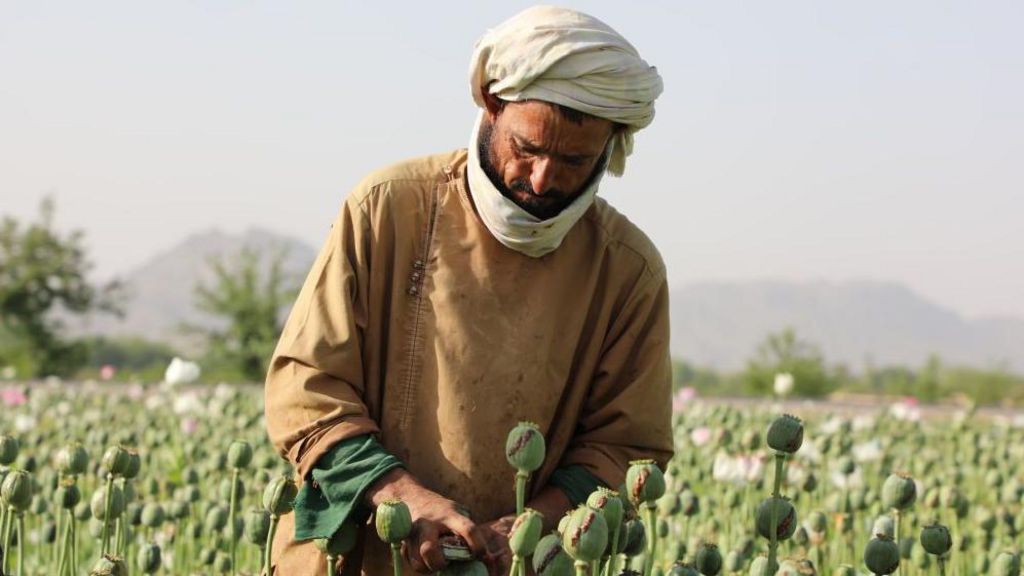
Afghanistan, once responsible for over 80% of the world’s opium supply, has seen a dramatic decline in opium farming since the Taliban imposed a ban in April 2022. According to a recent survey by the United Nations Office on Drugs and Crime (UNODC), the area dedicated to opium poppy cultivation has shrunk by 20% compared to last year, while opium production has dropped by 32%. The Taliban justified the ban by citing opium’s harmful effects and its contradiction with their religious beliefs. Despite severe economic challenges, most Afghan farmers have complied with the ban, shifting to cereal farming. However, poppy cultivation remains far more profitable than legitimate crops, leaving many farmers in dire straits. Over 40% of farmland lies fallow due to a lack of profitable alternatives, limited agricultural output, and adverse climate conditions. The total area under opium poppy cultivation this year is estimated at 10,200 hectares, primarily in the north-eastern region, with Badakhshan province leading. This marks a stark contrast to pre-ban figures, which exceeded 200,000 hectares. Four provinces previously known for opium cultivation—Balkh, Farah, Laghman, and Uruzgan—were declared poppy-free in 2025, highlighting the ban’s scale and durability. However, enforcement has not been without conflict. The Taliban’s efforts to destroy opium fields have occasionally sparked violent resistance, particularly in Badakhshan, where clashes have resulted in casualties. Despite these challenges, the majority of farmers adhere to the ban, though many express frustration over the lack of support for alternative livelihoods. ‘If we violate the ban, we face prison. If we comply, we face destitution,’ lamented an unnamed farmer in Helmand province. While opium production has declined, the UNODC reports a rise in synthetic drug trafficking, with methamphetamine seizures increasing by 50% in late 2024 compared to the previous year. Organized crime groups favor synthetic drugs due to their ease of production and resilience to climate shocks.