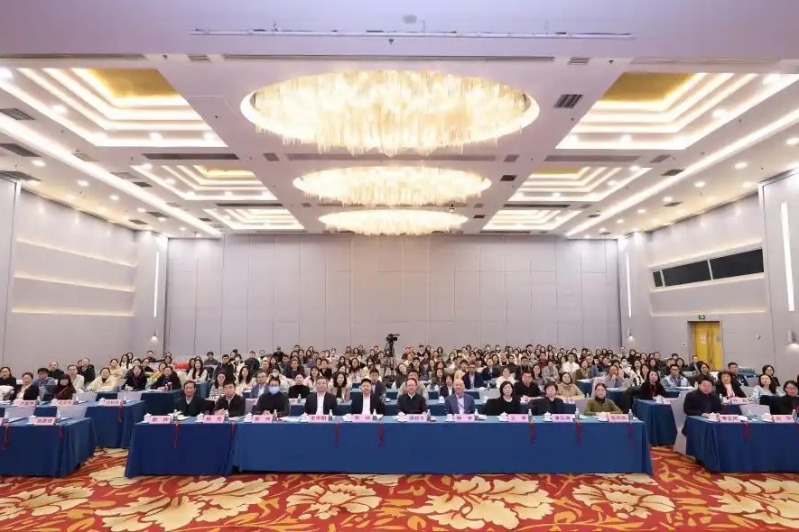
Over 100 leading researchers convened in Beijing on December 8, 2025, for the second Yuyuantan Conference on Research Integrity, addressing critical challenges in artificial intelligence adoption within academic circles. The gathering marked the release of the comprehensive Guideline on the Boundaries of AI-Generated Content Usage in Academic Publishing 3.0, establishing unprecedented standards for ethical AI implementation throughout research processes.
The newly unveiled framework provides detailed protocols across all stages of academic work, from literature review to post-publication practices. While endorsing AI assistance for reference collection, categorization, and conclusion summarization, the guideline mandates rigorous human verification of all AI-generated content. It specifically addresses the risks of fabricated citations, outdated references, and algorithmic hallucinations, requiring researchers to maintain ultimate accountability for all published content.
Academician Tan Tieniu of the Chinese Academy of Sciences emphasized the fundamental principle of researcher responsibility during his keynote address. ‘We must clarify researchers’ primary accountability as AI users and standardize disclosure requirements for AI utilization in academic papers,’ stated Tan, who also serves as Secretary of the Communist Party of China Nanjing University Committee. He advocated for expanded AI training programs and international collaborative governance to establish universal norms and advance Chinese technological standards globally.
The timing of these developments coincides with revealing data from Elsevier’s Research of the Future report, which surveyed over 3,200 researchers across 113 countries. The study identifies Chinese researchers as the world’s most active AI adopters, with 69% reporting utilization compared to the global average of 58%. Approximately 66% of Chinese respondents expressed confidence in AI’s potential to enhance research quality.
Gemma Hersh, Elsevier’s Senior Vice-President for Primary Research, acknowledged China’s leadership in both technological innovation and research quality improvement. ‘China has always published substantial research, but the last decade has witnessed remarkable quality enhancement—a significant achievement potentially accelerated by AI adoption,’ Hersh noted. She highlighted transparency and traceability as universal needs within the research community, with Elsevier developing supportive tools including Scopus AI, ScienceDirect AI, and the upcoming Leap Space platform.
Associate Professor Geng Peng of Tianjin Foreign Studies University’s School of Communication praised the guidelines for establishing clear boundaries, research norms, and disciplinary evaluation criteria. The framework provides explicit guidance for researchers to utilize AIGC tools as scientific assistants while maintaining academic integrity and human oversight throughout the research lifecycle.