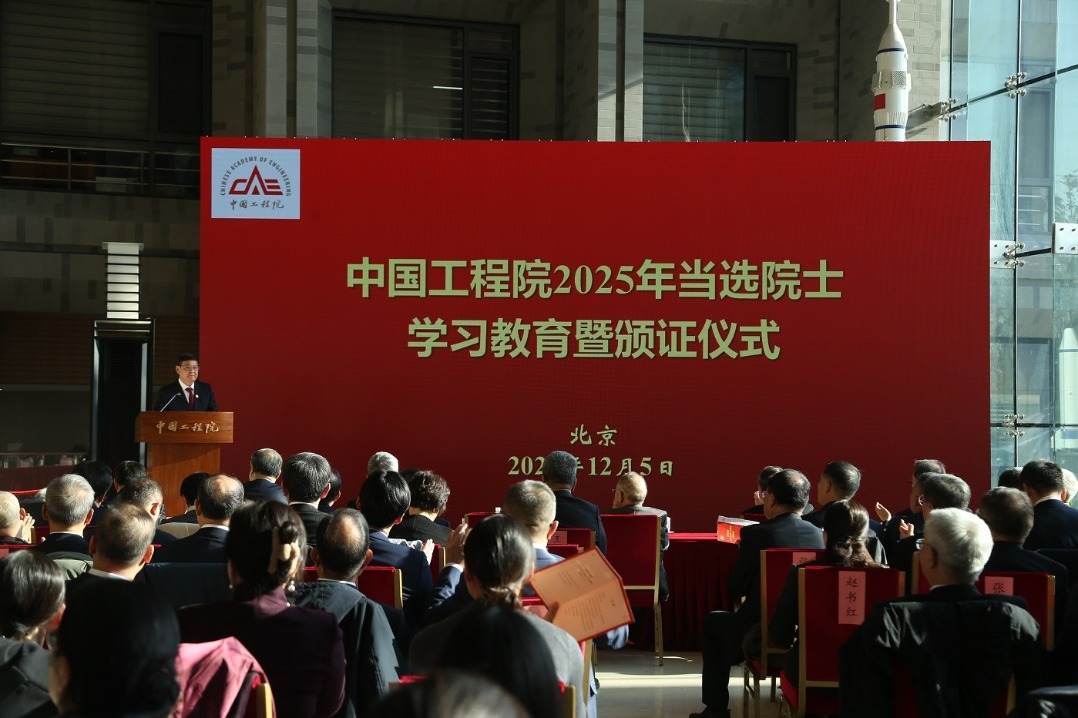
In a significant ceremony held in Beijing on Friday, China’s newly elected academicians pledged their commitment to advancing scientific innovation and accelerating the transformation of research into practical applications. The event marked the formal induction of 144 new domestic members and 51 international members into the nation’s prestigious academies.
Leadership from both the Chinese Academy of Sciences (CAS) and Chinese Academy of Engineering (CAE) emphasized the dual nature of the academician title as both honor and profound responsibility. CAS President Hou Jianguo challenged the new members to contribute to achieving high-level self-reliance in science and technology, positioning their work within the broader context of national rejuvenation goals.
CAE President Li Xiaohong highlighted the strategic alignment of the election process with national needs, particularly emphasizing the role of scientific innovation in developing new quality productive forces. The selection criteria prioritized candidates whose expertise addresses China’s most pressing strategic requirements.
Several newly elected academicians shared their perspectives on their expanded responsibilities. Professor Peng Chengzhi from the University of Science and Technology of China’s Quantum Physics Division described the appointment as representing “national trust and public expectation,” committing to align personal research goals with national development objectives.
Tsinghua University chemistry professor Li Jun emphasized the practical application of theoretical science, using rare earth elements—which he termed “industrial vitamins”—as an example of how resource advantages must transform into technological prowess for strategic sectors including renewable energy and semiconductor manufacturing.
Zhejiang University’s neuroscience expert Hu Hailan stressed the human-centered nature of life sciences, stating that scientific research ultimately serves human well-being, particularly in protecting mental health.
Representing private enterprise, Huang Xianbo, chief engineer at advanced materials supplier Kingfa, highlighted the importance of industry-academia collaboration in converting technological achievements into productive forces, especially in cutting-edge research areas aligned with national strategy.
The expanded academician roster reinforces China’s systematic approach to building scientific capacity, with members expected to play crucial roles in strategic research consultation and advancing the nation’s technological ambitions.