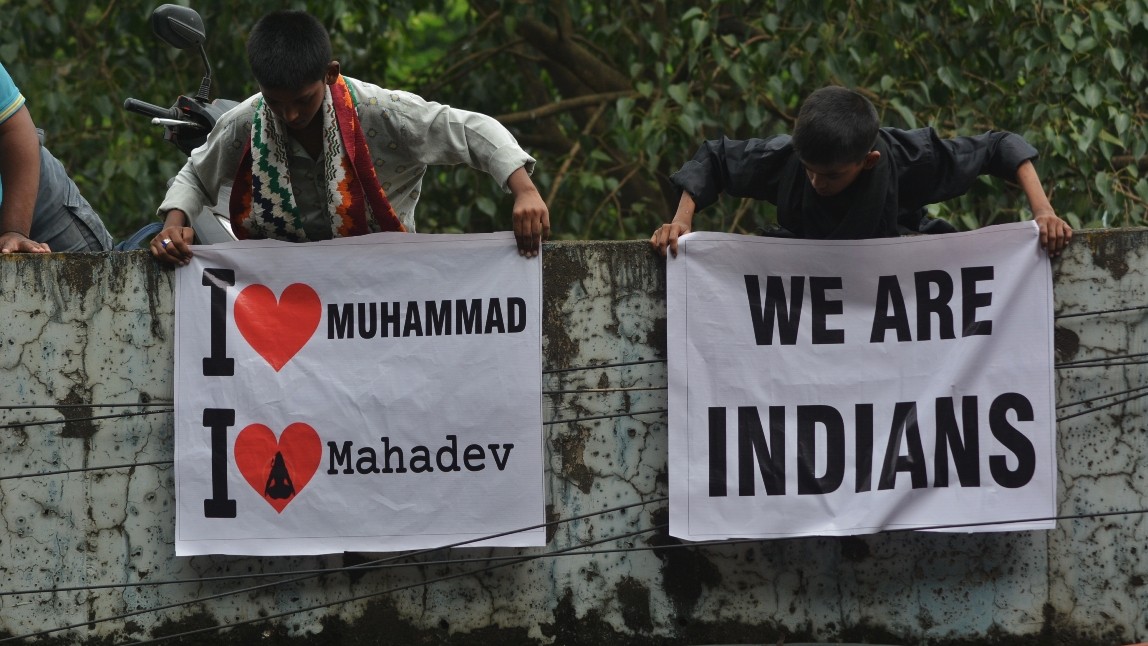
Since early October, Indian authorities have intensified a controversial campaign targeting Muslim communities across several states. Thousands of Muslims have been arrested, numerous buildings demolished, and internet services shut down in predominantly Muslim neighborhoods. The catalyst for this crackdown appears to be the widespread display of the phrase “I Love Muhammad” on banners, T-shirts, and social media, which authorities claim threatens public order. However, human rights activists argue that these actions are part of a broader, systemic effort to suppress India’s Muslim minority. According to the Association for Protection of Civil Rights (APCR), over 4,500 Muslims have been charged, and 265 arrested nationwide, with 89 arrests occurring in Bareilly alone. The first incident occurred on September 4 in Kanpur, Uttar Pradesh, during Milad-un-Nabi, a festival celebrating the Prophet Muhammad’s birth. A group of Muslims installed an illuminated sign reading “I Love Muhammad,” which some Hindus deemed provocative. This minor dispute quickly escalated into a national controversy, with young Muslims across India taking to the streets to assert their faith. Authorities responded with a heavy-handed crackdown, including arrests, property demolitions, and internet blackouts. Critics, including Aakar Patel of Amnesty International, have condemned these actions as violations of constitutional rights, including freedom of expression and due process. The situation has raised concerns about India’s commitment to secularism and religious freedom, particularly under the Modi government, which has been accused of promoting Hindu nationalism. With state elections approaching, observers warn that such crackdowns may intensify, further marginalizing India’s Muslim population.