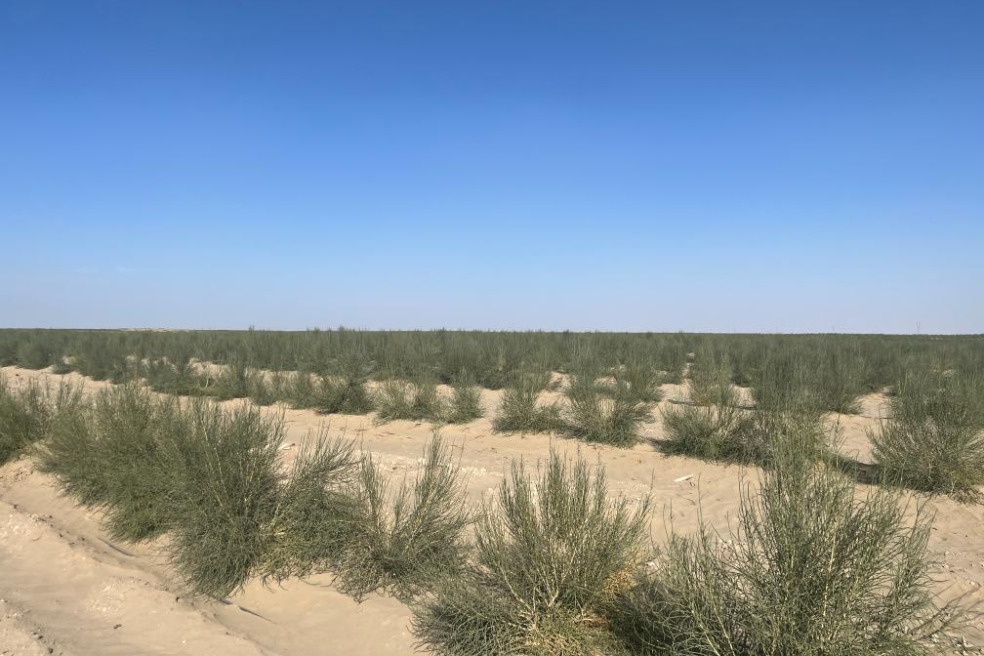
In the arid expanse of the Taklimakan Desert, a remarkable tale of symbiosis unfolds between the saxaul tree and the cistanche herb, offering a sustainable solution to desertification. The saxaul seed, known for its rapid germination, takes root in the sandy soil of Xinjiang’s southern desert edge. Within hours, it sprouts, braving harsh ultraviolet radiation and relentless sandstorms. Its grayish-white branches sway in the wind, forming a natural barrier against drifting sand while its deep roots tap into scarce groundwater. Beneath the surface, the cistanche herb thrives parasitically, embedding its roots into the saxaul’s vascular system to absorb water and nutrients. Each spring, the cistanche’s stem emerges, releasing a sweet fragrance that attracts honeybees. These bees, in turn, facilitate pollination, ensuring the propagation of both species. This intricate relationship not only stabilizes the desert but also provides economic benefits. Cistanche, dubbed ‘desert ginseng,’ is a valuable medicinal herb cultivated alongside saxaul forests. Farmers rent beehives to enhance pollination, creating a virtuous cycle where ecological protection and economic gains coexist. This model exemplifies China’s ‘edge-locking’ project, which aims to encircle the Taklimakan Desert with artificial vegetation. Li Peng, a veteran of desert control in Xinjiang, emphasizes the complexity of such initiatives, highlighting the need for systematic planning in water management, infrastructure, and maintenance. This innovative approach demonstrates how nature’s resilience, coupled with human ingenuity, can transform barren landscapes into thriving ecosystems.