Thirty-four years after the collapse of Nicolae Ceaușescu’s brutal communist regime in Romania, a groundbreaking new exhibition in the capital Bucharest has pulled back the curtain on the systematic repression and psychological violence carried out by the country’s feared secret police force, the Securitate.
Titled “A.REST 1989,” the exhibition is hosted at the National History Museum of Romania and runs through mid-September. A collaborative project between the museum, Romania’s National Council for Studying the Securitate Archives (CNSAS), and the Ministry of Culture, the exhibit leverages rare, never-before-displayed video footage to reconstruct the grim reality of detentions and interrogations that defined the Securitate’s sprawling network of surveillance and control.
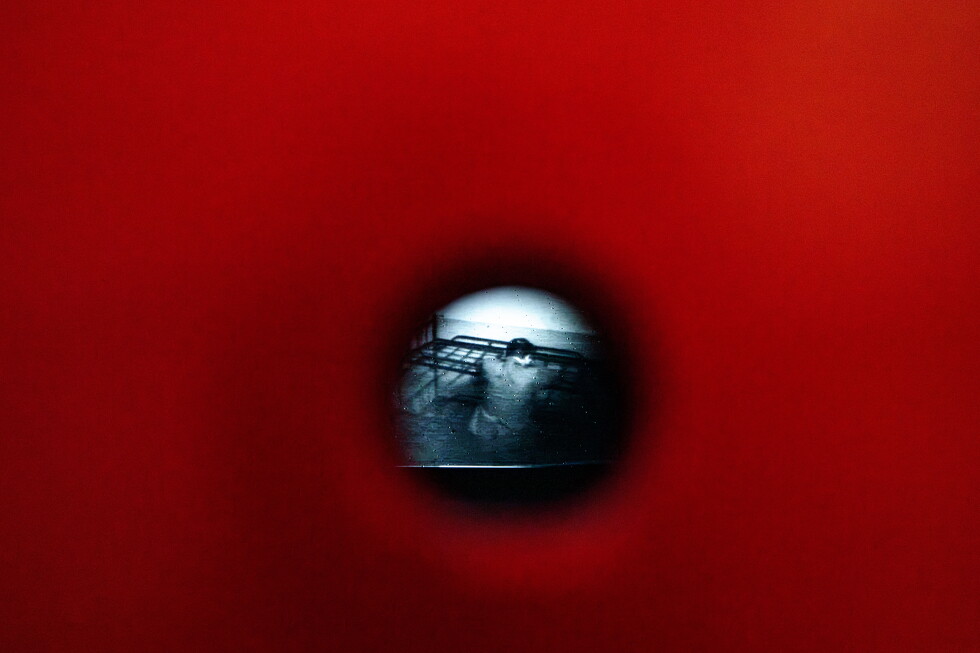
At the heart of the exhibition are 26 original 1989 videotapes, held by CNSAS, that capture the live interrogations of four detainees. These recordings, preserved accidentally amid the chaotic, violent collapse of the socialist regime at the end of that year, are displayed on grainy, wall-mounted screens in the museum’s central hall. A full-scale reconstruction of a sparse detention cell, fitted with only a narrow bed, an empty metal bowl and a chipped cup, anchors the space, offering visitors a visceral sense of the isolation and dehumanization endured by detainees.
Many of the recordings lay bare the coercive, intimidating tactics Securitate interrogators used to break suspects. Intense psychological pressure, repeated threats of violence, and intimidation targeting detainees’ family members feature heavily in the footage, with questioning often veering into absurdity that leaves detainees exhausted and disoriented. In one exchange, a woman whose husband was accused of defection tells her interrogator, “I no longer have the strength to fight. I need logical arguments, not this nonsense.”
Alongside the raw video recordings, the exhibition also displays rare artifacts connected to dissident activity and repression. These include a clandestine printing press owned by journalist Petre Mihai Băcanu, which the Securitate seized in early 1989 after Băcanu and his associates used it to publish an anti-Ceaușescu, anti-government newspaper. Băcanu’s own question to interrogators — “How could we, after 45 years of socialism, still be afraid of people’s opinions, even of their thoughts?” — is featured prominently as a testament to the regime’s fear of dissent. Another chilling artifact on display is a pair of modified glasses designed to blindfold detainees during transport, preventing them from identifying locations or other political prisoners.
Exhibition curator Oana Demetriade, a historian at CNSAS, explained that the project evolved from an initial plan to create a student documentary. After reviewing the unedited tapes, she partnered with architects and designers to build the immersive exhibition, noting that the archive offers an unprecedented unfiltered look at Securitate operations. “That’s what this whole archive brings new,” she said. “How it gets here and how people, those who are arrested, in the end, are repeatedly threatened, yelled at, threatened with beatings, threatened with the family suffering, and so on.”
Mihai Demetriade, also a CNSAS historian and co-curator of the exhibition, outlined the two parallel systems of illegal detention the Securitate operated. “Preventative detention” was deployed for political cases alleging crimes against the state, while “operational detention” functioned as a state-sponsored kidnapping system: dissidents were locked away to silence them during sensitive political events, such as party congresses or visits from foreign leaders. Unlike post-regime victim testimonies or redacted official documents, the Demetriade noted, the live recordings are irrefutable evidence of the regime’s brutality, impossible for historical revisionists to dismiss. “This space is important because it proves how rapacious, tough, aggressive the communist dictatorship remained even in the last moments of the communist system,” he added.
Organizers frame the exhibition as a belated memorial to victims of Securitate repression. “In the world of Securitate ‘justice,’ detainees or those under arrest were merely prisoners, captives in the operational labyrinth of manufactured guilt,” the organizing team says. With this display, “the victims, thus, gain a voice and a place.”
The exhibition arrives at a critical moment for Romanian collective memory: as nationalism has grown in the country in recent years, so has nostalgic revisionism about the Ceaușescu era, particularly among young Romanians who have no direct personal experience of life before the 1989 revolution. Cornel Constantin Ilie, manager of the National History Museum of Romania, said the exhibition is designed to cut through this misremembering by confronting visitors with unvarnished facts. “It is an exhibition that puts you in front of facts that cannot be ignored,” he said. “It’s very important because we must not forget and we must not repeat. … What we see in this exhibition is an ugly face of history, it is a story in which human freedom, human dignity were suppressed.”