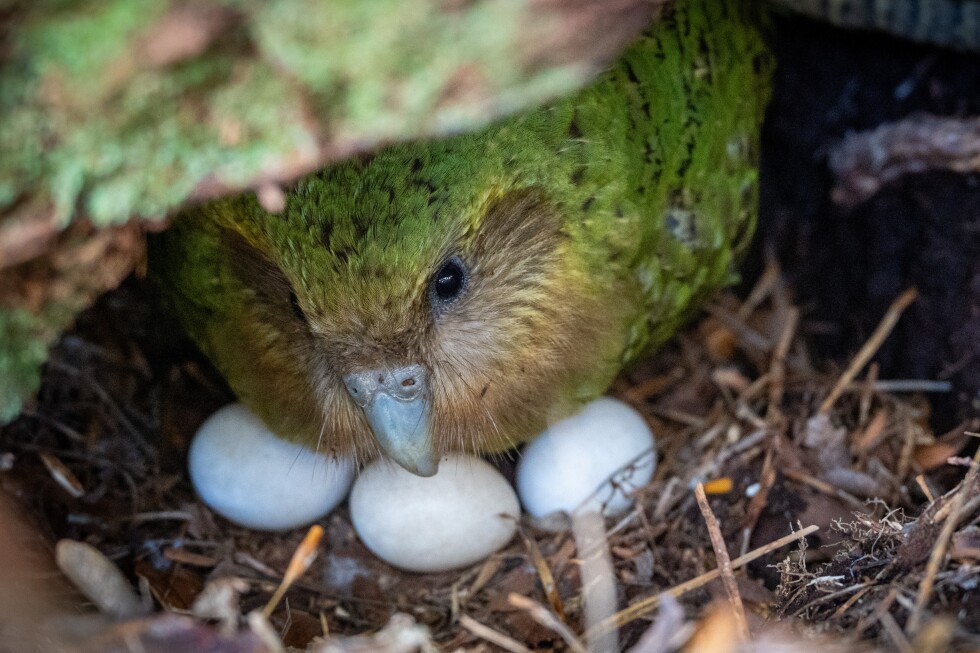
WELLINGTON, New Zealand — The kakapo, Earth’s sole flightless parrot species, continues its remarkable recovery from the brink of extinction through an intensive conservation program that has increased its population from a mere 50 to over 200 birds during the past thirty years. This nocturnal, reclusive avian native to New Zealand faces extraordinary survival challenges due to its biological characteristics: excessive weight, slow movement, appealing scent to predators, and infrequent reproductive cycles.
These peculiar parrots, comparable in size to small domestic cats and weighing up to 3 kilograms (6.6 pounds), possess distinctive physical features including owl-like facial structures, whisker-like feathers, and mottled green, yellow, and black plumage that provides camouflage against forest floors. Their potent musky-fruity aroma, while appealing to human observers, historically made them vulnerable to predators introduced by human settlement.
The species’ recovery represents one of conservation biology’s most unlikely success stories. After being declared potentially extinct in 1974, a remnant population was discovered in the late 1970s, triggering an extraordinary preservation initiative. Conservationists relocated the birds to three remote offshore islands free from predators, implemented individual monitoring through backpack trackers, and carefully managed genetic diversity through strategic breeding partnerships.
Kakapo reproduction occurs infrequently, with breeding seasons triggered only when rimu trees produce bumper fruit crops every two to four years. The current season shows exceptional promise due to abundant berry availability, raising hopes for record chick numbers in February. Male kakapo perform unique courtship rituals involving ground bowls and resonant booming sounds followed by distinctive “ching” noises to attract mates.
Public engagement has reached unprecedented levels through a livestream featuring 23-year-old kakapo Rakiura’s underground nest on Whenua Hou Island. Conservationists have implemented delicate egg management practices, temporarily replacing eggs with artificial substitutes during indoor incubation to maximize survival chances.
The extensive conservation efforts reflect New Zealand’s unique ecological context and cultural values. As a nation with no native land mammals except two bat species, birds have evolved distinctive characteristics and hold special cultural significance. “We don’t have the Eiffel Tower or the pyramids, but we do have kakapo and kiwi,” remarked Deidre Vercoe, operations manager for the Department of Conservation’s kakapo program. “It’s a real New Zealand duty to save these birds.”