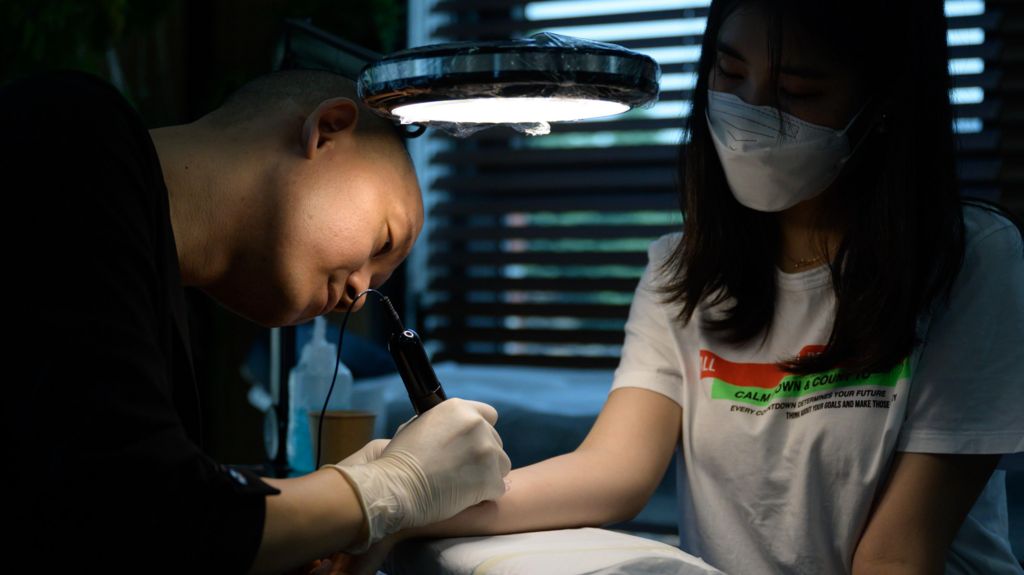
In a landmark decision, South Korea has officially legalized tattoo artistry by non-medical professionals, marking the end of a three-decade-long prohibition. The Tattooist Act, passed by the General Assembly on Thursday, grants licenses to non-medical practitioners, who constitute the majority of the industry. This historic move follows years of advocacy by tattoo artists seeking to practice their craft without fear of prosecution or harassment. Since 1992, offering tattoos had been restricted to medical professionals under a Supreme Court ruling, with violators facing up to five years in prison or hefty fines. Lim Bo-ran, president of the Korea Tattoo Federation, expressed overwhelming gratitude, describing the law’s passage as ‘a dream come true.’ Despite the widespread popularity of tattoos in South Korea, the industry has operated in a legal gray area, with artists often subjected to threats or legal action from disgruntled clients. Recent court acquittals of tattoo artists signaled a shift in societal attitudes, paving the way for this legislative change. However, the new law has faced opposition from the medical community, which argues that tattooing poses health risks and should remain a medical procedure. The law will take effect in two years, requiring artists to pass a national exam, complete safety training, and maintain detailed records. While the change is celebrated by many, it may not immediately erase the stigma surrounding tattoos, as recent polls indicate that a majority of South Koreans still view them negatively. The journey toward full societal acceptance of tattoos in South Korea is likely to be gradual and complex.