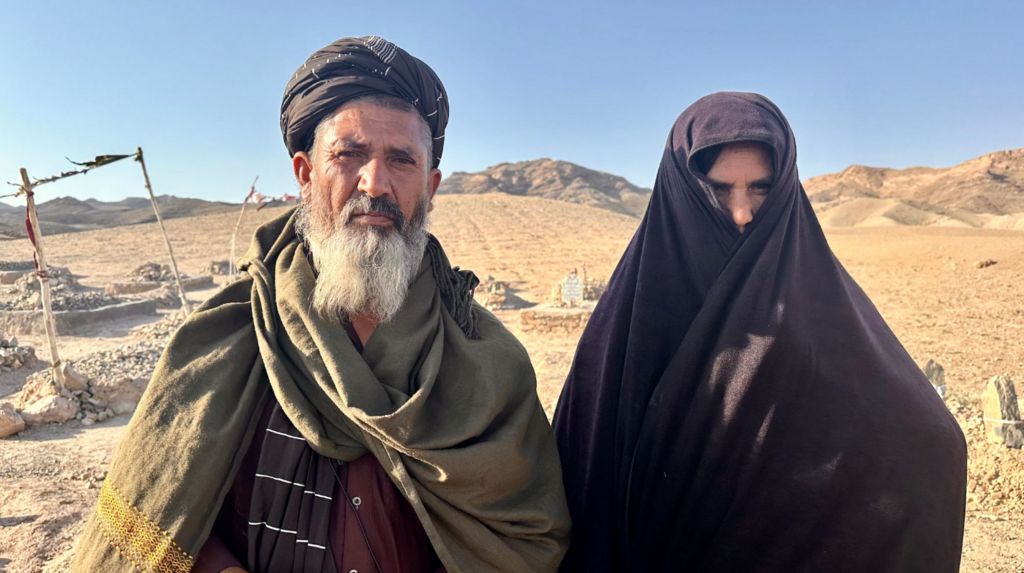
In the desolate graveyard of Sheidaee, outside Herat in western Afghanistan, Ghulam Mohiddin and his wife Nazo mourn the loss of their three young sons—Rahmat, Koatan, and Faisal Ahmad—all victims of malnutrition. Their story is a harrowing testament to the silent wave of child mortality sweeping across Afghanistan, a crisis exacerbated by severe food shortages, economic collapse, and dwindling international aid. The couple, who survive by breaking walnut shells, have received no assistance from the Taliban government or NGOs, leaving them helpless in the face of unimaginable grief. ‘One minute there’s a baby in your arms, the next minute they are empty,’ Nazo lamented. The graveyard, filled with hundreds of small graves, starkly illustrates the scale of the tragedy, with two-thirds of the burials being children. The UN has labeled the situation an ‘unprecedented crisis of hunger,’ with nearly half of Afghanistan’s children under five suffering from stunted growth. The World Food Programme (WFP) warns that over three million children are at risk of severe malnutrition, as aid funding dries up and winter approaches. The Taliban’s policies, including restrictions on women’s rights and bans on NGO operations, have further complicated efforts to deliver life-saving assistance. With WFP’s funding set to run out in November, the situation is dire. ‘We are starting to turn away malnourished women and children because we simply cannot afford to feed them,’ said John Aylieff, WFP’s country director. As Afghanistan teeters on the brink of catastrophe, the world watches, seemingly powerless to stop the unfolding disaster.
My three boys starved to death. I hope angels bring them home, says Afghan mother