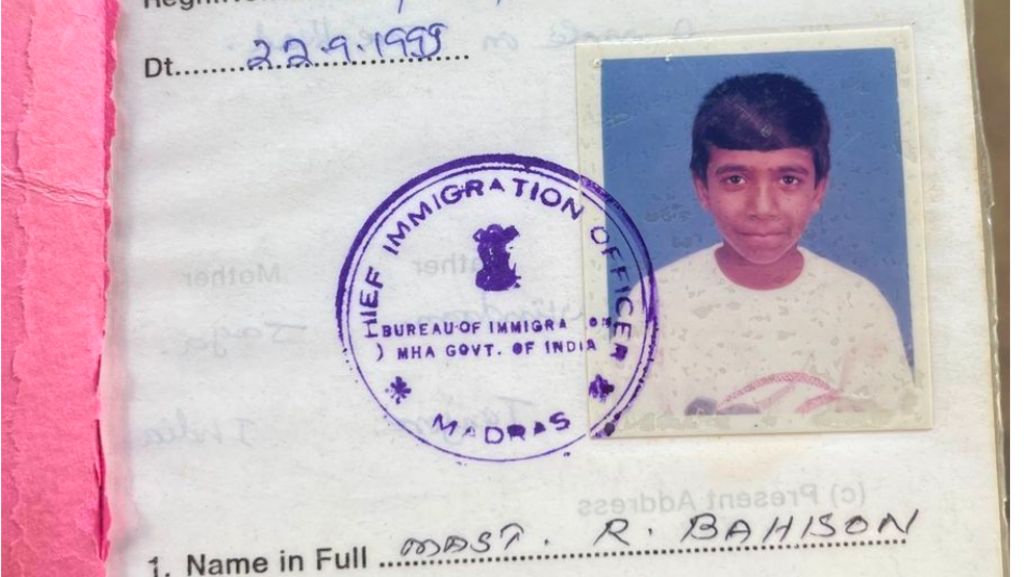
Bahison Ravindran, a 34-year-old web developer born in Tamil Nadu, India, to Sri Lankan refugee parents, has found himself in a legal limbo after being declared ‘stateless’ by Indian authorities. Despite holding an Indian passport and various government-issued identity documents, Ravindran was arrested in April for possessing an ‘invalid’ passport. Authorities cited a 1987 amendment to India’s citizenship law, which mandates that at least one parent must be an Indian citizen for a child born after July 1, 1987, to qualify for citizenship by birth. Ravindran, born in 1991, was unaware of this rule and has since applied for citizenship through naturalisation. His case highlights the struggles of thousands of Sri Lankan Tamil refugees in India, many of whom fled during the island nation’s civil war in the 1980s. Over 90,000 Sri Lankan Tamils reside in Tamil Nadu, with more than 22,000 born in India after 1987 facing similar citizenship challenges. India’s refusal to sign the 1951 UN Refugee Convention and the exclusion of Sri Lankan Tamils from the 2019 Citizenship Amendment Act (CAA) have exacerbated their plight. Ravindran, who recently married a Sri Lankan woman, hopes his case will prompt a resolution. His lawyer, Sandesh Saravanan, argues that Ravindran’s passport was issued after police verification, yet the Foreigners Regional Registration Office (FRRO) flagged his parents’ origins, leading to his arrest. The Madras High Court has temporarily barred authorities from taking coercive action until the next hearing on October 8. Ravindran’s story underscores the broader issue of statelessness among Sri Lankan Tamil refugees in India, a problem that remains unresolved despite political promises.