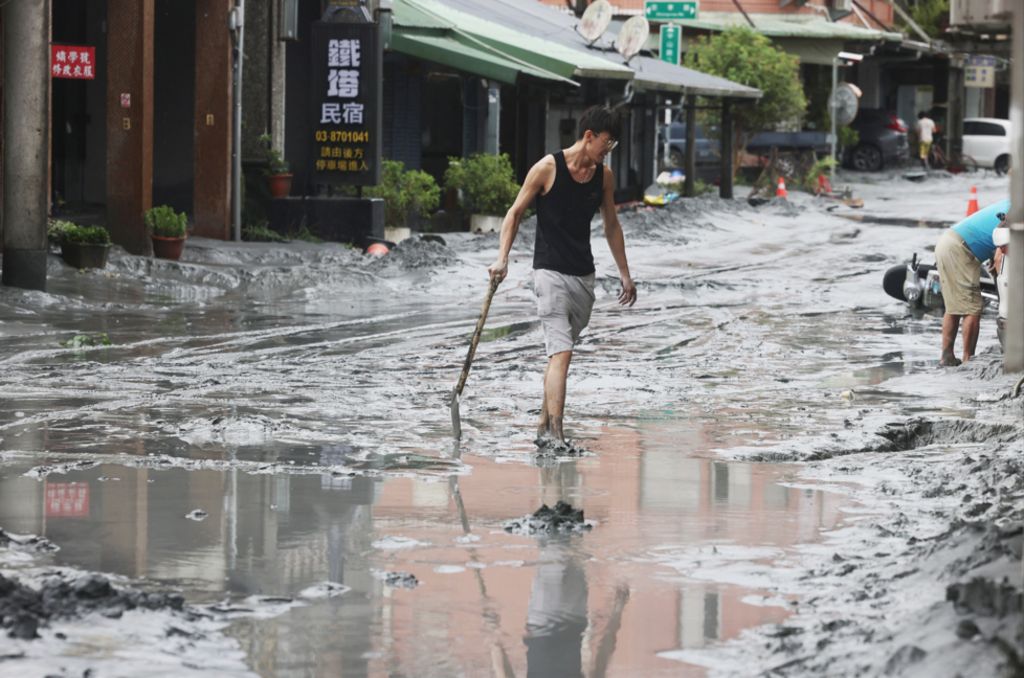
Super Typhoon Ragasa has left a trail of destruction in Taiwan, particularly in the eastern county of Hualien, where a catastrophic flood caused by the breach of a barrier lake has claimed lives and devastated communities. The barrier lake, formed after landslides triggered by an earlier typhoon in July, held an immense volume of water—approximately 91 million tonnes. When it burst its banks on Tuesday, it unleashed a torrent comparable to a tsunami, killing at least 14 people, injuring 32, and leaving 46 unaccounted for. The floodwaters, reaching depths of up to the second floor of buildings in some areas, swept away bridges, uprooted trees, and submerged vehicles, leaving residents in shock and despair. Awa, a 42-year-old bookstore owner in Guangfu Township, described the scene as “like a river outside, with cars floating and everything drifting.” She and her husband sought refuge on the second floor of their shop, attempting to salvage their books. Survivors reported receiving no immediate warning before the disaster struck, despite prior monitoring of the lake’s water levels by universities and authorities. Emergency evacuations were not mandatory, and many elderly residents, particularly those without access to smartphones, were left vulnerable. The disaster has highlighted the challenges of managing natural hazards in Taiwan, where barrier lakes are a recurring phenomenon. Experts noted that the lake’s composition and the lack of accessible roads hindered preventive measures. The tragedy has further strained Hualien’s tourism industry, already reeling from recent earthquakes. As communities grapple with loss and recovery, questions remain about the adequacy of disaster preparedness and response.