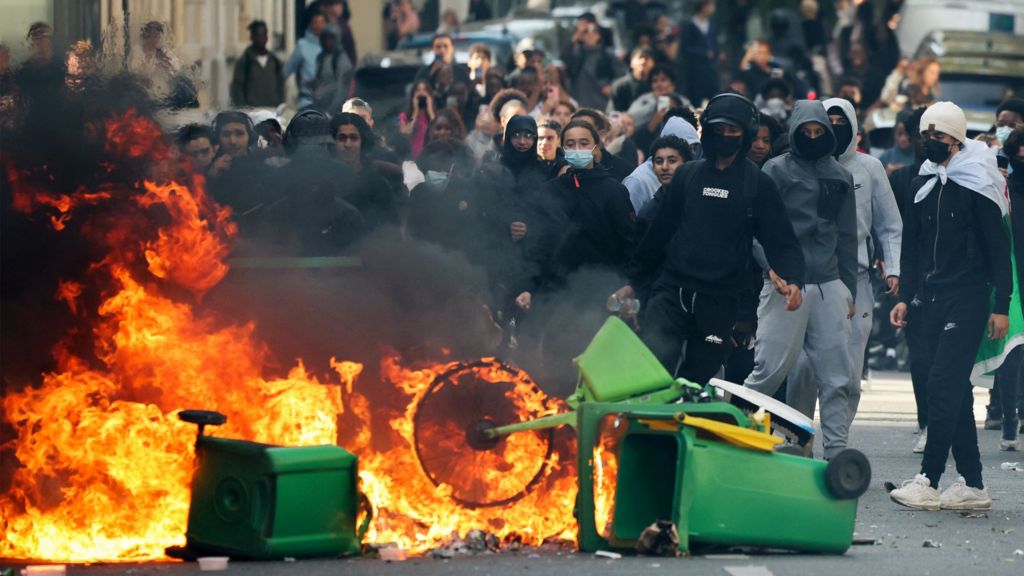
France is on edge ahead of a planned nationwide day of mass mobilization Tuesday, as a weeks-long student-led movement demanding increased investment in public education has spiraled into widespread unrest, leaving hundreds of schools shuttered, dozens injured, and thousands detained across the country.
The wave of demonstrations first emerged in Paris back in September, launched by high school students frustrated by systemic failures in the country’s education system: overcrowded lecture halls, dilapidated campus infrastructure, and persistent staffing shortages that have undermined learning conditions for years. The movement quickly gained traction, spreading to every corner of France and drawing support from university students, major teachers’ unions, and left-wing political opposition groups.
By Monday, more than 500 schools across the nation were either fully or partially closed due to student blockades and disruption, French Education Minister Édouard Geffray confirmed. Tensions boiled over into violent clashes between protesters and law enforcement that day, leaving a 15-year-old student in the northern city of Lens with a traumatic hand injury after an explosion during a confrontation near his school. Officials confirmed the teen was hospitalized and his condition is not life-threatening.
The severe injury is just one of dozens of serious harm recorded since the unrest began a week ago. Last week, 14-year-old Eden was struck in the head by a tear gas grenade during a protest in Saint-Ouen-l’Aumône, suffering a double jaw fracture that required urgent, major surgery. Speaking to reporters Monday, Eden’s mother described her grief and outrage, saying her son’s injury was a shameful breakdown of public order. “They are dealing with children who are asking for nothing more than better conditions to study,” she told French outlet BFMTV. “This should never happen.”
As of Monday, official data from France’s justice ministry shows that more than 5,000 people have been arrested since the movement began, with 87% of those detained being minors. Fourteen protesters have been placed in pre-trial detention, and more than 1,800 people are currently facing prosecution, according to the ministry.
The violence has extended beyond school blockades, with protesters setting fire to dumpsters and building barricades from burning construction materials in city streets. Geffray added that 24 schools have been completely burned and ransacked since the unrest started, while at least 190 students have sustained injuries during clashes with police.
Late last week, French Prime Minister Sébastien Lecornu unveiled a package of new government measures meant to address the core grievances raised by the students, promising “visible changes” for secondary campuses and education staff. But the prime minister also drew a hard line against unrest, stating: “We will make no concessions to violence. We stand by students and staff who have been assaulted, as well as police officers and gendarmes who have been injured.”
Major protest organizers have rejected the government’s proposal as insubstantial. The Union Syndicale Lycéenne (USL), one of the leading coordinating groups for the student movement, said the executive branch had offered “nothing concrete” to resolve the crisis. Calling the current situation a “political deadlock” marked by what it describes as “unprecedented repression” of the movement, the USL has urged people across the country to join Tuesday’s national day of action. The call has been backed by other major education groups, including the prominent teachers’ union SNES-FSU, which has directed its members to participate in the protest.
The unrest has quickly become a flashpoint in French national politics, months ahead of the country’s upcoming presidential election. The government and hard-right opposition leaders have blamed the radical left for inciting and fueling the violence. Lecornu has accused the left-wing party La France Insoumise (LFI) of “irresponsible” behavior for encouraging the movement’s growth. Marine Le Pen, leader of the hard-right National Rally, went further, claiming the unrest is no longer a student protest but “riots organised by professionals and overseen by deputies from La France Insoumise”, and called for a new strict anti-rioting law to be passed by parliament.
On the other side, LFI leader and presidential candidate Jean-Luc Mélenchon has framed the movement as the most significant youth uprising in French education since the historic 1968 general strikes, and accused police of widespread abuses of power. He has called on the public to join the protests to protect the student movement. Even some left-wing local leaders have broken with the movement over the violence: Benoît Payan, the left-wing mayor of Marseille, condemned “unacceptable violence” in his city, noting that while young people’s concerns about their future and public services are legitimate, they must pursue change through peaceful demonstration.
Organizers are bracing for massive turnout across the country on Tuesday, as the standoff between the student movement and the Macron administration shows no sign of de-escalation.