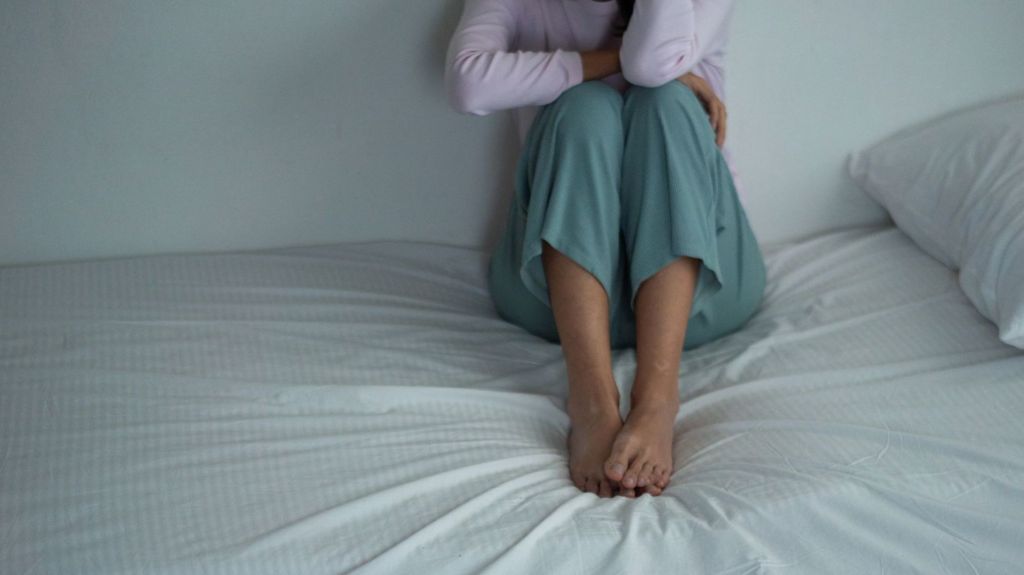
For nearly a decade, Seo Mi-hyeon, a woman with an intellectual disability, endured repeated sexual abuse at the hands of the director of Saekdongwon, the state-subsidized Incheon care facility where she lived. It was only after a violent head injury in 2025, sustained while resisting an assault, that she found the courage to speak out – unmasking a scandal that has shaken South Korea and forced a long-overdue reckoning with systemic failures in the country’s care system for disabled people.
Seo, who is in her 40s, entered Saekdongwon, a residential home for people with intellectual disabilities, in 2016. The fully state-funded facility, which currently houses 33 residents, quickly became a place of terror for her. According to her testimony, the abuse began within months of her arrival, with the facility’s director, identified only by his surname Kim, attacking her at night or in the early hours of the morning when no other staff were nearby. When she tried to block one assault, Kim threw a glass at her, leaving her with a serious head wound.
Care home staff rushed Seo to hospital and stitched her wound before even notifying her mother, she said. When Seo’s mother requested CCTV footage to clarify how her daughter was injured, facility officials refused, claiming they lacked authorization to release the material. Seo’s mother immediately removed her from the facility, and only when Seo was told she would never have to return did she disclose the years of abuse. The 40-something woman told police, “I was hurting inside, so I came to tell my story.” Through her attorney, she later told the BBC, “I thought it was safe to speak because I was told I didn’t have to go back to Saekdongwon. I just endured it.”
When police launched their investigation into Seo’s claims, they quickly expanded the probe to other Saekdongwon residents and uncovered two more victims: Lee Mi-Na, who also reported repeated rape, and a third resident who faced sexual violence. A Seoul court found Kim guilty on all counts earlier this month, sentencing him to 15 years in prison – five years less than the 20-year sentence prosecutors had requested. Kim was convicted of rape for Seo and Lee, and a lesser charge of sexual violence for the third victim, after the court dropped the rape charge due to what it called a lack of conclusive evidence of force that left the victim unable to resist. Kim has denied all allegations and filed an appeal shortly after the ruling.
Disability rights advocates and civic organizations have slammed the verdict, arguing that evaluating a victim’s capacity to resist penalizes disabled people who often cannot fight back against powerful abusers. The criticism extends far beyond the sentencing: a 2025 assessment commissioned by local authorities and led by a research team from Woosuk University found evidence suggesting as many as 10 additional Saekdongwon residents may have been abused by Kim. The court never addressed this finding during the trial, and police have been unable to pursue additional charges because most of the potential victims have severe communication impairments that prevent them from describing the abuse in verbally complete, cohesive testimony. Jeon Ji-su, the professor who led the Woosuk team, told the BBC investigators only accepted accounts from victims who could articulate their experiences in full sentences. Baek In-seong, a representative of disability sexual violence survivor counselling centre Hansahoe, questioned this approach: “If victims express their experiences differently from the way we expect, shouldn’t the state make a greater effort to hear their voices?” Police have defended their work, claiming any individual shortcomings do not undermine the investigation as a whole.
The scandal has also exposed deep flaws in South Korea’s system of oversight for state-subsidized care facilities. In 2011, massive public outcry following the release of *Dogani*, a fictional film based on real abuse at a South Korean school for deaf children, led to sweeping legal reforms that created harsher penalties for abusers working in disability care, expanded sexual offense classifications, and removed the statute of limitations for many rape cases involving disabled victims. Yet Saekdongwon remained under the control of Kim for years despite regular inspections from local Ganghwa County authorities. A county official admitted to the BBC that inspections focus almost exclusively on administrative paperwork, and residents are only interviewed when specific complaints are filed. An external monitoring team assigned to the facility never received a report from staff, the official added, expressing deep regret that regulators failed to uncover the abuse earlier.
Many families of disabled residents also face systemic barriers to speaking up about suspected abuse, advocates say. Securing a spot in a residential care facility is already extremely difficult: a national survey of parents of disabled people found 60% of families wait at least three years to secure a placement. If a family pulls their loved one out over abuse concerns, they are forced to take on full-time care themselves with almost no alternative options. Kim Yoon-tae, head of Woosuk University’s Institute of Cognitive Science, explained that residential facilities hold near-total control over residents’ daily lives, from meals and sleeping arrangements to healthcare and outside access. This power imbalance creates a perfect environment for abuse to go unreported, he said.
This case is far from an isolated incident. In 2023, an appeals court upheld an eight-year sentence for a Yeongcheon care worker who sexually assaulted two disabled residents, and just this year, an Anseong care worker received a six-year sentence for repeated rape of a disabled resident that began in 2022. Jo Ha, a counsellor who has supported Saekdongwon victims, argues the abuse is not the fault of one bad actor – it is the product of structural failure. “The violence women with disabilities experience is not an individual problem,” she said. “It is structural violence, shaped by overlapping layers of gender, disability, institutionalisation, poverty and social isolation.”
Compounding public anger, 13 petitions for leniency were submitted to the court ahead of Kim’s sentencing, including one from a social welfare organization that asked the judge to consider Kim’s “contribution to the welfare sector.” Welfare advocacy group Gyeol condemned the requests, stating: “Past service in the welfare sector does not exempt anyone from accountability.” Even with the 15-year sentence, the judge called Kim’s crimes “particularly reprehensible” because he exploited his position of trust and power over vulnerable residents to gratify his own desires, in violation of his professional duty to protect them.
In response to the national outcry, South Korean Prime Minister ordered the creation of a cross-government task force to address systemic abuse in disability care, calling the Saekdongwon scandal “a grave matter that calls into question the very reason for the state’s existence.” The government subsequently inspected more than 1,500 residential disability facilities nationwide, identifying 33 suspected abuse cases and opening investigations into 8 of them. Officials have announced plans to strengthen risk-based targeted inspections, and require joint inspections that include local authorities, police, and independent disability rights groups.
Local Ganghwa authorities have ordered Saekdongwon to close permanently and revoked the operating license of the foundation that ran the facility. The facility has challenged the license revocation in an administrative lawsuit, and closure has been delayed while the government relocates the 33 remaining residents and arranges individual independent living support plans – a process that is still ongoing.
For Seo, life after leaving Saekdongwon has brought a quiet peace she never knew inside the facility. “I just feel at peace. I’m happy every day,” she said. “The best thing is being able to eat and sleep when I want.” Her only remaining wish is to cut all ties with Kim, but she has a message for policymakers and the public: people with disabilities deserve safe spaces to live. “I hope there can be a facility without sexual violence, where disabled people like us can live in peace.”