### Fading Magic: The Slow Death of India’s Traditional Street Performance Tradition
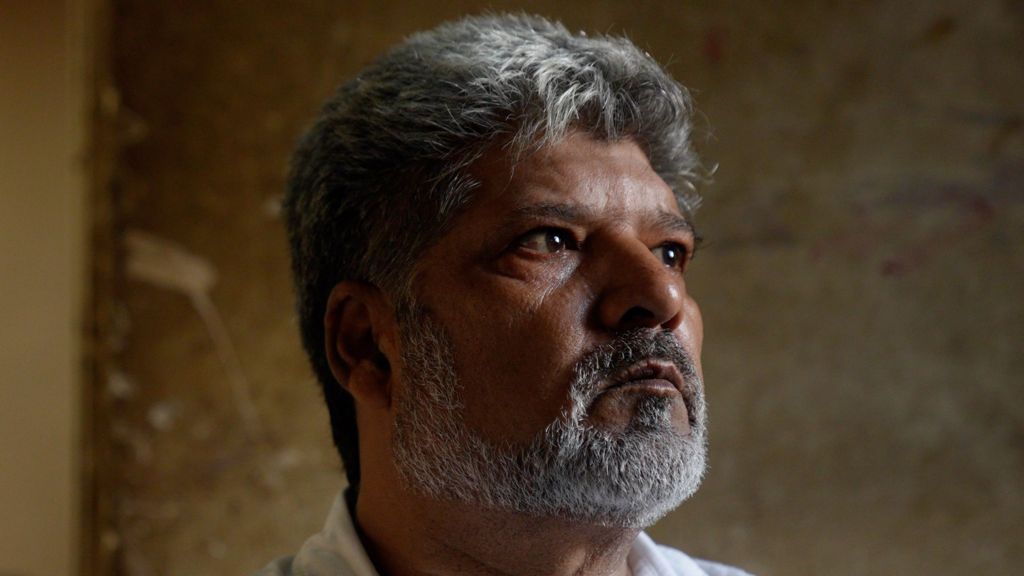
In a cramped, modest home in Delhi, 55-year-old Ishamuddin Khan, one of India’s most celebrated street magicians, still can pull off the legendary illusion that made him an international name: making a rope appear to levitate and rise skyward. For decades, he has toured the world performing this trick, once dismissed as nothing more than myth, and keeps mementos of his fame—yellowed newspaper clippings and faded photographs—in his home. Today, however, the days of packed public performances are long behind him, and he spends more time reminiscing about his glory days than practicing his craft.
“Street magic is dying a slow death. It is on a ventilator,” Khan observes, a bleak assessment that mirrors a widespread crisis across India’s community of traditional street performers. For generations, magicians, jugglers, puppeteers, and acrobats earned their living drawing crowds in busy public squares and marketplaces. But shifting cultural trends, evolving entertainment habits, and growing regulatory restrictions have gutted their audiences, pushing countless artists to abandon their ancestral crafts entirely.
Khan hails from the Madari community, a ethnic and cultural group with a centuries-long lineage of public performance rooted in Indian folklore and mythology. While there are no official government counts of remaining Madari performers, community records indicate roughly 400 Madari families still reside in Delhi, with hundreds more scattered across Uttar Pradesh, Rajasthan, and Telangana. As historian Ashok Mathur explains, the performance skills of the Madari people have been passed down orally through family lines for countless generations—a tradition that is now at risk of breaking.
Like his ancestors before him, Khan learned the art of magic from his father and uncles, giving his first public performance at just 12 years old. By his early 20s, he had mastered the iconic Indian rope trick, an illusion long written off as an impossible myth: the trick involves making a rope rise vertically into open air, after which a young boy climbs the suspended rope before disappearing. After six years of relentless practice, Khan debuted the trick publicly in 1995 near Delhi’s iconic Qutub Minar monument. Two years later, he performed it for a crowd of 30,000 on a Karnataka beach, a performance that caught the attention of international media and opened doors for performance tours across the UK, France, Germany, and Japan.
Khan had hoped his newfound fame would shine a lasting spotlight on India’s endangered traditional performing arts, and for a brief period it did. But public interest quickly waned, and as opportunities for public performance dried up, even skilled magicians with generations of family training found it nearly impossible to make a sustainable living. One of those who left the craft is 40-year-old Imam Khan, who now earns roughly 200 rupees ($2 USD) a day collecting recyclable waste from Delhi’s streets near a large municipal dump.
Industry analysts and cultural researchers point to multiple interconnected factors driving the decline of street performance, with the changing nature of public spaces at the top of the list. Anurupa Roy, founder of the Katkatha Puppet Arts Trust, explains that many public spaces have become increasingly restricted: closed municipal parks and gated residential communities that bar outside visitors have eliminated many of the most popular performance spots for street artists. Researcher and performer Komita Dhanda adds that heightened security measures in dense urban centers have also crowded out performance opportunities, noting that even well-established street theatre groups like Jana Natya Manch, where she works, regularly face bureaucratic barriers to staging public shows.
Compounding the issue of limited space is the lack of a clear national regulatory framework for busking in India. Unlike the United Kingdom, which has a standardized federal system for street performance, India leaves regulation of public performance up to individual states. Performers must navigate a patchwork of inconsistent local rules around public order, noise pollution, obstruction of public land, and anti-begging laws—since the line between voluntary donations for performance and public begging is often left undefined. As lawyer Kaushik Mitra notes, this legal ambiguity means street performers regularly face penalties and crackdowns from police and municipal authorities.
The global COVID-19 pandemic delivered a final, devastating blow to an already struggling industry. When India implemented national lockdowns in 2020, all public performances came to an abrupt halt. Many out-of-work performers returned to their rural home villages, and large numbers never came back to urban centers to resume their craft. “We saw a sharp decline in public performances after this period,” Dhanda says. “The brunt was especially harsh for street magicians and performers, many of whom did not return to cities.”
For the performers who did stay and continue their trade, challenges have only grown worse. Forty-two-year-old Shahim Khan still performs on Delhi’s streets, sometimes bringing his 12-year-old daughter Alia along with him. But where he once could stage four or five shows a day in busy central areas and earn 1,000 to 1,200 rupees, he is now confined to out-of-the-way industrial parks, barely managing two shows a day for just 200 to 400 rupees in earnings.
The rise of short-form digital entertainment has also eaten into the audience for traditional street performance, as modern audiences increasingly turn to social media and streaming platforms for leisure. Dhanda notes that shifting cultural tastes have also changed what India showcases to the world, with decades-old international fascination for iconic tricks like the Indian rope trick having faded almost entirely.
For Ishamuddin Khan, the loss is far more than economic—he fears that a centuries-old cultural tradition will disappear entirely if no new generation takes up the craft. “A trick can survive only if someone learns it,” he says. His own son Altamash performed alongside him as a teenager, but has now left the craft to work decorating parties with balloons. Years without consistent practice have eroded his skills, and he admits he is slowly forgetting the tricks his father taught him. Altamash says he always knew he would never match his father’s fame, but never imagined that street performance would become an unviable profession entirely. “I knew I may not achieve the fame my father has, but I did not think there would come a time when performing would not remain an option,” he says.