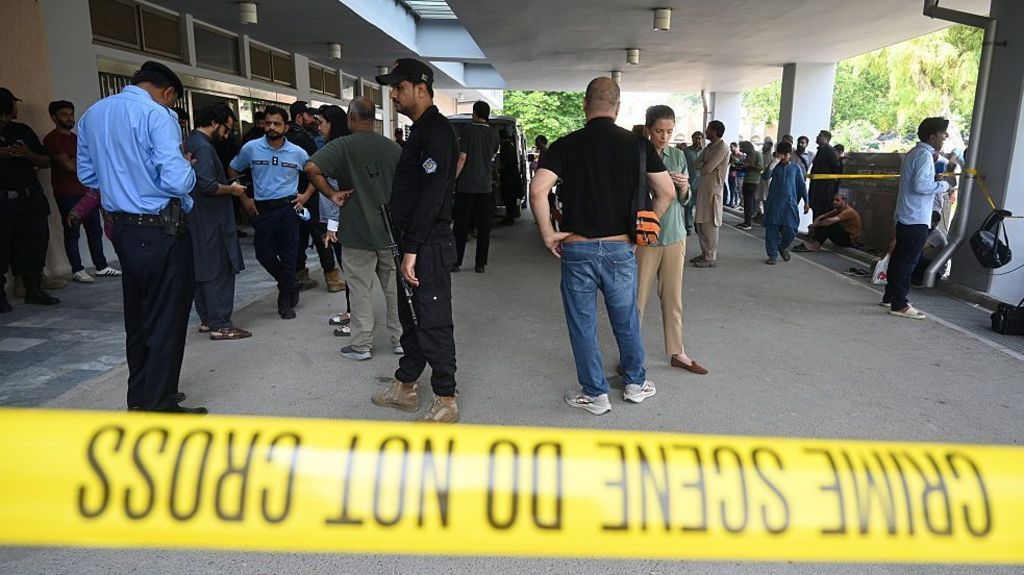
Last month, a devastating blaze that broke out in the neonatal intensive care unit of Pakistan’s largest public hospital, the Pakistan Institute of Medical Sciences (PIMS) in Islamabad, claimed the lives of 14 newborns, most of whom were premature or medically fragile. Now, a government-ordered official inquiry has exposed a cascade of preventable systemic and institutional failures that turned a small electrical spark into an unconscionable catastrophe.
The investigative committee, led by a retired senior civil servant, confirmed that the blaze most likely originated from an overheated electrical cable connected to a faulty air conditioning unit in the ward, matching initial accounts from authorities released on the day of the fire. While the exact electrical defect remains unconfirmed, the report documents how the fire spread rapidly through flammable plastic medical equipment and waste containers unchecked, amplified by a complete lack of basic fire safety infrastructure.
Most alarmingly, the inquiry confirmed the neonatal unit had no functioning smoke detectors, fire alarms, or automatic sprinkler systems to suppress the blaze or alert staff and visitors in its earliest stages. Back in 2018, the hospital received official approval to replace and upgrade all outdated air conditioning units across the facility, but eight years later, the critical upgrade was never carried out. The unit had recently undergone routine maintenance, but the report emphasizes that general maintenance does not replace mandatory electrical safety inspections.
Witnesses and first responders described chaotic conditions that compounded the danger. The first sign of trouble was recorded on corridor CCTV at 6:38 a.m. on August 26, when a nurse was spotted fleeing the neonatal ward to call for help, returning just 20 seconds later with a security guard. Another nurse, Razia Noreen, rushed into the smoke-filled ward immediately and emerged seconds later with the only infant who survived the disaster. Within one minute of the first alert, dense smoke completely obscured the CCTV camera feed.
For many patients and visitors inside the hospital that morning, the only warning of the fire came from shouted alerts from staff, not official alarms. Abdul Ghafoor, who was in a nearby ward with his hospitalized mother when the fire broke out, told the BBC he ran upstairs to help after hearing the warnings. “The entire ward was filled with smoke, we could not see anything,” he recalled. Hivsa Walid, who was in an adjacent ward with her sister-in-law and newborn niece, added that widespread panic left no coordinated response: “There should have been fire extinguishers and protocols, but no one was doing anything. Everyone was just running.” Ghafoor and a small group of civilian bystanders broke glass corridor panels to vent toxic smoke before emergency crews arrived, the only proactive response to the emergency.
The inquiry also confirmed multiple critical failures that delayed and blocked rescue efforts. Emergency services were not notified of the fire until 6:54 a.m., nearly 16 minutes after the first staff member spotted the blaze. First responders arrived on scene at 7:01 a.m., but encountered locked and blocked escape routes and entry points, the report found. A serving firefighter, who spoke to the BBC on condition of anonymity, said rescue teams had to break through glass windows to enter the building because all access doors were locked. “Even after getting inside, the doors leading towards the ward were locked,” he explained. The firefighter, who arrived after the blaze was extinguished, described a horrific scene: “It was difficult for me to even describe what we saw. The medical equipment above the babies had melted and collapsed onto them.”
Hospital leadership previously defended the locked ward door, claiming access was restricted for security reasons following past incidents of infant abduction from Pakistani public hospitals. However, the inquiry rejected this justification, noting that “ordinary access restrictions may be legitimate for security purposes… they cannot render designated emergency routes inaccessible when needed.”
Beyond infrastructure and access failures, the report found no evidence that neonatal unit staff had received any fire safety training or participated in emergency evacuation drills for the ward, which houses medically vulnerable newborns many dependent on continuous oxygen support. Staff also had no training to shut off oxygen supplies in an emergency, and while oxygen likely intensified the heat of the blaze, the inquiry found no evidence it facilitated the fire’s spread.
The inquiry also highlighted that PIMS management ignored explicit prior warnings about fire safety gaps. Just one month before the neonatal unit fire, a separate blaze broke out at the hospital’s on-site nursing hostel, which already exposed major deficiencies in smoke detection, alarm systems, and overall emergency preparedness. The report concludes that PIMS and its senior leadership “bear the principal institutional responsibility for failing to convert known risks, prior warnings and assigned duties into an effective safety system.”
In response to the inquiry’s findings, Pakistan’s Prime Minister has ordered that all short-term fire safety reforms outlined in the report be implemented within three months, and mandated comprehensive fire safety audits for all public and private buildings across the country. Eight senior PIMS officials have already been suspended from their posts, and the prime minister has directed that criminal proceedings be initiated against the officials held responsible for the failures that led to the deaths. Funeral services were held for the 14 newborn victims in the weeks following the tragedy. PIMS has not yet issued any public comment on the inquiry’s findings.