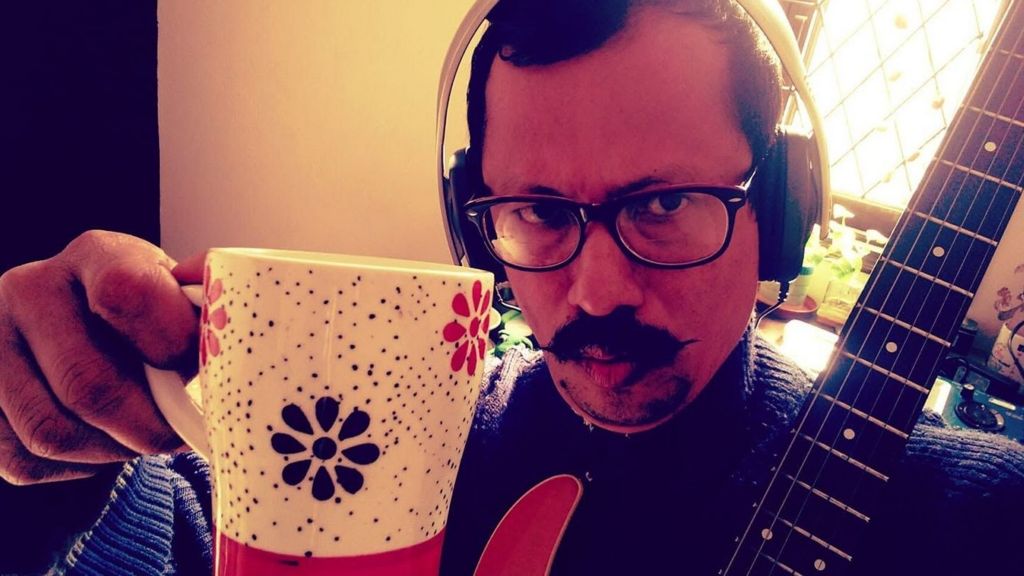
The tragic homecoming of Chongtham Vikram Singh to his native Manipur last week was nothing like any of his loved ones ever imagined. When his old friend Dhiren Sadokpam arrived at Imphal’s airport to greet him, the 54-year-old renowned musician did not step off the passenger plane. His remains arrived in the cargo hold, sealed inside a steel shipping container.
Three days before that somber reception, Singh had been beaten to death outside his residential apartment in southeast Delhi. The circumstances of his killing have stirred nationwide grief, anger, and a long-simmering conversation about systemic targeting and discrimination faced by people from India’s northeastern states living in the national capital.
According to official police accounts and statements from Singh’s family, the confrontation began late one Sunday night. A group of men had gathered outside Singh’s apartment building, drinking loudly and creating a public disturbance. Singh went downstairs to object to the commotion, a choice that would turn fatal. His wife, Joshna Chongtham, told reporters that after the initial confrontation, Singh retreated back to the family’s upper-floor apartment – but the group pursued him, launching a brutal assault right outside his door.
Hours after the attack, Singh began complaining of severe breathlessness. His 20-year-old son rushed him to a local hospital, where he died in the early hours of the following morning. In the days since the killing, Delhi police have arrested seven adult men and one minor in connection with the crime, and investigators say they are still working to piece together the full sequence of events that led to Singh’s death.
While law enforcement officials have stated they have not uncovered any evidence to support claims of a racially motivated attack, the killing has reignited longstanding fears among Delhi’s northeastern community, whose members have documented decades of unaddressed racial abuse, harassment, and violent attacks in the capital. Northeastern community organizations have already held public protests across the city, demanding a fully independent and impartial investigation into the killing to ensure no detail is overlooked. In a public statement days after her husband’s death, Joshna emphasized that the family was not seeking vengeance – only accountability. “We are not seeking revenge. We are seeking justice,” she said. “He had a name, a family and a life that mattered.”
Beyond the national conversation about community safety, Singh’s death has also pulled back the curtain on a remarkable 40-year career in music that shaped generations of performers in Manipur and beyond. Born into a creative family, Singh was immersed in music from early childhood: his mother, Chongtham Kamala, was a celebrated Manipuri vocalist who sang for the region’s first feature-length Manipuri-language film, *Matamgi Manipur*. As a young boy, he accompanied his mother to recording sessions at All India Radio, and by his early teens, he had auditioned himself, earning a spot as a child artist performing on the accordion.
As he grew older, Singh’s love expanded to stringed instruments, first mastering Hawaiian and Spanish guitar before moving to the electric guitar. By the mid-1980s, when homemade cassette tapes brought Western rock and heavy metal thousands of miles across the country to Imphal, Singh was at the center of the city’s burgeoning grassroots rock scene. Young musicians across the capital scrounged together what equipment they could – cheap, locally built amplifiers, modified sound systems, and guitars turned up to full volume – to experiment with the new sound. Singh, then a student at Don Bosco School, would often skip study periods to watch local bands perform, later recalling those early days as “sweet and innocent” moments that set him on a lifelong path in rock.
It was in 1987 that Sadokpam first met Singh, as the two young men waited at an interstate bus terminal to leave Imphal for college in Shillong. Sadokpam remembered Singh as a quiet, boyishly energetic young man who preferred to spend hours alone in his room, practicing until he had mastered every note of a new composition. Singh went on to play in a series of foundational Manipuri rock bands: first Ultra Vires, where he honed his experimental style, then Phoenix, one of the most celebrated groups of Manipur’s early rock era that retained a loyal following decades after its peak. By the time he joined Eastern Dark, Sadokpam recalled, Singh’s connection to his instrument was so complete that he could make the six strings “cry and sing”.
In the early 1990s, Singh spent two years studying at the historic Calcutta School of Music, where he deepened his knowledge of Western classical music and developed a new passion for jazz. From that point on, his repertoire spanned genres: rock, blues, jazz, fusion, and classical, blending styles into a signature sound all his own. By the 2000s, Singh had settled permanently in Delhi, where he built a life centered on performing live and teaching the next generation of musicians. In 2010, he reconnected with an old friend to form his final band, Fubar Ghetto, a group that centered improvisation and played everything from jazz to rock across Delhi’s live music circuit, performing at universities, clubs, cultural festivals, the National School of Drama, and even the Czech Embassy.
Singh never chased mainstream fame. Instead, he built a quiet, enduring legacy as a generous working musician and mentor, beloved by his students, peers, and audiences. Those who knew him consistently remember him as a gentle, kind person who cared more about lifting up other musicians than seeking recognition for himself. Sachidananda Angom, a former guitar student of Singh’s, called him “always kind, helpful” and noted that he “could really light up a room”. Mame Khan, a popular Rajasthani folk singer who toured and performed with Singh for several years, described him to *The Indian Express* as “a really kind and lovely person” who never picked fights with anyone.
For Sadokpam, who reconnected with Singh in middle age after losing touch for 20 years, the last memory he holds is of a 2019 dinner at Singh’s Delhi home, where Singh picked up his guitar, played for his old friend, and talked excitedly about his current students. When Sadokpam left that night, Singh asked him to visit again soon, and Sadokpam promised he would. “I never made it back,” he said.