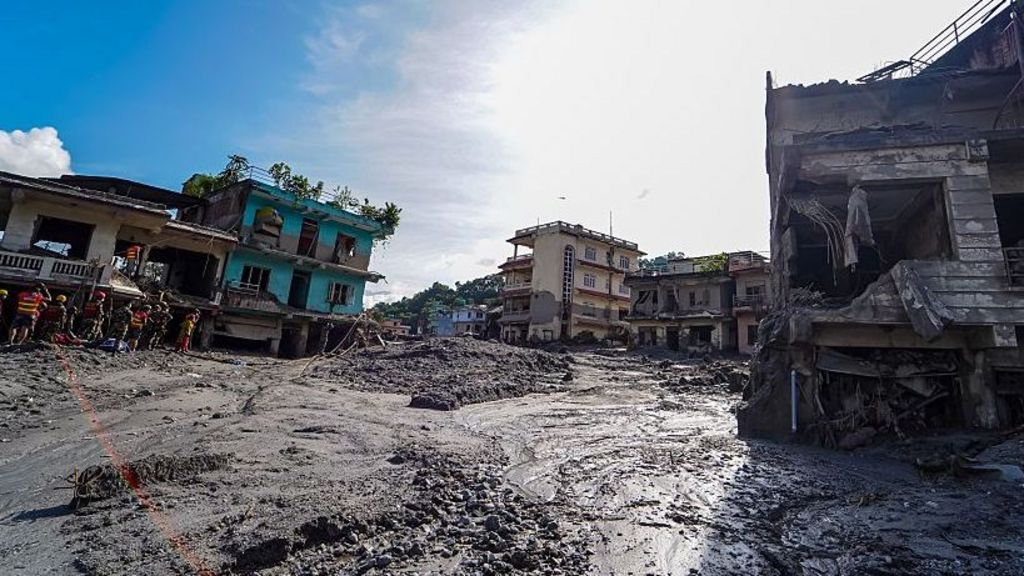
In the wake of last month’s catastrophic flooding that left dozens missing and hundreds displaced across Nepal, Prime Minister Balendra Shah has announced a harsh government crackdown on unregulated online harassment targeting disaster survivors who have spoken out about slow search and rescue efforts. The prime minister’s public warning, shared via a Facebook post, makes clear that authorities will not tolerate behavior that adds to the anguish of families already grappling with grief and uncertainty.
The crisis began when multiple flood survivors turned to social media to plead for information about missing loved ones and push public officials to accelerate search operations. Instead of receiving support, many of these vulnerable users have been met with virulent hostile comments from other online users. Shah condemned these actors in stark terms, stating, “People who make unnecessary remarks, belittle those in pain or seek to cause them further suffering at this sensitive time are criminals.”
One high-profile case underscores the severity of the abuse. Two weeks after floodwaters swept through her community, a woman whose brother remains missing publicly told the BBC that Nepal’s search and rescue operations were unacceptably slow, arguing that timely deployment of specialized experts and equipment would have let her learn her brother’s fate far sooner. She told the outlet she still held out hope of finding him alive, but days after speaking out, she reported receiving dozens of vicious, insulting comments in response to her criticism, saying the abuse only compounded her family’s already unbearable suffering.
A second viral case has drawn widespread attention: a pregnant young woman whose husband is missing posted a video criticizing authorities for what she described as a “lack of urgency” in search efforts, asking through tears, “My husband is missing now, how can I keep this baby?” The video quickly spread across regional social platforms, but instead of sympathy, it drew a wave of cruel insults. One comment urged her to jump into the flood-swollen river to conduct the search herself, while another accused her of unfairly scapegoating the government for the disaster.
While a small contingent of social media users has pushed back against the abuse, calling on communities to console survivors rather than attack them, the frequency of these attacks has prompted formal law enforcement action. Nepali police officials confirmed they have launched investigations to trace the origin of abusive comments, cross-referencing digital metadata to identify perpetrators through their registered addresses and phone numbers. A dedicated 10-member inter-agency committee has been convened specifically to probe these cases of online harassment.
Under Nepal’s existing Electronic Transactions Act, perpetrators convicted of defaming or harassing others via social media face severe legal penalties: up to five years of prison time, a fine of as much as 100,000 Nepali rupees (equal to approximately $662 USD or £490 GBP), or both.
Digital rights experts say the abuse stems from multiple overlapping sources. Dovan Rai, executive director of Body & Data, a Nepal-based non-profit focused on advancing safe digital spaces, told the BBC that a portion of the insensitive comments come from users engaging in “rage baiting” — a manipulative tactic where creators post inflammatory negative content to trigger public outrage, drive engagement, and boost shares and clicks on their posts. Rai added that other abusers are staunch, ideologically driven supporters of the current government, who view any criticism of official disaster response as an attack that must be condemned. This extreme partisan polarization, she explained, has further eroded civil discourse on Nepal’s social media platforms, leaving vulnerable survivors caught in the crossfire.