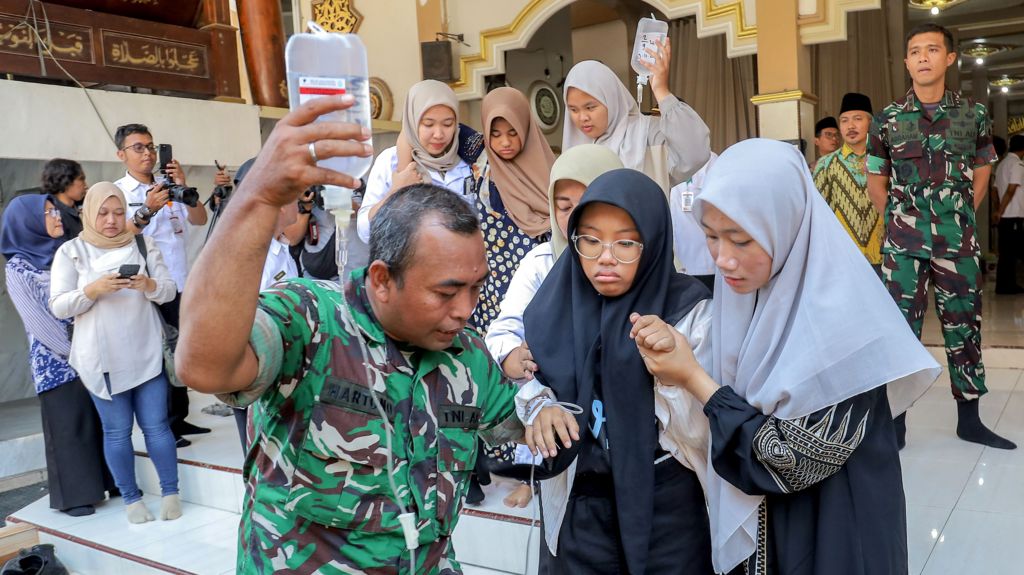
Indonesia is grappling with a wave of mass food poisoning outbreaks that have sickened roughly 2,000 students and teaching staff across the archipelago over three days, all tied to the national government’s flagship free school nutrition initiative. The most severe incident unfolded at a public high school in Rembang Regency, Central Java, where 777 people developed acute food poisoning symptoms after eating lunch served through the Makan Bergizi Gratis (MBG, or Free Nutritious Meals) program last Wednesday.
Among those affected at the Lasem district high school were 752 students and 25 teachers, many of whom developed severe diarrhea that quickly overwhelmed campus facilities. “They had diarrhoea and took turns using the toilet,” Juhartutik, the school’s principal, told BBC News Indonesia in an interview. “There are 40 toilets in total, so they can’t accommodate everyone.” In response to the outbreak, the school dismissed nearly 1,200 enrolled students and all 95 non-teaching staff members, and a small number of the most severely affected patients were transported to local hospitals for emergency treatment. Juhartutik added that national government authorities have committed to covering all associated medical costs, and the local private distributor contracted to supply the program’s meals has already visited the campus to accept accountability for the incident.
This Rembang outbreak followed closely on the heels of a separate mass incident the prior day at an Islamic boarding school in Sidoarjo, East Java, that left 730 people ill after consuming MBG-provided meals, according to local public health officials. One parent, Reni, described her child’s rapid onset of symptoms: dizziness and nausea that quickly progressed to severe abdominal cramping and gastrointestinal distress. Multiple patients in that outbreak required inpatient hospital care, and several affected students were so weak they had to be transported to care in wheelchairs.
Additional cases have been confirmed across other regions of Indonesia this week, including hundreds of affected people at multiple schools in Tana Toraja, a highland regency in South Sulawesi. Parents and school staff have already reported troubling observations about the quality of meals served through the program, including slimy chicken portions, undercooked staple items, and unusual off odors that indicate improper handling. Health experts note that common culprits for mass food poisoning outbreaks like these include improper cold storage of perishable ingredients, inadequate food preparation practices, and microbial contamination of finished meals.
Local public health and law enforcement authorities have launched formal investigations into the string of outbreaks, and laboratory testing of collected food samples is currently underway to pinpoint the exact source of contamination. Achmad Sholeh Syarifudin, the head of the local MBG food distribution unit in Lasem, has issued a public apology and accepted full responsibility for supporting the recovery of affected students and staff. He added that the unit will launch a full organizational review of its operational protocols to prevent similar incidents in the future.
The MBG program is a multibillion-dollar flagship policy of newly inaugurated President Prabowo Subianto, designed to address widespread childhood malnutrition by providing free daily nutritious meals to students across the country. However, the initiative has already faced significant controversy beyond the current food safety crisis: it has been dogged by persistent allegations of graft in procurement and distribution contracts, as well as widespread public criticism over its massive projected cost to the national budget. When addressing the outbreaks this week, the head of Indonesia’s National Nutrition Agency acknowledged that accountability would be strictly enforced. “If it is identified that there was negligence and there are criminal elements, I apologise, we cannot help,” the official said, signaling that legal action would follow if wrongdoing is confirmed.