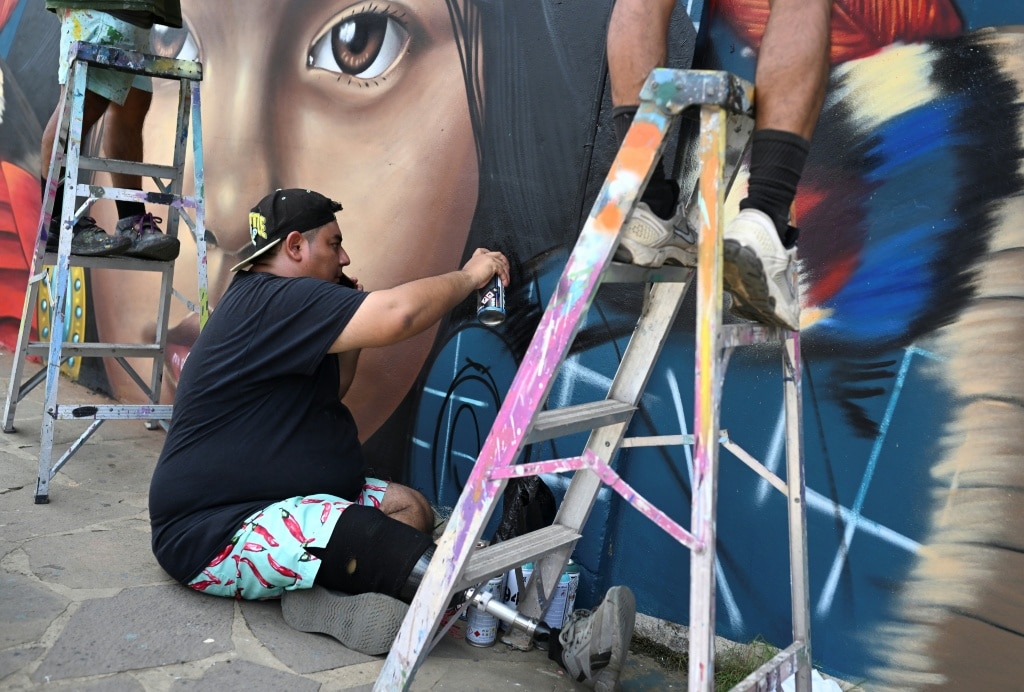
Nestled amid mist-shrouded coffee-growing mountains in western El Salvador, the cobblestone lanes and terracotta-roofed homes of Concepcion de Ataco bear little resemblance to the tense, violence-plagued streets that once defined swathes of the small Central American nation. Today, the concrete walls that gangs once used to mark their violent territorial boundaries are covered in vibrant, sweeping murals: sleek jaguars poised in jungle undergrowth, delicate native wildflowers, pre-Columbian inspired portraits, and colorful tropical birds, all brought to life by dozens of spray paint cans in the hands of local and regional artists.
This transformation is the work of Pigmen Trip, a traveling mural festival now in its eighth year, founded and organized by 31-year-old Salvadoran artist Isaac Sosa. For nearly a decade, Sosa and his fellow muralists navigated the constant threat of gang harassment and violence to bring art to marginalized neighborhoods. Working in gang-controlled zones was once a frightening high-stakes endeavor, but a dramatic nationwide shift in security has opened new possibilities for the movement.
Since President Nayib Bukele launched a sweeping national anti-gang offensive in 2022, gang influence across El Salvador has collapsed dramatically. The crackdown has drawn sharp international criticism, however, with human rights NGOs documenting widespread allegations of arbitrary detentions, extrajudicial violence, and other abuses that may amount to crimes against humanity. Despite these controversies, for many Salvadorans living in former gang strongholds, the decline in gang activity has brought palpable new freedoms.
“With this change, this rebirth we are experiencing as a country…it’s a different atmosphere, more peaceful, more enjoyable, and with greater freedom of expression,” Sosa said. Standing before a fresh canvas of concrete in Ataco, he added: “Years later, we won back the walls from the gangs.” For Sosa, mural painting is far more than public art—it is a magical tool capable of driving deep social transformation, turning symbols of intimidation into canvases that celebrate local identity and community.
Since the festival’s launch, participating artists have created more than 200 murals across the country, bringing together creators from across Latin America, including Colombia, Mexico, Brazil, Peru, and Argentina. For veteran participants like 36-year-old Darwin Flores, the shift in security has transformed every step of the creative process. Before gangs were weakened, painting in so-called “hot zones” required extreme preparation: artists had to verify every detail of their location and their team to avoid running afoul of territorial rules. Now, Flores says he can walk into any neighborhood, even former gang strongholds like La Campanera, without fear.
The new atmosphere has also opened opportunities for emerging creators like 29-year-old Cristian Juarez, who paints with a prosthetic after losing his right leg in an accident 11 years ago. Juarez echoes Flores’s experience: “It wasn’t so easy to paint back then, but now everything is very different.” Standing before his own mural—a striking portrait of a young woman in a feathered headdress—Juarez paused to mourn the many local artists who fell victim to gang violence and disappeared in recent decades.
For long-time residents of the towns hosting the festival, the colorful new murals represent far more than aesthetic change. Cristian Lara, a 50-year-old local merchant, whose home now features a custom mural painted by festival artists, called the work a blessing for his community. “There are new winds of change in El Salvador,” he said, a sentiment shared by the artists who have turned symbols of fear into beacons of hope for a nation rebuilding.