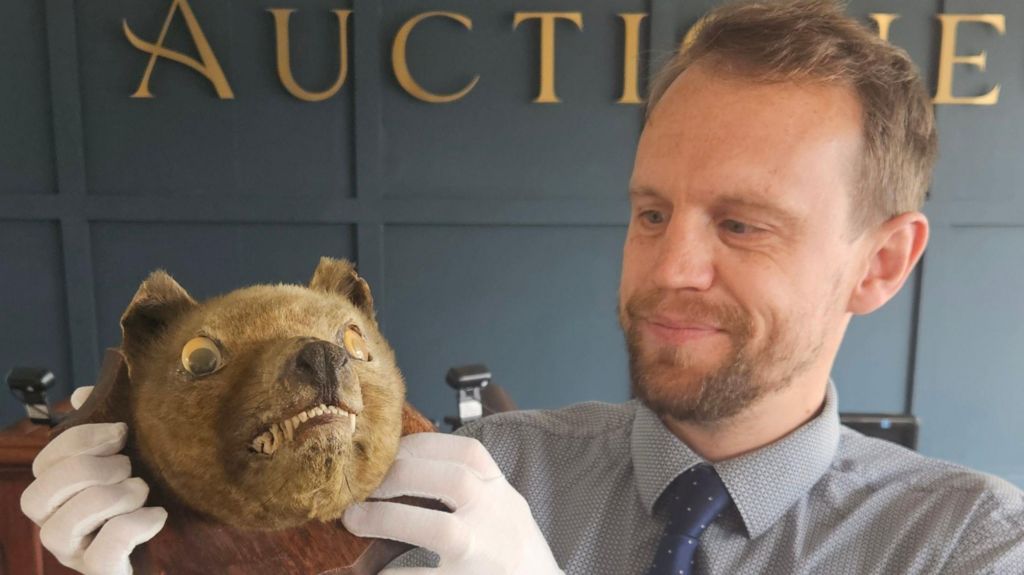
A chance £50 purchase at a UK antiques market has turned into one of the most extraordinary extinct species auction discoveries in recent memory, after a item once misidentified as a taxidermy fox head sold for £60,000 when it was confirmed to be a preserved thylacine — better known as the Tasmanian Tiger.
The story began when an anonymous collector picked up the mounted specimen purely for its quirky charm: the previous owner had added novelty googly eyes to the piece, a detail that won over the vendor when they spotted it at the market. It was only when the item was consigned to Auctioneum, a Bristol-based auction house, that specialists began to question its true identity. What they uncovered shocked everyone involved.
Native to mainland Australia, New Guinea, and Tasmania, the thylacine was a unique carnivorous marsupial with physical traits similar to canids. While most populations vanished from Australia roughly 2,000 years ago, a small colony survived on the island of Tasmania into the early 20th century. Decades of systematic hunting, combined with introduced disease and widespread habitat destruction, pushed the species to total extinction. The last known living thylacine died at Hobart Zoo in 1936, and the species was formally declared extinct shortly after.
Today, preserved thylacine specimens are among the most coveted items in global natural history collections. Only 101 taxidermy thylacine specimens are known to exist worldwide, and the vast majority of these are held in major public museums and scientific research institutions. Complete mounted heads like the one sold in Bristol are extremely rare outside of these institutional collections, with even high-quality replicas of thylacine bones and skulls fetching thousands of pounds at auction.
When the specimen went under the hammer at Auctioneum’s Bristol saleroom, it drew immediate global attention from collectors and researchers alike. Auctioneer Andrew Stowe described the electric atmosphere in the room during the bidding. “Bids quickly jumped into the tens of thousands, and simply kept on going up. The room went silent, everyone crowded in to watch. It was an amazing moment to witness,” Stowe said. Even the auction house team was caught off guard by the discovery. “It was quite a shock to discover we were sitting on something so special,” Stowe added. “When we broke the news that it was actually a thylacine, the vendor was in complete shock. Even replicas of skulls or bones sell for thousands of pounds [so] to find a complete item like this, is almost unheard of, especially here in the UK.”
The winning bidder was James Cranfield, a prominent private collector of taxidermy and natural history specimens, who called the acquisition “the find of a lifetime.” In a statement following the auction, Cranfield confirmed he plans to make the rare thylacine head accessible to academic and scientific researchers, ensuring the specimen contributes to ongoing study of the extinct species rather than being kept out of public reach.
The unexpected discovery has reignited public fascination with the thylacine, a species that continues to capture global interest decades after its extinction, with ongoing research exploring potential de-extinction efforts and unconfirmed sightings still reported occasionally in remote regions of Tasmania.