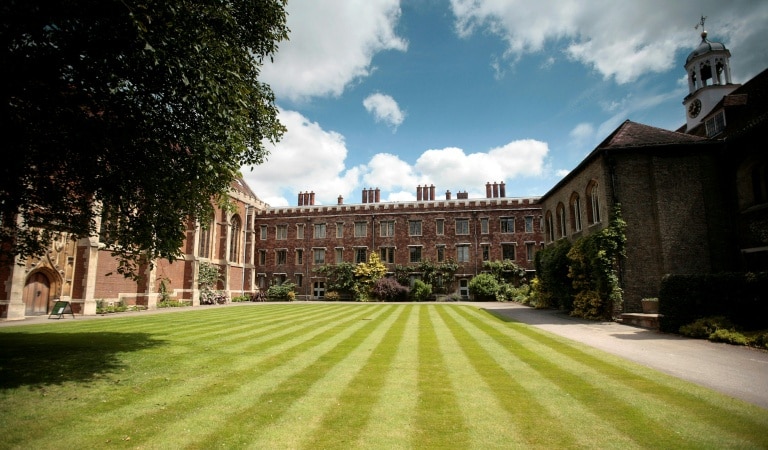
A 41-year-old academic who made history as the University of Cambridge’s youngest Black professor, before resigning last week amid a heated plagiarism scandal, has been found dead in south London, the elite British university confirmed.
Jason Arday, who left his post as a professor and his fellowship at Jesus College on 5 August following the eruption of multiple public accusations, was found unresponsive on Friday afternoon at a residential address in the Battersea neighborhood of London. London’s Metropolitan Police Service confirmed that officers were called to the site by the London Ambulance Service, and that the 41-year-old man was pronounced dead at the scene. Next-of-kin have been notified, and police said the death is currently treated as unexpected but not suspicious. A full report will be prepared for the local coroner, with the investigation ongoing under the Met’s Central South Command Unit.
“We are desperately saddened to hear this tragic news,” University of Cambridge Vice-Chancellor Deborah Prentice said in an official statement. “Our heartfelt sympathies go to Jason Arday’s family and friends at this incredibly difficult time.”
UK Education Secretary Lucy Powell also released a statement saying she was “deeply shocked and saddened” by the news, calling on the public to respect the family’s privacy during the grieving period, reminding people “there are real people with loved ones involved.”
The controversy that engulfed Arday began in July, when Nathan Cofnas, a US academic and self-described “race realist” whose research affiliation with Cambridge ended earlier this 2024 over his own allegations of racism, published public claims that Arday had plagiarized multiple sections of his doctoral dissertation from other scholars’ work. Right-wing British newspapers and commentators quickly amplified the allegations, arguing Arday had been given an unfair advantage through the university’s diversity, equality and inclusion (DEI) hiring policies.
Major UK outlets including The Times and The Telegraph published a series of investigative pieces that also disputed other claims Arday had made about his personal life, including assertions he had run 30 marathons in 35 days and raised millions of pounds for charity.
Shortly after the university launched formal probes into the allegations, Arday announced his resignation. In a public letter posted online following his exit, he wrote that stepping down was “the only way” to end a “difficult period,” but stressed the decision should not be “mistaken for an acceptance of the narratives that have surrounded me.” In an interview with The Times earlier this August, Arday acknowledged he had made academic “mistakes” in his work, but pushed back against claims he was an “academic fraud,” arguing the campaign to remove him from his post was racially motivated.
The scandal quickly fractured the Cambridge campus and wider academic community, with two competing factions issuing open letters to university leadership. One group of senior academics called for an independent investigation into Arday’s appointment, while other scholars signed a separate letter in support of Arday, rejecting attempts to use the controversy to generalize about minority academics.
Earlier this week, Prentice addressed the growing divide, describing the alleged misconduct as “an aberration” and promising a thorough, transparent probe that would include independent academic investigators from outside Cambridge. She also stressed that the controversy should not be used “to cast aspersions” on other ethnic minority academics working at the institution.
Just one day before Arday’s death, his memoir *Great and Unfortunate Things* was published in the United States, with a UK release scheduled for later this August. The book has also come under public scrutiny amid the ongoing scandal.