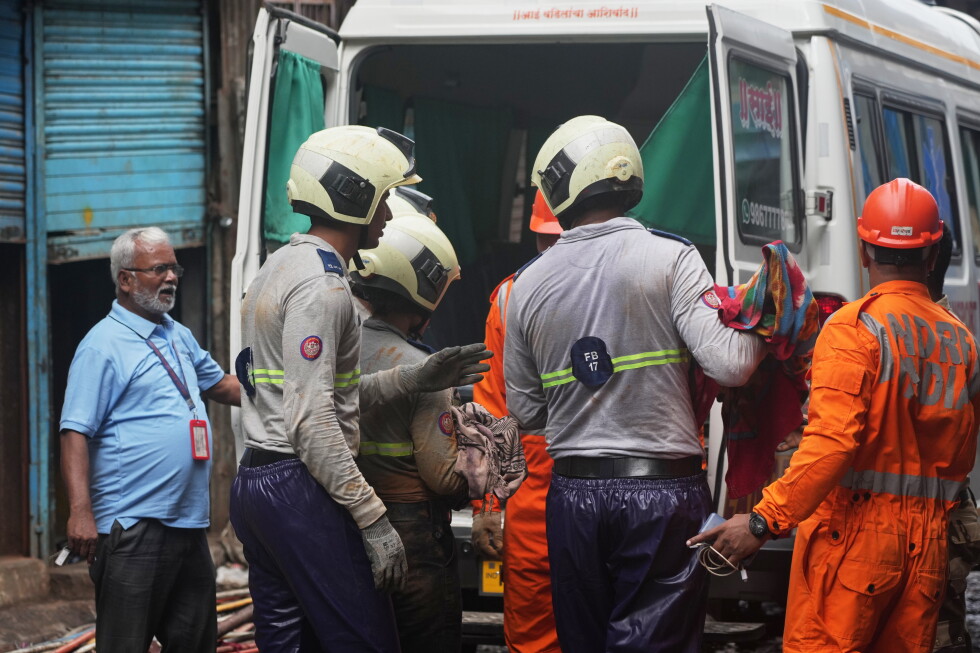
In the early hours of Wednesday, a devastating landslide triggered by extreme monsoon downpours swept through a crowded residential neighborhood in Mumbai, India’s financial and commercial hub, leaving at least six people dead and four others injured, local authorities confirmed.
The disaster struck before sunrise, when a fractured segment of a steep hillside gave way and crashed onto a cluster of informal homes in Ghatkopar, a densely populated suburb of the megacity. According to civic official Tanaji Kambli, between two and three residential structures were fully buried under the mud and debris when the slope collapsed.
Emergency response teams including municipal workers, local police, firefighters, and personnel from the National Disaster Response Force were deployed to the site immediately after the collapse to launch search and rescue operations. However, their life-saving efforts were significantly slowed by the area’s extremely narrow access lanes, which make it impossible to bring in heavy excavation equipment to clear debris efficiently.
By the latest update, rescue workers have managed to extract 10 people from the rubble. All of those pulled from the debris were transported urgently to a public city hospital. Kambli confirmed that six of those patients, including two young children and two teenagers, were pronounced dead on arrival at the medical facility. The remaining four injured people remain in the hospital receiving ongoing care for their injuries.
Mumbai Mayor Ritu Tawde traveled to the affected neighborhood within hours of the landslide to meet with survivors and local residents. During her visit, she announced that the city government would provide formal monetary compensation to the families of those killed in the disaster to help them cover funeral costs and other expenses.
India’s national weather department has issued a forecast warning of more intense monsoon activity across the entire western region of the country in the coming days. Local authorities have already issued repeated urgent calls for residents living in areas known to be at high risk of floods and landslides to stay on high alert and evacuate to safer locations if instructed.
Home to more than 20 million residents, Mumbai receives the bulk of its annual rainfall during the June-to-September monsoon season. Torrential seasonal downpours have long created major disruptions for the city, routinely flooding major roads and railway lines, halting air and rail travel, and triggering destructive landslides and building collapses. These risks are concentrated especially in crowded informal settlements built onto steep, geologically unstable hillsides, where most of the city’s low-income population resides.
Climate and disaster experts have warned for decades that Mumbai’s growing vulnerability to deadly monsoon disasters is driven by multiple manmade factors: unplanned rapid urbanization, unregulated construction of housing on geologically fragile hillside terrain, and a severely underbuilt and inadequate urban drainage system. These longstanding risks are now amplified by human-caused climate change, which is bringing heavier, more erratic, and more unpredictable rainfall patterns to the region every monsoon season.