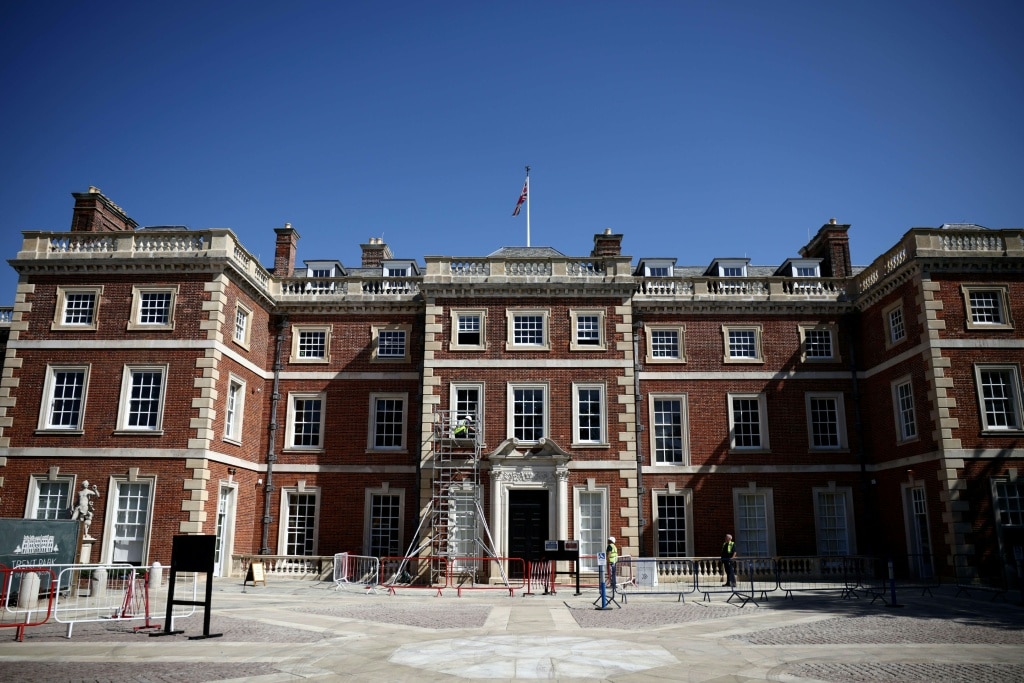
During the darkest years of World War II, an elegant country mansion just north of London played host to an extraordinary covert operation: high-ranking Nazi generals detained as prisoners of war lived in comfortable, well-appointed rooms upstairs, unaware that a team of hidden intelligence listeners sat in the basement below, recording every offhand comment and secret they let slip. That facility, known as Trent Park, has now been transformed into the new Trent Park House of Secrets museum, finally bringing the little-recognized operation and the unsung heroes who ran it into the public eye.
Before the war, Trent Park was celebrated for its luxurious interiors and elite social circle, owned by a wealthy British politician whose guest list included icons like Charlie Chaplin and future prime minister Winston Churchill. When the conflict broke out, the British government repurposed the sprawling estate as part of a secret network of intelligence-gathering facilities, fitting nearly every space from the drawing rooms to the garden with hidden bugging devices. These microphones connected to monitoring equipment in the former servants’ quarters, where listeners worked around the clock transcribing every word captured from the prisoners’ casual conversations.
Between 1942 and 1945, 84 German generals and 22 lower-ranking officers were detained at the site, officially labeled Camp No. 11. Far from the harsh conditions of standard POW camps, the men were provided with valets, given access to recreational activities, and even permitted to take day trips off the property. The intentionally comfortable arrangement was a carefully calculated strategy: British intelligence leaders believed relaxed, unsuspecting prisoners would let sensitive information slip, a tactic museum director Giuseppe Albano describes as “brilliantly devious.” Many prominent Nazi officers passed through the estate, including General Dietrich von Choltitz, the last Nazi military commander of Paris, who was detained there after surrendering the city against Adolf Hitler’s orders in August 1944.
Unaware that even conversations near open windows or on garden walks were being recorded, the detainees inadvertently revealed critical intelligence that reshaped the course of the war. Most notably, offhand comments about Germany’s V-2 ballistic missile program exposed the location of the program’s primary research facility. This intelligence allowed the British Royal Air Force to launch a devastating bombing raid on the site that delayed the deployment of the weapons, which were already targeted at London, by months. The eavesdropping operation also uncovered confessions of war atrocities: von Choltitz admitted in one bugged conversation that “the worst job I carried out was the liquidation of Jews.” British officials chose not to use these transcripts in post-war Nuremberg trials, however, to avoid revealing the highly classified bugging operation to the public.
Trent Park is often overshadowed by Britain’s more famous World War II codebreaking hub Bletchley Park, the site famously depicted in *The Imitation Game* where Alan Turing cracked the Nazis’ Enigma encryption. Albano argues that the intelligence gathered at Trent Park was just as impactful as the work done at Bletchley Park, on par in its contribution to shortening the entire length of the Second World War. The two facilities operated as part of the same coordinated intelligence network, with all insights gathered at Trent Park shared directly with Bletchley Park’s codebreaking team.
What makes the Trent Park story particularly remarkable is the identity of the listeners themselves. Most were fluent German speakers who had fled Nazi persecution as Jewish refugees, a group that faced widespread hostility in Britain at the time even as they risked everything to help the Allied war effort. Many never spoke about their top-secret work publicly in the decades after the war. Adam Ganz, whose late father Peter Ganz—a German Jewish refugee who survived the Buchenwald concentration camp before being recruited as a Trent Park listener—never talked about his service, even to his family. Ganz, now an Oxford professor, says his father’s quiet commitment to the work suggests he was proud of his contribution, even when it went unrecognized by the public for decades.
After the war ended, government officials removed most of the bugging equipment from Trent Park, but small fragments of original wiring were left behind. These surviving pieces are now on display at the new museum, which was developed as part of a local area redevelopment led by a property developer. Many original transcripts of the bugged conversations have been released to Britain’s National Archives, though Albano confirms some materials remain classified decades later. For the first time, the museum has recreated the original basement listening rooms, and visitors can hear recorded excerpts of actual conversations, with actors reading from original transcripts—including one memorable moment where a general references a top-secret “rocket testing site” in the same breath as he asks for more bratwurst for visiting officers.
For historians and the families of the listeners who operated the facility, the opening of the museum marks a long-overdue recognition of a critical, hidden chapter of World War II intelligence. “It’s important and valuable that that contribution is being recognised,” Ganz says of the work done by the refugee listeners at Trent Park.