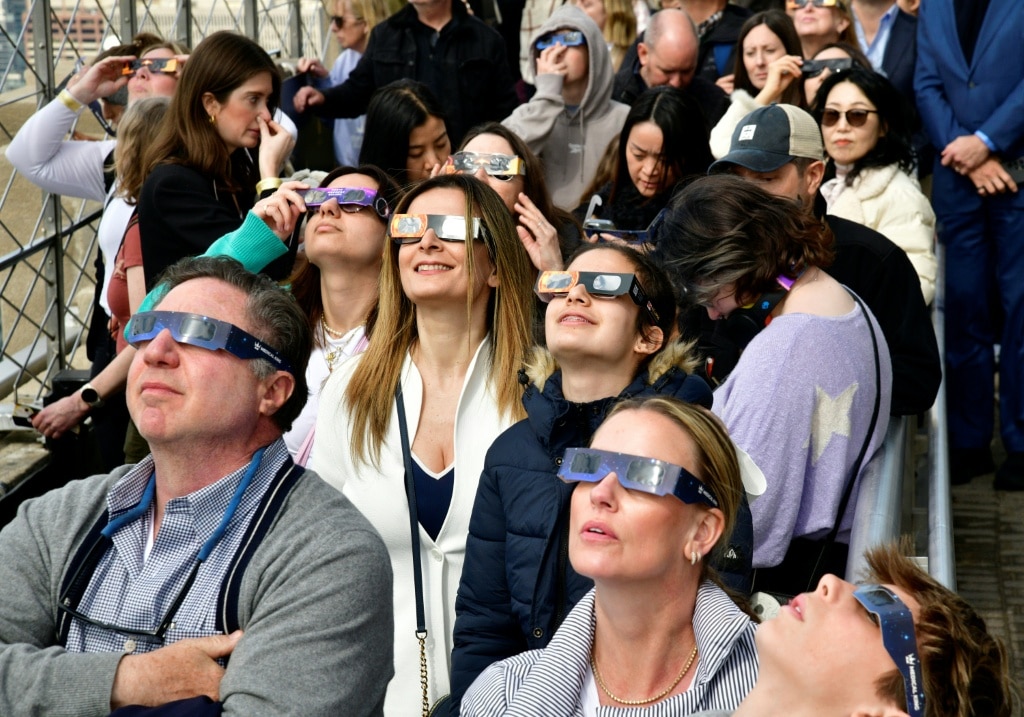
Next week, a rare celestial event will bring a small, passionate community of globetrotting astronomy enthusiasts to the northern tip of Spain, all chasing the once-in-a-century experience of a total solar eclipse visible over mainland Europe. The event, scheduled for August 12, promises the kind of visceral, life-altering encounter that keeps dedicated “eclipse chasers” plotting their next trip years in advance: when the moon slides fully between Earth and the Sun, the midday sky will drop into an eerie violet twilight, air temperatures will plummet, disoriented wildlife will mistake sudden darkness for night, and distant planets and stars will shine bright against the blotted-out solar disk.
For this tight-knit group of hobbyists and professional scientists alike, no photograph, video, or secondhand account can replicate the raw intensity of standing in the path of totality. “It feels like it’s the end of the world… you’re changed forever if you see one,” explained Elizabeth Warning, a 51-year-old TV researcher and self-described eclipse chaser based in Sydney, Australia. But Warning’s long-planned trip to Spain hangs in the balance: devastating wildfires continue to burn across parts of the eclipse’s visibility corridor, forcing many travelers to reconsider their plans. As someone who has lived through Australia’s recurrent bushfire crises, Warning said her sympathies lie with local communities that have lost homes and loved ones to the blazes. “It’s very sad,” she said.
Total solar eclipses occur somewhere on Earth every 18 to 24 months on average, so dedicated chasers build their travel itineraries years in advance to catch every possible event. While many past eclipses have required expensive, logistically complex trips to remote locations like Siberia, Chile, or Antarctica, this year’s Spanish event is the first total solar eclipse visible on mainland Europe this century, making it far more accessible for travelers from across the globe.
Ryan Milligan, a solar physicist at Queen’s University Belfast, has chased 12 total eclipses across six continents, from the frozen Faroe Islands to the arid expanses of Siberia. “A total eclipse is not something you see, it’s something you experience,” he told reporters. “The temperature drops, the light and the shadows are all in the wrong place, the colours are muted, there’s a 360 degree sunset, the animals go to sleep — these things you cannot convey to people through a picture or a video or a news article.” For chasers, the brief, intense window of totality — which rarely lasts more than a few minutes — delivers an unmatched adrenaline rush that sparks an addiction to the hobby. “It’s that adrenaline rush of trying to experience all that within a few minutes that pushes us literally to go to the ends of the Earth,” Milligan added. Once the event ends, chasers immediately turn their attention to planning their next encounter.
The hobby is not without its risks, however: cloud cover, the universal bane of eclipse chasers, has ruined many carefully planned trips. Lucie Green, a solar physicist at University College London, traveled all the way to Antarctica in 2021 to watch an eclipse, only for heavy cloud cover to block the entire event. “I’ve got about a two-thirds success rate,” she joked. Luck can change in an instant, though: Warning recalled watching clouds part at the very last second during a 2015 eclipse in the Faroe Islands, giving her a full view of totality that eclipse watchers just hundreds of meters away missed out on — while Milligan, who was in that cloudy group, still laments missing the event after being told he would have seen it if he had stayed at his hotel.
The small size of the eclipse chasing community means members often run into each other unexpectedly across the most remote corners of the globe: Green recalled accidentally bumping into Milligan while driving through the unpopulated northwest Australian outback to watch a 2019 eclipse.
For this year’s event, many casual astronomy fans have also joined the trip to northern Spain. Jenny Winker, a 60-year-old retiree from St. Paul, Minnesota, is traveling with nine family members to see the event. “If you’ve never seen a total eclipse, it is breathtaking,” she said. Like Warning, Winker has been closely monitoring the ongoing Spanish wildfires, having already watched wildfire smoke drift over her home state from blazes in Canada.
Green noted that the eclipse is scheduled to occur just before sunset, so smoke particles from the ongoing wildfires could create a hazier view than many chasers expect. Even with the uncertainty around wildfires and weather, many chasers are already looking ahead to next year’s event: a total solar eclipse crossing Egypt that will be the longest visible totality for observers on Earth until 2114, with six minutes and 22 seconds of full solar coverage in Luxor, near the ancient Valley of the Kings.