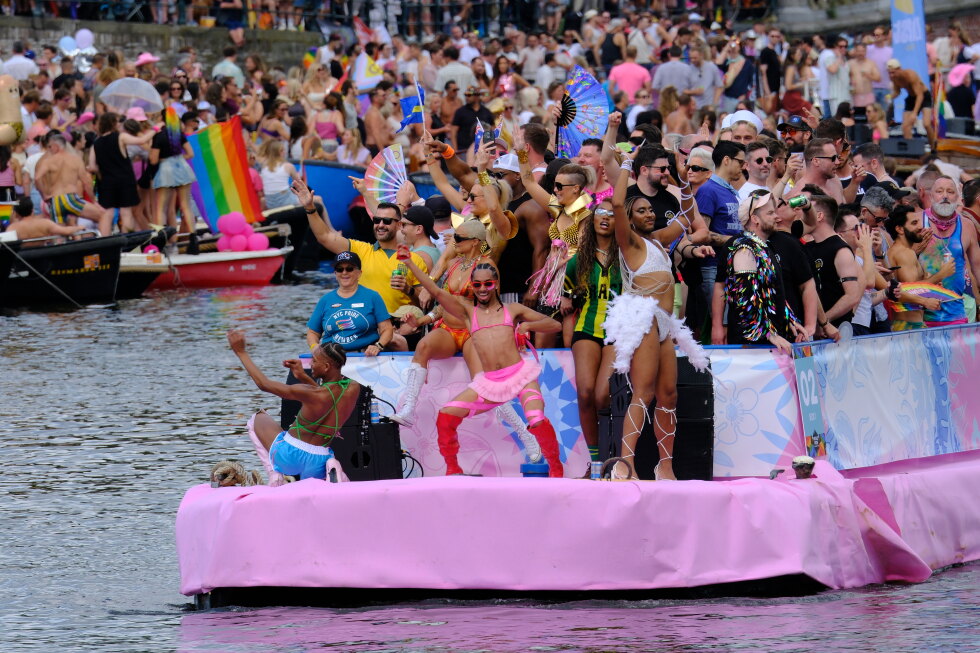
On a recent Saturday in the Dutch capital, hundreds of thousands of spectators packed the banks of Amsterdam’s iconic canals to cheer on the city’s legendary annual Pride canal boat parade, the centerpiece of this year’s combined World Pride celebration. The high-spirited event unfolded just seven days after a deadly extremist attack targeting a Pride gathering in Berlin left one attendee dead and 29 others wounded, prompting stepped-up security measures across major European Pride events this year.
Among the 80 vibrantly decorated vessels taking part in the floating procession, one boat carried openly gay Dutch Deputy Prime Minister Rob Jetten. Clad in a crisp white button-down, a black life vest and a gold statement necklace, Jetten waved steadily to cheering crowds lining the waterway as pulsing techno music echoed from speakers along the parade route, joining participants in marking the global LGBTQ+ rights celebration.
The Berlin attack, which authorities have classified as an Islamic extremist act, unfolded when 30-year-old suspect Abdul Ballout allegedly drove a van into a crowd gathered near the city’s Pride event last Saturday, before attacking additional people with a machete. The following day, Ballout was shot and killed by police during an arrest confrontation in a Berlin suburb. German prosecutors later confirmed the suspect had a documented history of attempting to travel to join the militant Islamic State group.
In response to the attack, Amsterdam officials moved quickly to implement enhanced security protocols for the city’s World Pride events, while aiming to minimize disruption to attendees. As the parade kicked off, uniformed officers patrolled the canals aboard marked motorboats, and a police helicopter maintained a constant overhead patrol. The caution extended across Germany as well: the same day as Amsterdam’s parade, Hamburg held one of Germany’s largest annual Pride processions with doubled police staffing compared to 2023, with organizers projecting a turnout of roughly 250,000 attendees.
For many visitors and participants, the decision to attend the Amsterdam event in the wake of violence was an intentional act of solidarity. Rod Lugtenburg, a 55-year-old tourist from Toronto who traveled specifically for World Pride, stood on Amsterdam’s historic Skinny Bridge wearing a rainbow-adorned maple leaf T-shirt as the boats passed. “For me, it’s about acceptance, being able to be who you are,” he said. “I have Dutch heritage and I have always loved the fact that the Dutch have been leading the way” in advancing acceptance and legal protections for the LGBTQ+ community, he added, noting “And Canada is right behind them, so I’m very proud.”
Despite the Netherlands’ long-held global reputation as a leading haven of tolerance for LGBTQ+ people, the joyful celebration unfolded against a troubling backdrop: a steady rise in reported verbal and physical attacks targeting community members across the country. Just one day before the parade, an Amsterdam court convicted a man of using hate speech at a local preliminary Pride event earlier that week, sentencing him to 40 hours of community service.
Participants in the parade spanned public and private groups, including official vessels from Dutch government ministries, national military and law enforcement agencies, alongside dozens of LGBTQ+ advocacy organizations and social clubs. The nation’s oldest LGBTQ+ rights group, COC Netherlands, marked its 80th anniversary of activism with a parade boat that carried a policy manifesto calling for continued progress on LGBTQ+ human rights across the country. The boat also featured a large portrait of Marsha P. Johnson, the iconic trans activist who played a central role in the 1969 Stonewall Uprising in New York City — the rebellion that ignited the modern global movement for queer equality.
This report included contributions from Associated Press correspondent Geir Moulson in Berlin.