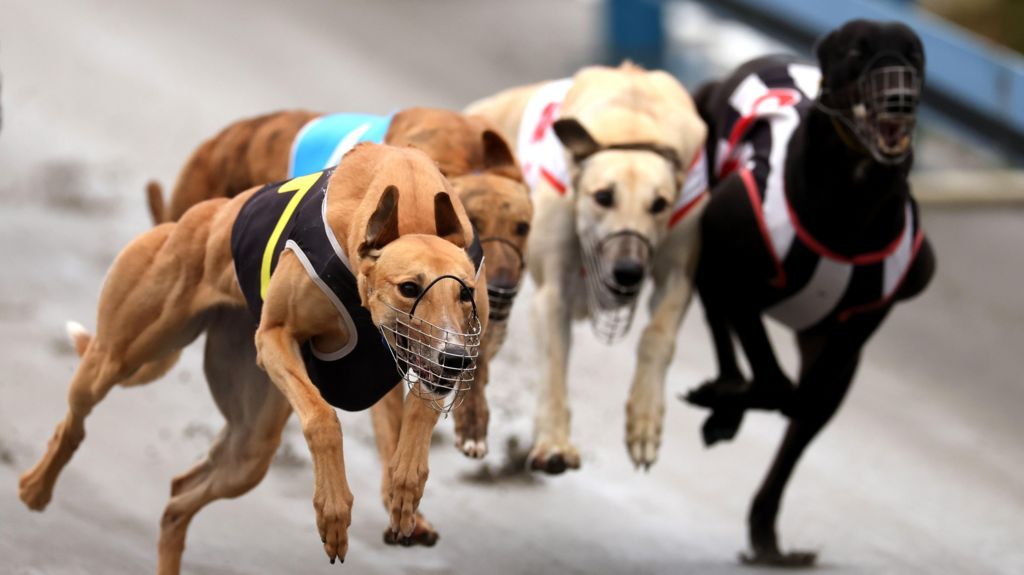
When New Zealand’s nationwide ban on commercial greyhound racing comes into force this Saturday, a little-known chapter of the industry’s final days will play out across the Tasman Sea: at least two chartered flights carrying up to 150 retired racing greyhounds are bound for eastern Australian states, where the sport remains largely legal, allowing the small number of remaining New Zealand trainers to continue their careers.
The ban, first announced in December 2024 and formally legislated this past April, mandates the full shutdown of greyhound racing across New Zealand, requiring roughly 1,400 dogs from the industry to be rehomed as pets over the coming years. Greyhound Racing New Zealand (GRNZ), the sport’s former governing body in the country, confirmed to the BBC that a small group of local trainers are choosing to relocate their dogs to Australia rather than retire their animals, keeping the racing practice alive for a subset of the national herd.
New Zealand’s decision to end greyhound racing followed three independent reviews conducted in 2013, 2017, and 2021. Racing Minister Winston Peters’ spokesperson explained that while the industry had made incremental improvements to animal welfare standards, the injury and mortality rates among racing greyhounds remained unacceptably high, meaning the sector had irrevocably “lost its social licence” to operate in the country. Peters’ office called the planned relocation of racing dogs to Australia “the last gasp actions of a dying industry,” adding that the vast majority of the 1,300 to 1,400 affected greyhounds will be rehomed in New Zealand over the next two years, and the cross-border relocation of a small number of dogs is a one-time final event rather than an ongoing flow. GRNZ has disputed the government’s findings on welfare outcomes, with chief executive Edward Rennell insisting to the BBC that New Zealand greyhound racing already maintained the highest animal welfare standards of any professional racing code in the country.
Under current Australian import rules, all dogs entering the country from New Zealand are classified as companion animals and must undergo mandatory biosecurity screening for diseases including rabies. Australia’s Department of Agriculture, Fisheries and Forestry clarified to a Senate inquiry in June that import requirements are set based on biosecurity risk, regardless of the animal’s intended future use. The department declined to provide additional comment to the BBC for this report.
Rennell told the BBC that between 6 and 10 New Zealand trainers have expressed interest in relocating to Australia, noting that most New Zealand citizens do not require special visas to move and work in Australia. Final logistics for the chartered flights are set to be confirmed over the next two weeks, with GRNZ covering the full cost of air travel and owners and trainers responsible for all other relocation expenses. Rennell added that while the imported dogs will continue racing in Australia, their competitive edge is likely limited: New Zealand greyhound breeding operations largely paused immediately after the ban was announced 18 months ago, leaving the current generation of dogs less optimized for top-tier professional racing.
This is not the first wave of New Zealand racing greyhounds moving to Australia: officials confirmed an initial 80 greyhounds were exported to Queensland on a chartered flight back in April 2025, after the ban was formally passed into law. Simon Stout of Greyhounds Australasia told a Tasmanian parliamentary hearing this week that one relocated New Zealand trainer and their family were drawn to the “shining lights of the new facility” west of Brisbane.
GRNZ has identified existing kennel facilities across Queensland, New South Wales (NSW), and Victoria as potential destinations for the dogs. The Queensland Racing Integrity Commission confirmed it has been formally notified by GRNZ of the impending arrival of greyhounds and possible relocation of industry participants. Officials in NSW and Victoria stated they have not received notification of specific relocation plans in their jurisdictions, adding that greyhounds are legally permitted to cross jurisdictional borders for racing purposes within Australia.
Animal welfare advocates have raised sharp alarm over the relocation, noting that Australia already faces a widespread crisis placing retired racing greyhounds. Kylie Field, director of the Coalition for the Protection of Greyhounds, pointed out that New South Wales alone currently has more than 4,100 retired greyhounds waiting for permanent homes, and the Australian industry has already been sending thousands of retired dogs to the United States and Canada to ease domestic rehoming backlogs – more than 2,000 have been shipped overseas to date. Federal Greens Senator Mehreen Faruqi told the BBC she is deeply concerned about regulatory loopholes that allow the ongoing export of racing greyhounds into Australia, saying neither New Zealand nor Australian authorities have taken meaningful action to address the welfare risks.
Australia’s greyhound racing industry is vastly larger and more commercially valuable than New Zealand’s ever was: the latest Greyhounds Australasia data shows that the Queensland, NSW, and Victorian industries collectively generated nearly A$2 billion in revenue in 2022-2023, dwarfing New Zealand’s peak total of NZ$147 million. Kiwi gamblers are still legally permitted to place bets on Australian greyhound racing even after the domestic ban takes effect. Currently, greyhound racing is only banned in the Australian Capital Territory, and Tasmania has passed legislation to phase out the sport entirely. Globally, Scotland and Wales outlawed commercial greyhound racing earlier this year, and most U.S. states have banned the practice, leaving just two active tracks in West Virginia.