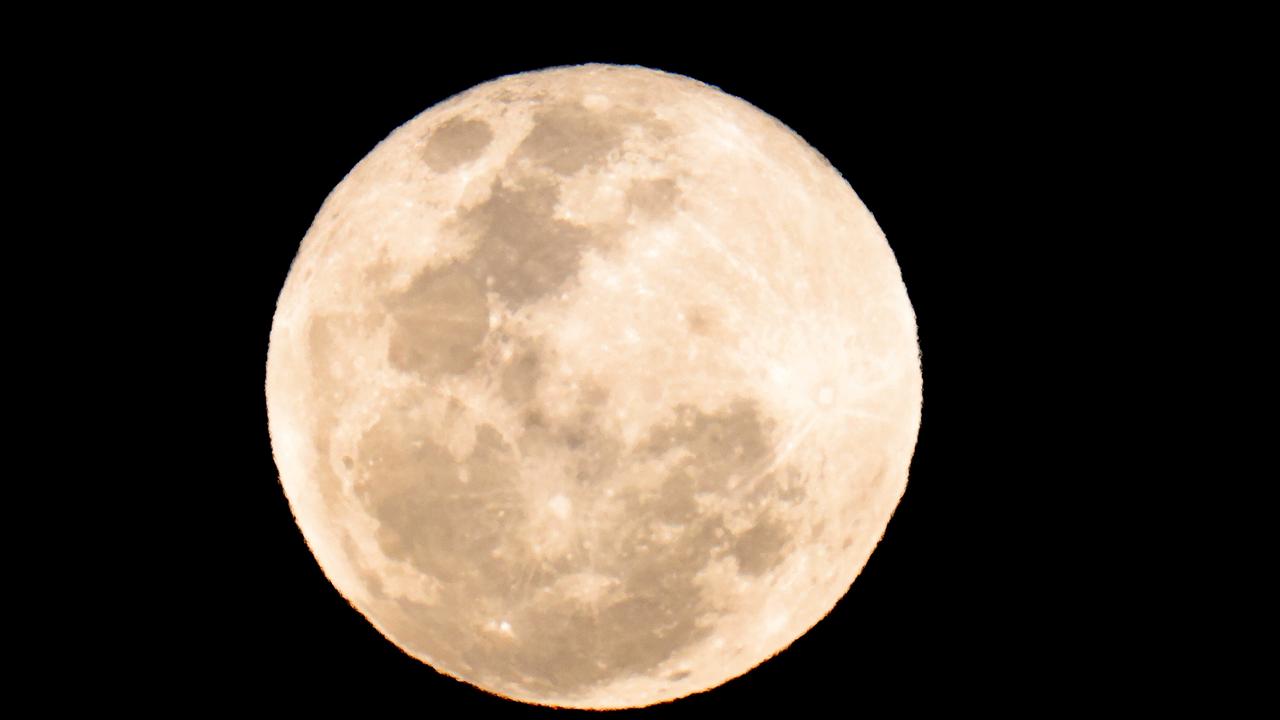
Astronomy enthusiasts across Australia are gearing up for a rare celestial treat this week, as a distinctive full buck moon — classified as a micro moon that will outshine two active meteor showers — prepares to light up southern hemisphere skies this Thursday.
This July full moon carries unique orbital characteristics that set it apart from other full lunar events in 2024. Unlike supermoons that occur when a full moon aligns with its closest approach to Earth, this full moon coincides nearly with apogee, the farthest point in the moon’s elliptical orbit around our planet. This positioning makes it a micro moon, and it will also reach the second-highest peak in the night sky of any full moon this year, a quirk of its seasonal alignment.
Visibility timelines vary slightly across Australia’s southern and eastern states, with the micro moon set to become visible from approximately 4:45 pm AEST in Tasmania, the Australian Capital Territory, Victoria and New South Wales. Dr. Laura Driessen, a postdoctoral researcher and science communicator at the Sydney Institute for Astronomy, shared key insights to help stargazers maximize their viewing experience.
“The moon’s orbit around Earth is not a perfect circle — it’s slightly oval, so the farthest point from our planet is called apogee,” Driessen explained. “This is a full moon that occurs when the moon is at its most distant from Earth, creating the micro moon effect.”
Driessen noted that the buck moon’s intense brightness will overpower the faint streaks of two meteor showers active this week, making the lunar event the main attraction for skywatchers. For optimal viewing, she recommends that enthusiasts travel away from the bright artificial light pollution of major urban centers to darker, open rural areas. “A clear night sky is the biggest factor for good viewing,” she said. “In Australian winter, the air tends to be drier than in other seasons, which actually works in our favor, creating crisper, clearer viewing conditions.”
The name “buck moon” has its origins in Indigenous North American naming traditions, coined to mark the time of year when young male deer begin growing new antlers. Though the name originated on the other side of the globe, it has been widely adopted in modern astronomy calendars used by Australian skywatchers. After this week’s event, the next full moon will peak in late August, and it will carry the name Sturgeon Moon, another traditional North American naming convention tied to seasonal fishing patterns.