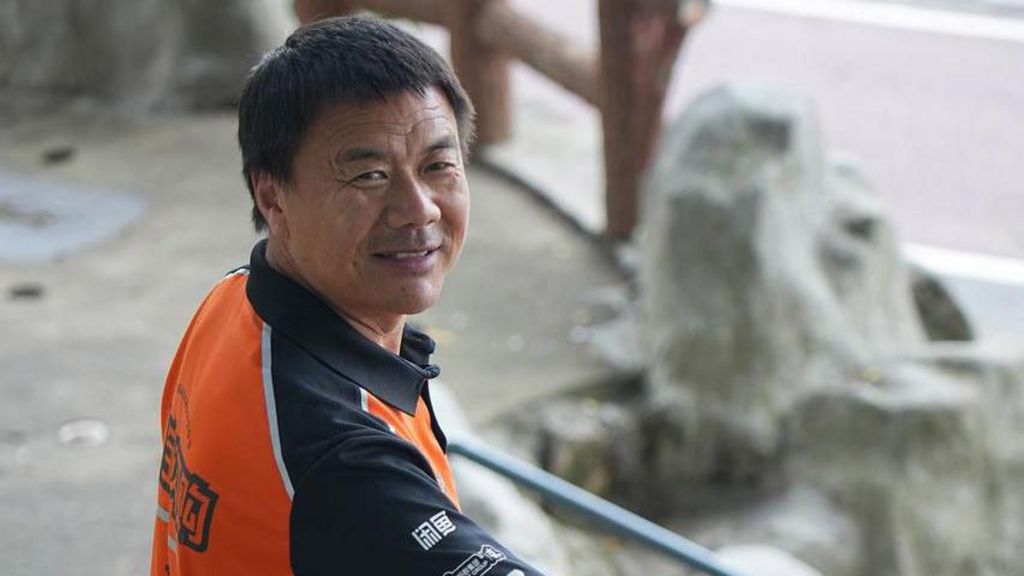
For years, 56-year-old Wang Jibing balanced long, chaotic shifts delivering food across Chinese cities with a quiet, lifelong passion: writing poetry. Many of his verses were scribbled in fragments on scrap paper, jotted down between waiting for restaurant orders and rushing to drop off meals to customers. Now, this body of work rooted in the everyday reality of gig work has earned him one of China’s most prestigious literary recognitions: the Lu Xun Literary Prize.
Wang’s award-winning collection, *Low Flight*, draws its inspiration directly from the daily struggles and quiet resilience of fellow delivery riders. The title itself carries a profound, unassuming philosophy—one line from the collection reads, “Who says spreading your wings means flying high? Flying low is also flying.” It is a sentiment that mirrors Wang’s own life trajectory, shaped by decades of working odd, manual jobs to make ends meet.
Born in eastern China’s Jiangsu province, Wang left school as a teenager after his family could no longer afford tuition. Over the following decades, he bounced between a wide range of blue-collar roles: he worked on construction sites, collected recyclable waste, ran a small street stall, and eventually took up food delivery in 2019. Through every unstable season of work, however, his love of reading and writing never faded. For more than a decade, he quietly shared his original poems and personal essays on Chinese social media platforms, building a small but loyal following long before he entered the national spotlight.
Wang’s viral breakthrough came in 2022, when his poem *Man in a Hurry* spread rapidly across Chinese social media. The verse was inspired by a 2019 delivery mishap, where Wang spent hours stuck trying to find a customer who had entered an incorrect address—an experience familiar to millions of gig workers across the country. The relatable, raw emotion of the poem resonated with online audiences, turning Wang from a little-known amateur writer into a national literary curiosity. In 2023, he published his first full collection, *Man in a Hurry: Poems of a Food Delivery Rider*, cementing his reputation as a working-class voice in Chinese literature.
When news of his Lu Xun Literary Prize win broke on July 15, Wang told Chinese state outlet the Global Times that he had held his breath in nervous anticipation ahead of the announcement. The sudden flood of media attention that followed the win has brought unexpected mental pressure, he added. Despite this new acclaim, Wang shows no signs of leaving his delivery route: he plans to keep working until he turns 60, he says. “Financially I don’t need this job to make a living, but I love the vibe of the work and it keeps me fit,” Wang told the Global Times. “I want a down-to-earth life and the award will never change who I am.”
Unlike Wang’s first collection, which centered his own experiences, *Low Flight*—published in 2024—grew out of extensive interviews and surveys Wang conducted with roughly 200 fellow delivery riders. The collection offers an unfiltered, on-the-ground look at the pressures facing workers in China’s massive gig economy, a sector that employs tens of millions of people.
Wang’s win is part of a growing, widely celebrated trend in Chinese literary culture: working-class and blue-collar writers gaining mainstream recognition for works that center their own lived experiences. In 2017, an autobiographical essay by migrant worker Fan Yusu titled *I am Fan Yusu* went viral across Chinese social media, drawing millions of readers with its unflinching account of personal struggle, and forcing Fan to temporarily leave her home to escape a deluge of media requests. More recently, former courier Hu Anyan’s 2023 memoir *I Deliver Parcels in Beijing* became a surprise national bestseller, attracting international attention and being published in English translation last year.
The Lu Xun Literary Prize, named for the writer widely regarded as the father of modern Chinese literature, is one of the highest honors a Chinese writer can receive. While the exact monetary value of the award is not publicly disclosed, the prize was set at 100,000 Chinese yuan (around $14,800) as of 2014. Lu Xun, a towering figure of 20th-century Chinese literature, was known for his incisive, satirical works that critiqued social inequality and traditional power structures. His work has experienced a renewed cultural resonance among young Chinese people in recent years: a few years ago, Kong Yiji, an out-of-work scholar character from one of Lu Xun’s short stories, became a viral meme representing the disillusionment of young Chinese graduates struggling to find stable work.
For Wang and a growing community of working-class writers, however, the recognition of their work marks a larger shift: a growing appetite for stories that center the lives of ordinary people working at every level of China’s economy, proving that literary inspiration can thrive even in the most fast-paced, unassuming of daily environments.