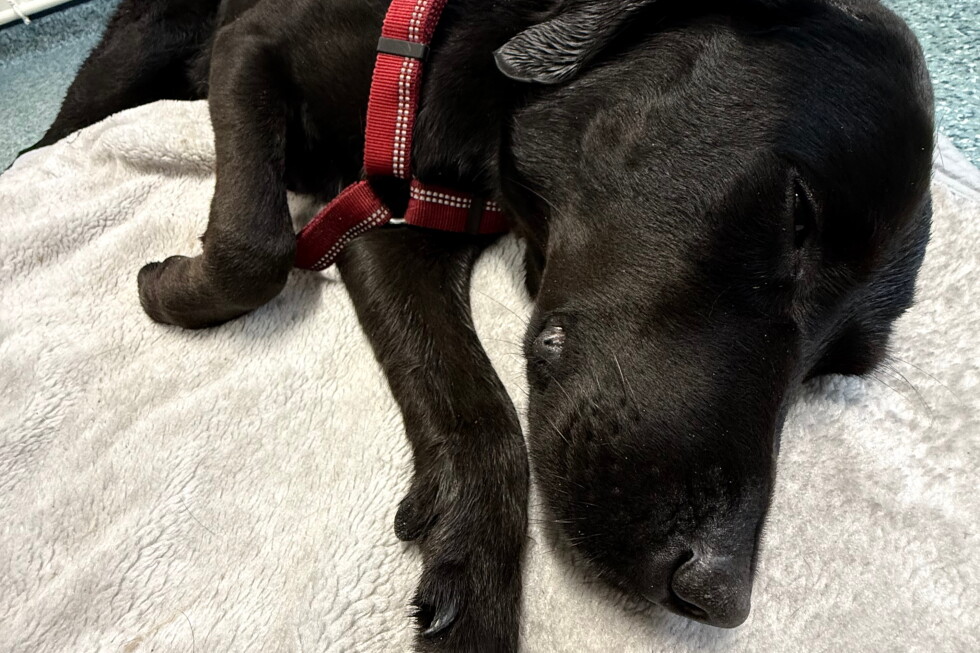
On a July hike up Britain’s tallest peak, Ben Nevis, an experienced dog trainer faced every pet owner’s worst nightmare when her 5-year-old black Labrador retriever, Tokyo, suddenly became incapacitated mid-climb – a crisis later traced back to accidental cannabis ingestion that has become a growing public safety concern for animals across the U.K. and U.S.
Christina Bluhme, a canine professional with 25 years of industry experience, had hiked for more than three hours and was nearing the 1,345-meter summit alongside her son and two dogs when Tokyo began showing alarming symptoms. The dog swayed uncontrollably as if heavily intoxicated, before quickly losing the ability to stand or walk at all. What started as a clear, pleasant hiking day shifted abruptly to cold, rainy conditions, with temperatures plummeting to just 5 degrees Celsius, turning the already steep rocky trail into a hazardous slippery slope.
Bluhme immediately called off the summit attempt and alerted emergency services for help, initially unsure what had caused her beloved dog’s sudden collapse. Police initially indicated they were unable to dispatch a dedicated rescue team, but fortune intervened: an all-volunteer crew from the Lochaber Mountain Rescue Team was already descending the peak after completing a separate mission to assist an injured hiker airlifted by helicopter. The team quickly loaded the 25-kilogram dog into a rescue stretcher and navigated the treacherous terrain at speed, reaching the trailhead in roughly an hour. Bluhme later recalled being stunned by the team’s agility and urgency, saying “they were almost running” down the mountain, with her clinging to the stretcher through the descent.
Veterinary staff from Crown Vets in nearby Fort William had been alerted ahead of time and were standing by when the group arrived. Initial assessments suspected a serious spinal injury, but a senior veterinarian narrowed the cause to a neurological toxin after observing Tokyo’s fluctuating consciousness. A consultation with a pet poison control center confirmed the diagnosis: all of Tokyo’s symptoms aligned perfectly with acute cannabis intoxication. After treatment with activated charcoal to absorb the toxin, the dog made a full recovery by the next morning, appearing completely back to normal as if no incident had occurred.
Bluhme, who traveled to the Scottish Highlands from her home in southern England, said she was still shaken by the experience despite Tokyo’s quick recovery. She noted the £1,000 (roughly $1,335) veterinary bill was well worth the cost to save her dog, calling the entire incident “very terrifying.”
Tokyo’s near-tragedy is far from an isolated case. While reports of cannabis toxicity in pets are climbing across the U.K., the problem is far more pronounced in the U.S., where recreational or medical marijuana has been legalized in a majority of states. In 2023, marijuana and other recreational drugs entered the American Society for the Prevention of Cruelty to Animals’ (ASPCA) top 10 list of the most common pet toxins for the first time. Data from the ASPCA Poison Control Center shows calls related to potential marijuana ingestion rose 10% year-over-year in 2022, and have increased nearly threefold over the past five years as legal access expands.