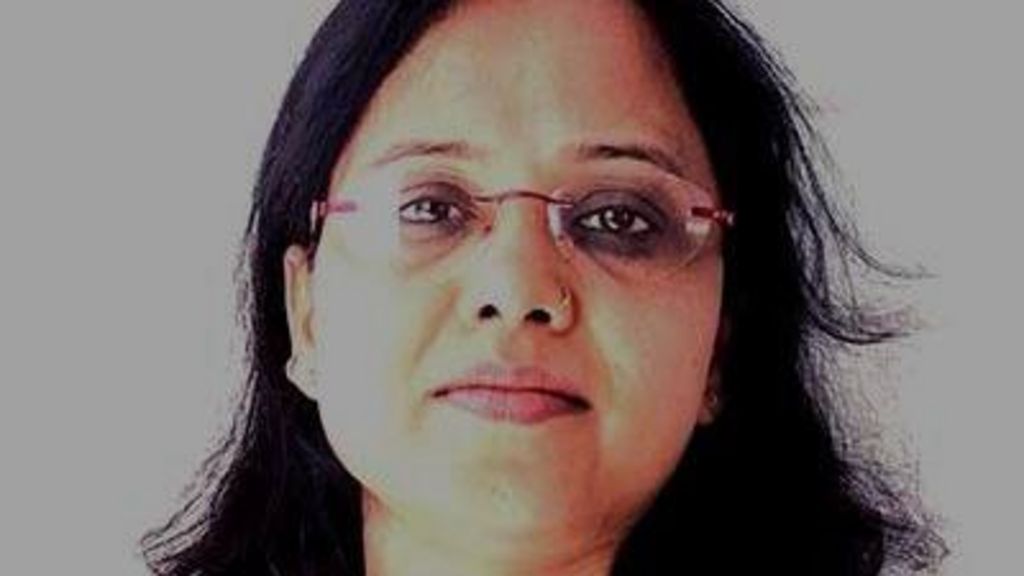
A Muslim judge in central India has been subjected to widespread online religious abuse, death threats and rape threats after issuing a life imprisonment verdict against 14 Hindu cow vigilantes convicted of a 2022 mob lynching. The targeted attacks have sparked national outrage over threats to judicial independence and the growing influence of communal rhetoric in the country’s legal system.
On June 12, Tabassum Khan, additional district and sessions judge in Madhya Pradesh state, delivered a guilty verdict on 14 men on charges including murder, attempted murder, rioting and wrongful confinement. The case stems from a fatal 2022 attack: 50-year-old Nazir Ahmad, a Muslim man, was intercepted by a mob of self-proclaimed ‘gau rakshaks’ (cow protectors) while transporting cattle at night. The mob dragged Ahmad and two companions from their vehicle, beat them brutally with sticks and rods over suspicions of cow smuggling. Ahmad died from his injuries, while his surviving companions testified to the violence in court. In her ruling, Khan explicitly categorized the killing as a clear act of mob lynching.
Almost immediately after the verdict was announced, unrest erupted. Family members of the convicted men gathered outside the courtroom to protest the ruling, blocking police convoys transporting the defendants to jail and claiming the men were wrongfully punished for ‘protecting cows’. What began as in-person protest quickly escalated into a coordinated online campaign of religiously charged hate targeting Khan personally.
Multiple videos shared across social media platforms feature Hindu right-wing influencers hurling communal slurs at Khan, issuing violent threats including public calls for her rape and murder. One video even threatened widespread bloodshed across India if the convicted men were not released within 10 days. As of this reporting, many of these threatening videos remain publicly accessible, having amassed thousands of likes and shares, with the perpetrators’ identities and social media accounts clearly visible in the content.
Mainstream right-wing media figures have also amplified the backlash. A leading anchor with Sudarshan News, a prominent right-wing Hindi news outlet, publicly expressed solidarity with the convicted men’s families, claiming the men had sacrificed everything to protect cows and urging viewers to mobilize in protest. Several major cow protection advocacy groups and Hindutva organizations have held large public demonstrations against the verdict across multiple states. On June 22, the Gau Raksha Parishad held a protest in Punjab where demonstrators burned an effigy of Khan and assaulted it in effigy. Three days later, the Rashtriya Bajrang Dal organized a parallel protest in Uttar Pradesh, demanding the immediate release of all 14 convicted men.
Critics across India’s legal community have emphasized that the attacks on Khan are not rooted in legitimate criticism of her legal reasoning, but are exclusively rooted in religious bigotry targeting her Muslim identity. Retired Supreme Court judge Markandey Katju highlighted this dangerous trend in a public post on X, noting that protesters and online abusers have sought to delegitimize Khan’s authority solely by reducing her professional identity to her religion.
“Her Muslim identity became the principal basis upon which the legitimacy of the judgement was questioned. This represented a dangerous inversion of justice. Judicial decisions are meant to be evaluated through legal reasoning, not through the religious identity of the individual delivering them,” Katju wrote. In subsequent comments, Katju shared that Khan had reached out to him to say the relentless abuse had left her traumatized, leading her to question whether she had done something wrong by upholding the law.
Leading Indian judicial bodies have rallied to Khan’s defense, condemning the threats as an attack on the foundation of democratic governance. The Supreme Court Advocates-on-Record Association (SCAORA) and the Supreme Court Bar Association (SCBA) have both issued formal statements denouncing the harassment and calling for immediate legal action against the perpetrators. Vikas Singh, president of the SCBA, told reporters that threats against sitting judges represent an existential threat to democracy itself.
“If we allow this to happen, no judge will be able to dispense justice. In a democracy, a judge must be able to perform their duty without fear or favour,” Singh said.
Local law enforcement officials confirmed that they have registered a criminal case under relevant sections of the Indian Penal Code, with two arrests made so far in connection with the threats. State cyber cells are currently tracing all individuals who have shared the inflammatory videos and are conducting ongoing monitoring of social media platforms to remove additional hateful content.
Still, prominent legal advocates argue that authorities have not done enough to guarantee Khan’s safety. Senior Supreme Court advocate Sanjay Hegde pointed to a recent precedent involving another targeted judge to argue that equal protection must be extended regardless of judicial rank. In 2024, former Bombay High Court judge Gautam Patel and his family received constant threats for more than 10 months after delivering a verdict in a Muslim community succession dispute. After three judicial organizations filed a public interest litigation, the Bombay High Court ordered the Maharashtra government to provide enhanced security to Patel, ordered the Mumbai police commissioner to supervise the investigation and demanded regular status updates.
“If a retired judge of a high court deserves state protection and judicial supervision of his case, so does a serving sessions judge in a district court. The principle cannot bend to rank. It cannot bend to religion. It cannot bend to the political weather around a particular verdict,” Hegde wrote in a piece for legal news outlet Live Law.
In recent weeks, the Madhya Pradesh High Court has stepped in to escalate the response, ordering senior state officials to submit a formal explanation of the steps they have taken to protect Khan and identify the organizers of the hate campaign. The court has also issued a formal order requiring Khan’s enhanced police protection to continue indefinitely. The case has reignited longstanding national debates over the violence of cow vigilantism, the targeting of Muslim public figures, and the protection of judicial independence in an increasingly polarized political climate.