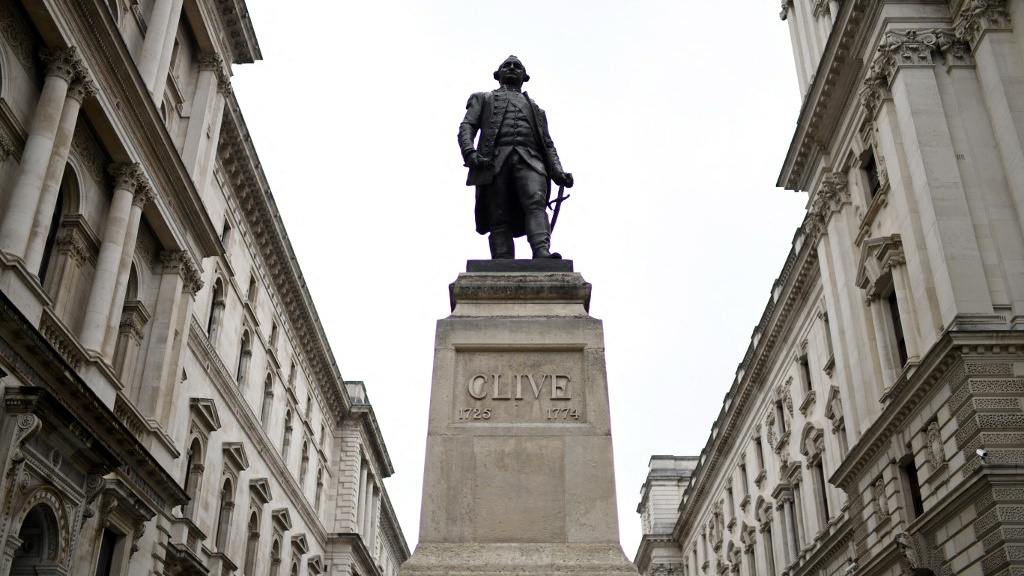
More than 130 years ago, Indian-born British author Rudyard Kipling famously asked, “And what should they know of England who only England know?” A staunch advocate of the British Empire, Kipling argued that British identity could not be separated from the project of imperial expansion that shaped the nation’s global standing for centuries. He chided ordinary Britons for their lack of awareness and engagement with the empire that defined their country’s role on the world stage. That question remains as relevant today as it was in 1891, as a fierce new debate over the teaching of imperial history in British secondary schools has reignited across public and political spheres.
The latest exchange began on a recent podcast hosted by Zack Polanski, leader of the UK’s left-wing Green Party. Reflecting on his own secondary education, Polanski noted that his history curriculum focused heavily on the Tudors, Roman occupation of Britain, and the Second World War, with barely any mention of the British Empire or its centuries of colonial expansion. “Maybe schools have got better but I imagine we’re still not there,” he said.
Joining Polanski as a guest was prominent historian William Dalrymple, who pushed further on the gap in modern history education. Dalrymple acknowledged that optional A-level modules covering the British Empire do exist for secondary students, but stressed these are never part of the mandatory core curriculum. Few teachers feel properly trained to teach the topic, he added, leaving imperial history as a niche subject studied only by a small minority of pupils. “Most British people are entirely ignorant about what is, for better or worse, the most important thing Britain ever did,” Dalrymple argued. He specifically called out the complete absence of any teaching on the British Mandate in Palestine, Britain’s role in the events leading to the 1948 Nakba, and the expulsion of more than 750,000 Palestinians from their ancestral lands.
The comments quickly drew pushback from conservative political and media circles. Former Conservative Education Secretary Michael Gove, currently editor of *The Spectator*, intervened on social media, dismissing the critique as the complaints of two privately educated men reflecting on their own outdated school experiences. Gove claimed that the current national curriculum for state-funded schools already covers the British Empire extensively. Max Jeffery, a writer-at-large for *The Spectator*, expanded on this defense, arguing that for 13 years, the national curriculum has required pupils in Years 7 through 9 to study “Britain’s ideas, political power, industry and Empire.” In a separate piece for the outlet UnHerd, writer Samuel Rubinstein added that the empire has long been part of the national history curriculum, and accused Polanski and Dalrymple of pushing for a national “exercise in self-flagellation” over Britain’s past.
But a close look at the structure of Britain’s education system and available curriculum data tells a more complicated story. While Gove and other critics point to the national curriculum as proof of comprehensive imperial history teaching, the national curriculum only applies to the small share of secondary schools in England controlled by local authorities. Today, 85 percent of English secondary schools are academies or free schools, which are not required to follow the national curriculum – and private schools are also exempt. Even for schools that do follow the national curriculum for Key Stages 1 through 3, content covering the empire is listed as a “non-statutory example,” meaning it is optional rather than required. The only mandatory history topic in the entire curriculum is the Holocaust.
Further data shows that even at the GCSE and A-level stages, where optional imperial history modules are offered by exam boards, very few students actually engage with the topic. Only 36 percent of teachers who cover the British Empire do so at the GCSE level, and that number drops to just 23 percent at the A-level stage. Just 9.6 percent of all GCSE history entries include a module focused on migration or empire, and all units on the empire offered by major UK exam boards are optional rather than mandatory. Even the module that focuses on imperial legacies, offered by exam board Edexcel, is titled “Migrants in Britain” and centers the effects of empire rather than the structure and impact of the imperial project itself.
The gap between official claims and on-the-ground teaching is backed by major national research. A large-scale study published earlier this year, led by researchers from the University of Oxford and University College London, found that only 16 percent of teachers believe Britain’s imperial past is taught well enough in UK schools. This gap exists despite overwhelming agreement on the importance of the topic: 94 percent of teachers and 79 percent of surveyed students said all young people should be taught about the British Empire. A recent government curriculum review recommended wider teaching of “History’s inherent diversity” through analysis of a broader range of sources, but did not specifically name the empire as a required topic.
Dalrymple, who is based in India, told Middle East Eye that the lack of education creates tangible gaps in British public understanding of global perceptions of the country. “There are more modules out there than twenty years ago, but it’s still overwhelmingly true that most people leave school without any clear idea about how the world sees us,” he said. “Living in India, I see Brits coming out, including high commissioners, who have no perception of how we are regarded and are very surprised to discover that the general impression of the empire is very different to how it’s laid out in their own education.”
Gurminder Bhambra, a sociologist at the University of Sussex who specializes in colonialism and modern British identity, argues that imperial history is foundational to understanding modern Britain itself. “The history of Britain as a modern nation cannot be understood separate to its history of colonisation – from the wealth that contributed to its development and the peoples that call it home, every aspect of Britain has been significantly shaped by empire,” she explained. “The failure to teach this history properly is what enables some to deny the citizenship claims of those that they deem other and, perhaps more perniciously, denies the very basis on which they make such claims.”
The gap in teaching is particularly stark when it comes to the legacy of the British Empire in the Middle East, specifically the lead-up to the ongoing Israeli-Palestinian conflict. After the 1917 Balfour Declaration, Britain governed Palestine under a League of Nations mandate for three decades, facilitating large-scale Jewish immigration amid rising persecution in Europe before abruptly withdrawing in 1948. The British withdrawal paved the way for the establishment of the state of Israel and the Nakba, the displacement of more than 750,000 Palestinians that remains at the core of the modern conflict. Last year, then-Foreign Secretary David Lammy acknowledged the historical injustice of the unfulfilled promise of equal rights for Palestinians in the Balfour Declaration, when announcing the UK government’s intention to recognize Palestinian statehood. But almost no British secondary students learn this history in school.
Data from 2020 shows that less than 2 percent of GCSE history students in England study any module covering the Middle East. In 2023, only 44 UK schools taught the Israeli-Palestinian conflict at the GCSE level, and just 0.5 percent of all GCSE history entries that year were for the only module on the topic offered by any major exam board. “The Nakba is not taught in British schools, and in many British textbooks a lie is told,” Dalrymple said. “I remember my primary school geography textbooks talked about Israelis making the deserts bloom. The fact that an entire people there were shunted out because the British did nothing to protect them, and indeed created the situation whereby they could be evicted, is unknown.” This ignorance, he added, shapes modern public and political discourse: “The results of this can be seen in speeches in parliament, and the attitudes of newsreaders. MPs and presenters simply do not know who these people in Gaza are and why they would have cause for complaint.”
Public opinion on how the empire should be taught is clear: a 2025 poll found that 78 percent of UK adults believe teaching should include a balanced mix of positive and negative aspects of the British Empire to give pupils a comprehensive view. Dalrymple pushes back against claims that calls for more comprehensive teaching are rooted in a desire to force “woke guilt” on students. “No one’s asking for a ‘woke’ guilt trip, but for British people to have the tools to understand the charges being levelled against them,” he said. “They shouldn’t be taught to hate their country or have an entirely negative view of their ancestry, but it’s important to understand what the debates are. The idea that the empire was a force for good is simply not how most of the world understands it.”
As modern Britain continues to evolve, with a large share of the population descended from immigrants who arrived after the collapse of the empire in the mid-20th century, the question of how to teach imperial history remains deeply tied to the question of national identity. As 19th century imperial commentator John Robert Seeley described it, the British empire was the “extension of the English nationality into new lands,” and modern historian Robert JC Young has framed Englishness as a global identity shaped by imperial expansion. As current data makes clear, this central pillar of British history and national identity remains largely untaught in UK secondary schools – even as overwhelming majorities of teachers and students agree it deserves a place in the curriculum.