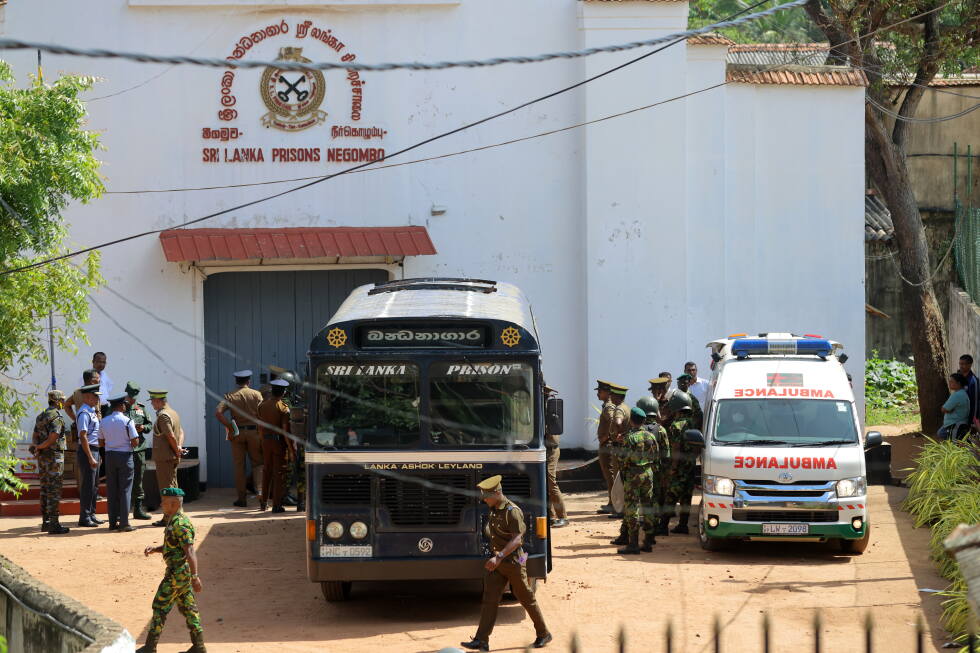
A violent confrontation inside a Sri Lankan correctional facility has ended in one of the deadliest prison incidents in the country’s recent history, with the official death toll rising to 26 by Tuesday, according to government updates. The tragedy unfolded at the Negombo Prison, located roughly 35 kilometers north of the island nation’s capital, Colombo, and has left authorities grappling to uncover what triggered the widespread unrest.
The chaos first began on Sunday as a dispute between rival groups of incarcerated people, before escalating into full-scale violence on Monday when inmates turned on responding prison guards, Justice Minister Harshana Nanayakkara confirmed to parliament. During the height of the unrest, inmates attempted to breach the prison’s main entrance to escape, but security personnel successfully blocked the breakthrough attempt, officials added.
By Tuesday’s update, 19 inmates and seven correctional officers were confirmed dead, while another 77 people — 23 prison staff and 54 incarcerated individuals — remain hospitalized for injuries sustained during the clashes. Nanayakkara labeled the event an unambiguous “tragic incident,” though he declined to share detailed specifics on the causes of death or the nature of the wounds suffered by those impacted.
Officials have since confirmed that the initial conflict broke out between two rival gangs tied to the illegal drug trade operating inside the prison. By Monday evening, order had been partially restored, and the inmates identified as leaders of the violence were transferred to other correctional facilities across the country to prevent further unrest.
In response to the deadly incident, the Sri Lankan government has launched three parallel independent investigations to get to the root of the clash. Alongside an internal administrative review by the national prison department and a formal criminal probe led by national police, a special independent committee headed by a retired judge will also conduct a separate inquiry. Nanayakkara told lawmakers that the probes will examine a range of potential contributing factors, including possible security failures, the role of severe overcrowding that has plagued Sri Lanka’s prison system for years, and systemic gaps that allowed the violence to escalate to such a deadly scale. The overarching goal of the investigations, he added, is to implement reforms that will prevent similar tragedies from occurring in the future.
Footage and on-the-ground reporting from Tuesday showed hundreds of distraught family members gathering outside both the Negombo Prison and local hospitals, crying and pleading with officials for updated information on the status of their incarcerated loved ones. Many have been left waiting for hours with no clear updates, amplifying grief and anxiety among the affected community.
In the wake of the clash, security around the Negombo Prison has been significantly bolstered. Authorities have deployed additional army troops to the site, along with armored vehicles, to secure the facility and prevent any further outbreaks of violence.
Longstanding systemic overcrowding has been a well-documented crisis in Sri Lanka’s prison system for decades. Current official data shows the system holds more than 39,000 incarcerated people, despite having a designed maximum capacity of just 10,000. Correctional reform advocates have repeatedly warned that this severe overcrowding elevates the risk of gang violence, the spread of contraband including illegal drugs, and violent clashes between inmates and security staff.