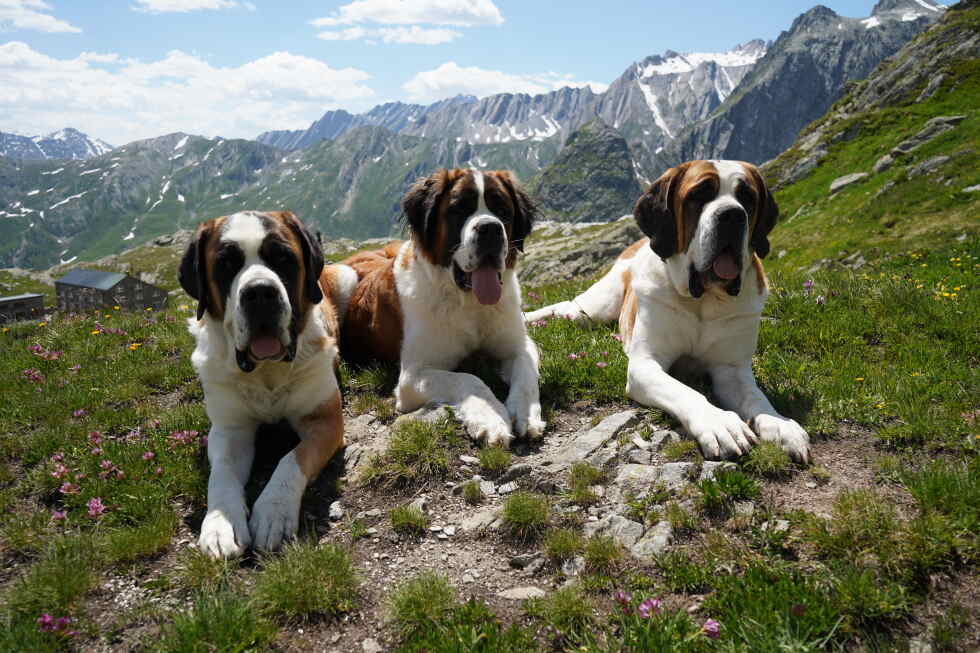
High in the snow-capped Swiss Alps, along the ancient Great St. Bernard Pass that straddles the border between Switzerland and Italy, the iconic St. Bernard dogs still tread the same mountain trails their ancestors have patrolled for centuries. These paths once carried them to find travelers trapped and buried under avalanche snow, a legacy that now lives on in a brand-new interactive museum dedicated entirely to the breed. This summer marks the first anniversary of Barryland, the world’s only museum and breeding center focused exclusively on St. Bernards, located in the Swiss valley town of Martigny.
The new facility opened last year after the breed’s historic collection outgrew its cramped original location, and it has already drawn far more visitors than organizers anticipated. Over 130,000 people have walked through Barryland’s doors in its first 12 months of operation, drawn by the enduring global fascination with Switzerland’s most famous national dog. Unlike traditional static museums, Barryland offers immersive, hands-on experiences: guests can observe live grooming sessions and canine physiotherapy sessions, hike the treacherous Great St. Bernard Pass via cutting-edge augmented reality simulations, and dive into centuries of the breed’s intertwined history with Alpine travel and rescue.
Mélanie Glassey-Roth, director of Barryland, explained that growing public demand for deeper insight into the breed’s history and cultural heritage drove the creation of the expanded, purpose-built center. “We have a lot of demand and interest for this breed and this whole history and patrimony,” she said. “So we decided to create a new park, a big one.”
The story of St. Bernards is deeply tied to the perils of the Great St. Bernard Pass, which sits 2,469 meters (8,100 feet) above sea level, making it one of Switzerland’s highest and most dangerous alpine crossing routes. The pass has welcomed travelers for more than a thousand years, ever since Saint Bernard de Montjoux, an archdeacon from Aosta, founded the Great St. Bernard Hospice there in 1050 to offer shelter to pilgrims and merchants braving the harsh, unpredictable mountain conditions.
Large working dogs were first brought to the pass in the mid-17th century, initially serving as guard dogs for the hospice before gradually becoming beloved companions. It did not take long for the breed’s unique skills to emerge: St. Bernards developed an extraordinary natural instinct to locate hikers who had become lost in blinding snow and thick alpine fog, turning them into legendary lifesavers that were uniquely suited to the harsh mountain environment. The breed took its name from the pass and the historic hospice, and its reputation spread across the whole of Europe in the early 19th century, carried by soldiers of Napoleon Bonaparte after his army crossed the pass on their military campaign.
The most famous of all St. Bernard rescue dogs was Barry the First, who served at the hospice between 1800 and 1812 and is widely credited with saving more than 40 lives over his career. Today, the Barry Foundation, which manages the breed’s conservation and breeding program, honors his legacy by always keeping a male dog named Barry as part of their pack.
Currently, 21 dedicated keepers care for 32 St. Bernards at the foundation’s facilities, with roughly 20 pedigree St. Bernard puppies born each year to preserve the pure line. While the breed’s legacy of mountain rescue remains central to its identity, modern rescue practices have phased St. Bernards out of active frontline rescue work: their large size makes them impossible to transport via the rescue helicopters that now respond to alpine emergencies, and smaller agile breeds such as Australian shepherds have taken over the role. To preserve the centuries-old tradition, however, a small group of St. Bernards still resides at the pass year-round, keeping the connection between the breed and its historic home alive.
Each year, the foundation’s St. Bernards consume roughly 10 metric tons (22,046 pounds) of dry dog food to sustain their large frames. In the summer months, the dogs roam and play in the lingering snowfields of the high alpine pass, before traveling 40 kilometers (25 miles) down the winding mountain roads back to their climate-controlled kennel at Barryland in Martigny for the winter.
Alexandra Piatti, one of the foundation’s full-time keepers, explained that her team accompanies every St. Bernard through every stage of their lives. “We get to see them born, and we get to see them grow up, and then become mothers, and we get to accompany them through all those different challenges in life,” she said. “We are their guide, so we can help them with socialization and educate them, and really be by their side for their whole lives.”
Beyond conservation and heritage work, the foundation’s St. Bernards also serve an important modern role as therapy and community outreach animals. In 2025 alone, the dogs completed 609 community visits to hospitals, senior care homes, schools, and prisons across Switzerland, bringing comfort and joy to thousands of people.
For keeper Déborah Dini, the work balances a deep respect for the breed’s centuries-old legacy with genuine affection for the dogs in her care. “We perpetuate the tradition,” she said. “We take care of them. We love them.”