Thirteen years after the 2012 Delhi bus gang rape that shook the world and forced India to overhaul its sexual assault laws, a new incident of comparable brutality has emerged from one of India’s most underdeveloped northern states, Bihar, reigniting long-simmering debates over systemic apathy toward gender-based violence across rural India.
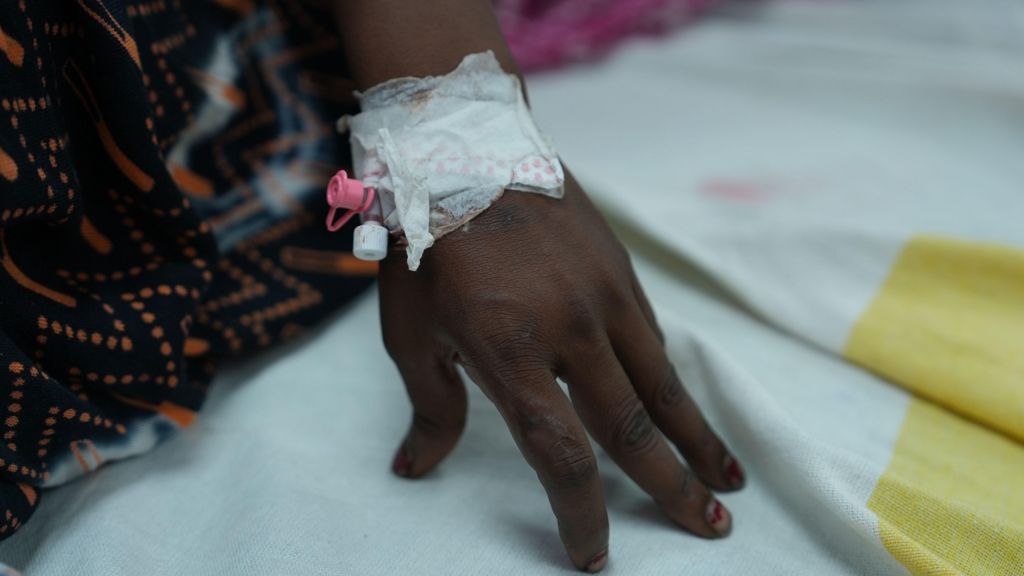
To protect the survivor’s identity in compliance with Indian law, the 28-year-old mother of four is being referred to as Soma, a pseudonym. Speaking to BBC Hindi from her hospital bed, Soma detailed the horrific attack that unfolded on the night of June 11 in her village in Begusarai district, a region officially classified as one of India’s most socially and economically backward.
On that night, Soma had stepped into the outdoor toilet attached to her family’s cramped one-room home — a space with no door, only a thin cloth curtain for privacy — when five men barged in. The attackers stripped her, bound her hands, gagged her to muffle her screams, and slashed her chest with a blade when she fought back, before gang-raping her and inserting foreign objects, including an empty bullet casing, into her body.
Trapped inside the home which the attackers had locked from the outside, Soma’s groans were initially mistaken for the sounds of a stray cat by her husband, an e-rickshaw driver. After growing suspicious, he called a neighbor to help break open the lock, and the pair discovered Soma’s battered, unconscious body.
What followed the attack, women’s rights campaigners say, is a familiar pattern of neglect and insensitivity that sexual assault survivors routinely face from police and medical institutions across rural India. When Soma’s husband carried his wife to the nearest police station three kilometers away, officers refused to register an official complaint and turned the couple away, telling them to seek medical care instead. The local police station head, Rajiv Kumar, has since been suspended by district authorities over confirmed charges of negligence, apathy, and insensitivity. An official First Information Report (FIR) was only registered two days after the attack, on June 13.
Access to proper medical care proved equally difficult in the immediate aftermath of the assault. A nearby private clinic turned the couple away, claiming it did not handle emergencies and had no on-duty physician. They were then directed to a government community health center, where Soma received only basic first aid before being referred to the district hospital.
Soma told the BBC that initial medical treatment at the district hospital was deeply inadequate, recalling that even after she regained consciousness on June 12 and explicitly told medical staff she had been gang-raped, staff dismissed her report. Civil Surgeon Ashok Kumar of Begusarai disputed this account, telling the BBC that staff were only informed of the gang rape on June 13, after which an immediate medical examination was conducted. Soma was discharged after the initial exam, but collapsed and lost consciousness again the next day, forcing her return to the hospital. It was only on June 18, after a village midwife alerted the family that a foreign object remained inside Soma’s body, that a spent bullet casing fell out, prompting a second, more thorough examination where doctors removed other remaining objects from her body. District authorities have confirmed that Soma is now in stable condition and recovering.
As of late June, Begusarai Superintendent of Police Maneesh (who uses a single name) confirmed that the official medical report has verified the sexual assault. Three of the five attackers have been named, two have already been arrested, and a dedicated Special Investigation Team has been formed to launch manhunts for the remaining three accused. Police confirmed that several of the identified suspects have prior criminal records, and have filed formal charges of gang rape against them.
The horrific details of Soma’s attack have sent shockwaves across India, with countless public figures and activists drawing immediate comparisons to the 2012 Delhi gang rape, where a 23-year-old physiotherapy student was gang-raped and violated with objects on a public bus, later dying from her injuries. That 2012 case sparked global outcry and mass nationwide protests, pushing the Indian government to introduce harsher anti-rape legislation, including the provision of the death penalty for the most brutal cases. Four of the six convicted perpetrators were executed in 2020, one died in prison, and a minor offender was released after a three-year sentence in a youth reform facility.
Despite the legislative reforms and increased national attention on sexual violence that followed the 2012 attack, official data still records more than 30,000 rape cases across India every year, and activists say the vast majority of cases go unreported, with many never reaching public attention. Anti-rape campaigner Yogita Bhayana argues that India has failed to learn the lessons of the 2012 case, noting that the threat of harsh punishment has never filtered down to rural and marginalized communities, and society has grown desensitized to extreme brutality against women. “Such cases keep happening because the message has not percolated down to every last corner of India that rape can get them capital punishment. Fear has not been instilled in society,” Bhayana told the BBC. She added that Soma’s case only received national media attention because of the shocking detail of the bullet casing, but that Soma’s survival is a small positive in an otherwise devastating case.
Now recovering in the hospital, Soma says she is in constant pain and distracted by a steady stream of visits from journalists, politicians, and social workers. Her greatest worry remains for her four young children, who are currently staying with relatives 35 kilometers away from the hospital. “I am very worried about my children, they are so young,” she said. “I want to get back home to them soon.”