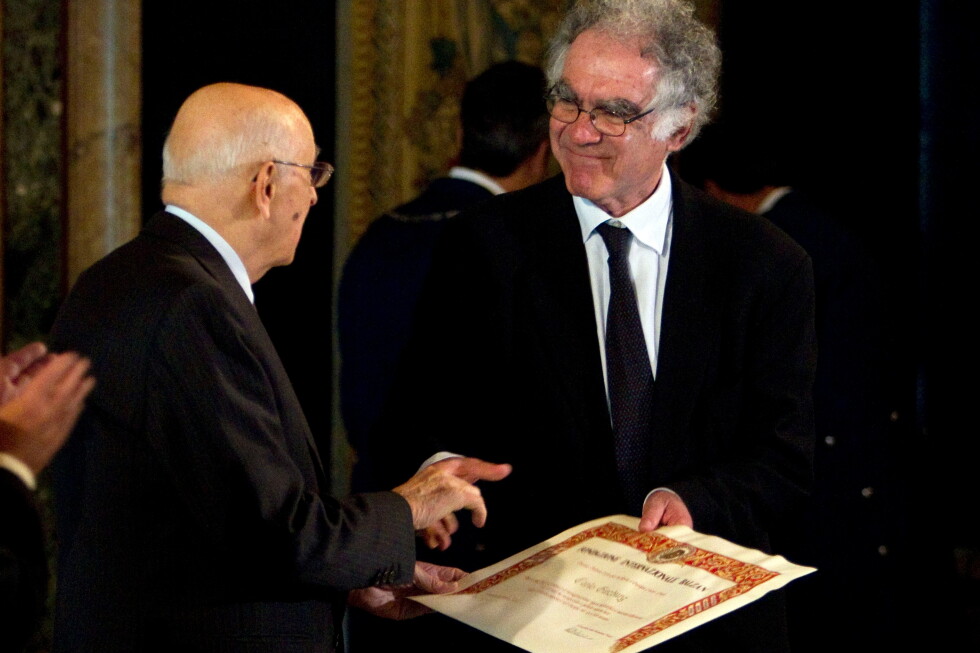
Carlo Ginzburg, the trailblazing Italian historian whose innovative scholarship redefined modern historical inquiry by centering the long-silenced perspectives of marginalized communities, passed away on Wednesday at the age of 87 in Bologna, a northern Italian city. The confirmation of his death came from Scuola Normale Superiore di Pisa, the prestigious academic institution where Ginzburg once studied as a student and later served as an emeritus professor.
Widely recognized as the founding father of microhistory, Ginzburg developed a radical new approach to studying the past that rejects broad, top-down macro-historical frameworks in favor of focused, granular analysis of small, specific subjects — from a single ordinary individual, to a tight-knit local community, to one isolated historical event. This method, he argued, unlocks far broader, more universal themes and structural tensions that shape larger historical narratives, a insight that upended centuries of traditional historiographical practice.
As one of the most influential voices in 20th and 21st century historical studies, Ginzburg also pioneered the groundbreaking “evidential paradigm” — an interpretive framework that centers seemingly insignificant clues, fragmented traces and overlooked small details to reconstruct the lived experiences of people pushed to the margins of dominant historical records created by ruling elites.
Ginzburg first honed his approach through early research into the benandanti, a little-known pagan fertility movement that operated in Italy’s Friuli region between the 16th and 17th centuries. Members of the group practiced shamanic healing, but were targeted as heretics by the Roman Inquisition. His research into the cult, which traced its origins to pre-Christian Central European spiritual traditions, formed the foundation of his first published book in 1966.
He solidified his global reputation with his 1976 landmark work *The Cheese and the Worms*, still widely regarded as one of the most important texts in modern Italian historiography. The book centers on the heresy trial of Menocchio, a 16th-century Friulian miller who was prosecuted for sharing unorthodox views about the origins of the universe and the nature of Jesus Christ. Drawing exclusively on surviving Inquisition trial records, Ginzburg masterfully demonstrated that the same documents created by ruling authorities to suppress dissent also contain hidden traces of that dissent, showing how power and resistance exist side-by-side in historical archives. Through this intimate small-scale case study, he illuminated far-reaching cultural frictions between elite educated culture and grassroots popular culture, as well as the enduring tension between state and religious authority and individual dissent.
Born in Turin in 1939, Ginzburg grew up in a family deeply committed to intellectual life and anti-fascist resistance: his mother Natalia Ginzburg was one of Italy’s most celebrated 20th century writers, and his father Leone Ginzburg was a prominent anti-fascist activist who was persecuted for his opposition to Benito Mussolini’s regime. Over the course of his decades-long academic career, Ginzburg held teaching positions at top global institutions, including Harvard University, Yale University, Princeton University and the University of California, Los Angeles. His body of work has been translated into more than 30 languages, reaching a global audience of scholars and general readers alike.
Ginzburg’s contributions to historical scholarship earned him dozens of the highest international honors in the humanities, including the Prix Aby Warburg, the Balzan Prize for Social and Political Sciences, the Antonio Feltrinelli Prize, and the Humboldt Research Award.
In a 2023 interview with Italian cultural magazine *Lucy*, Ginzburg emphasized that his methodological approach was not limited to academic historical research. He argued that the practice of prioritizing small clues and centering marginalized perspectives should be applied to “everyday life” as a tool to build deeper, more empathetic understanding of other people.
In a formal statement following Ginzburg’s death, Scuola Normale Superiore paid tribute to his transformative impact on the field, noting that he “changed the way of practicing the historian’s craft.” The institution added that Ginzburg’s work “restores voice to those who lack it, shows that the rigor of proof is a form of justice, and upholds a demanding idea of truth.”
Ginzburg is survived by his two daughters: Silvia, an art historian, and Lisa, a published writer and essayist. They are his children from his marriage to Anna Rossi-Doria, a fellow historian who preceded him in death.