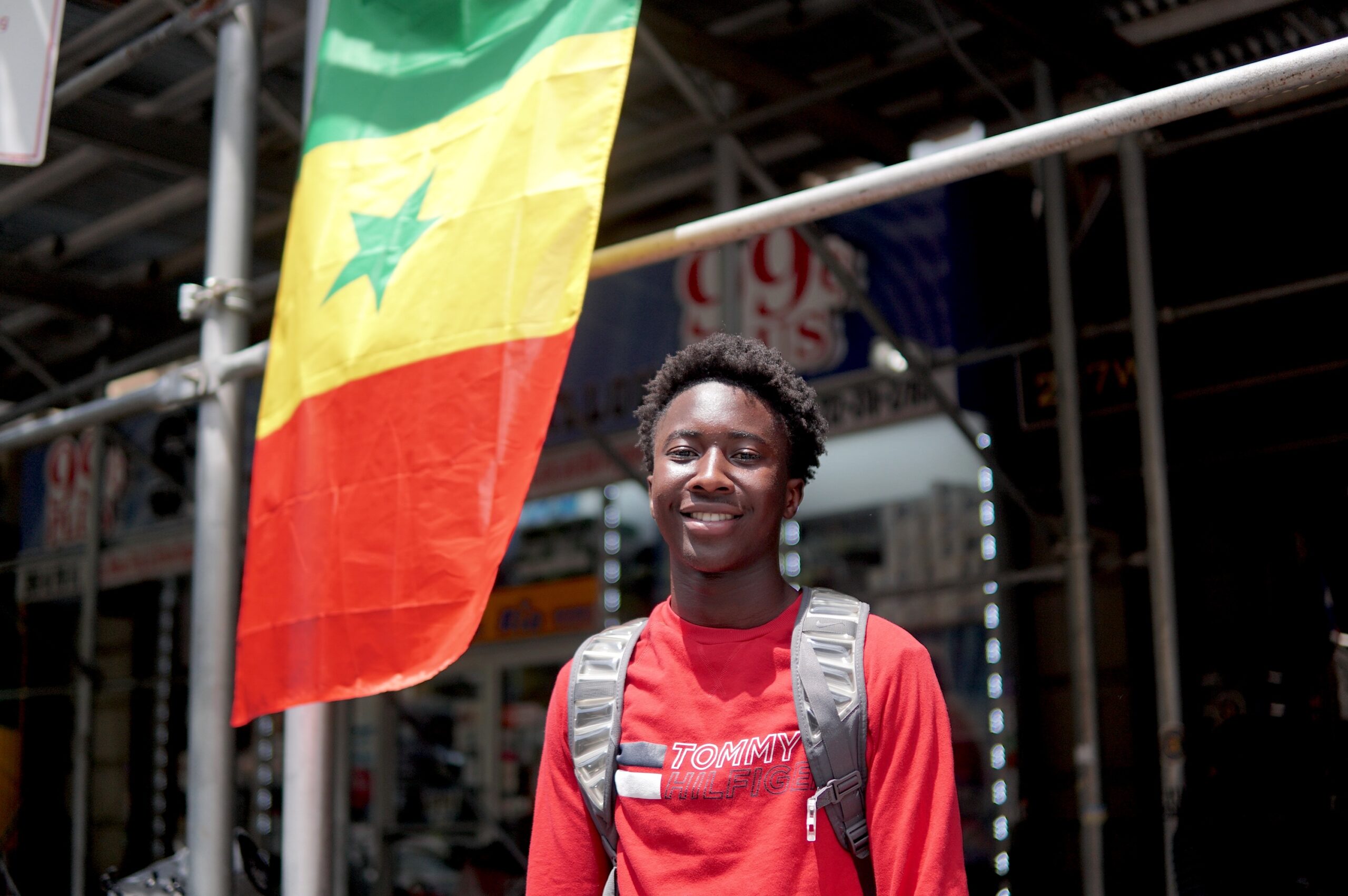
Nestled along 116th Street in Harlem, New York City, Little Senegal – the vibrant West African enclave at the heart of Harlem’s cultural tapestry – buzzes with pre-tournament anticipation ahead of the World Cup opening fixture between Senegal and defending champions France. Giant screens mounted in local barbershops and cafes stream warm-up matches, Senegalese national flags hang from brick walls, and nearly every casual conversation drifts back to the highly anticipated clash. Storefront after storefront displays the iconic green and white Senegal national football jerseys, while passersby don bucket hats emblazoned with the red, yellow, and green of the Senegalese flag. Yet for all the visible excitement, a quiet undercurrent of despondency hangs over the community, as stark systemic inequities – from crippling visa restrictions to exorbitantly priced match tickets – have dimmed enthusiasm and forced even the most diehard fans to re-examine their priorities amid ongoing economic strain. This World Cup, hosted in the United States, has set new records for ticket pricing, with sought-after fixtures involving top-ranked teams like Senegal – the 2025 African Cup of Nations title holders, despite the ongoing dispute over the result – seeing resale prices soar well into the thousands of dollars. For working-class fans in Little Senegal, these price points are completely out of reach, leaving thousands of local fans and amateur players convinced that modern elite football was never built for ordinary people. “I’m a lifelong football fan, but some things are simply unconscionable,” Abdoul Aziz, a Harlem-based caregiver, told Middle East Eye. “How could I spend more than $1,000 on a single ticket when there are people back in Senegal who need basic support? I could never do that – even though I love the game more than anything and I’m proud to support my national team.” Aziz, who traveled to New Jersey last week to greet the Senegalese team upon their arrival in the U.S., is far from alone in his frustration. MEE spoke to dozens of community leaders, local business owners, and football fans across Little Senegal, who all shared that despite the absurd barriers stacked against them, they are determined to build a memorable, community-centered tournament experience for everyone. Home to a large segment of the estimated 33,000 Senegalese people living in the United States, Little Senegal has been a cultural anchor for the West African diaspora in New York for decades. Since the community first established roots here in the 1980s and 1990s, the enclave has been celebrated for its authentic West African restaurants, traditional hair-braiding salons, and shops selling handcrafted boubous – the vivid, flowing traditional Senegalese robes – bringing a slice of West African culture to the heart of Harlem. Halal butcheries sit alongside small vendors selling international calling cards and mobile accessories, while general stores stock an array of beauty products imported directly from West African markets. The neighborhood stretches to the iconic Malcolm Shabazz Mosque, where Malcolm X once served as a minister for the Nation of Islam. When the Senegalese community first arrived, they were widely credited with breathing new life into Harlem’s struggling local economy, though years of skyrocketing rents and gentrification have spread the community more broadly across the city. Even so, Little Senegal remains the most important cultural and economic hub for West Africans in New York. Beyond the crippling ticket prices facing local fans, the community also grapples with systemic barriers that have locked out traveling Senegalese supporters from entering the country to attend the tournament. For years, Senegalese visitors and migrants have faced harsh scrutiny from U.S. immigration authorities, who have long alleged that Senegalese nationals frequently overstay their visas. This has led to an extraordinarily high visa rejection rate for Senegalese applicants, which reportedly hit 74 percent in 2025. The situation worsened in early 2026, when U.S. President Donald Trump added Senegal to a list of countries subject to mandatory entry bonds, requiring applicants to pay between $5,000 and $15,000 to gain entry – a cost that rules out all but the wealthiest Senegalese fans from attending the tournament. U.S. authorities eventually granted a narrow waiver for fans who purchased tickets through FIFA’s official website and registered for the FIFA pass system by April 15, but the restriction still kept tens of thousands of supporters from traveling. Even the Senegalese national fan group, The Douzième Gaindé, was completely barred from attending due to visa restrictions. “It’s devastating what they’ve done not just to Senegalese fans, but to fans from so many other countries across the Global South,” said Max, a 42-year-old Senegalese beauty product entrepreneur based in Harlem, as he sat in a local barber chair getting a touch-up on his greying hair. “This is the World Cup, after all. We’ve never seen anything like this before.” For many local residents, the barriers are not just inconvenient – they are rooted in systemic inequity. “This is racism. America always tries to position itself as superior to others,” said Saliou Gueye, a sports science student living in Harlem. Only a tiny handful of Senegalese fans managed to secure visas and tickets to the opening clash from Dakar. Boubacar Cisse, a business owner from the Senegalese capital, told MEE he and his brother were able to travel to the U.S. for the tournament, but acknowledged they are clear exceptions. Their visas were approved long before the World Cup was scheduled, for unrelated purposes. “It’s so difficult for most people. But we thank God we were able to get tickets to the game too,” Cisse said. “We understand every country makes its own policies, and we respect that… but since this is the World Cup, they could have made special accommodations for fans.” For Gueye, the dual burden of restricted entry for international fans and sky-high ticket prices for local fans feels deliberate: it is less than 14 miles from 116th Street in Little Senegal to the New Jersey stadium where the match will be played, yet for most Senegalese fans, it feels worlds away. In response to the overlapping crises facing the community, the Senegalese Association of America has mobilized to create accessible alternatives for local fans. The organization first worked with the Senegalese consulate in New York to lobby for discounted community tickets, and last week, the Senegalese government announced it had finalized an agreement with FIFA to distribute 800 discounted tickets to local Senegalese fans. For the thousands who still cannot afford tickets, the association will host massive public watch parties along 116th Street on all match days, a tradition the organization has carried out for major international tournaments for years. Local restaurants and cafes across the entire neighborhood – from 116th Street up to 137th Street near the Schomburg Center for Research in Black Culture – are already preparing to host huge crowds of fans for the opening clash against France. For Senegalese fans, the match carries far more meaning than just three points in a group stage. The fixture immediately brings back memories of the two teams’ iconic first encounter 24 years ago, during Senegal’s debut World Cup appearance in 2002. Aziz, the 42-year-old caregiver, was living in Dakar for the 2002 tournament, when Senegal and France met in their opening group stage match in Seoul. Back then, France was the defending World Cup champion, fielding one of the most talented squads in the tournament’s history. But the defending champions were stunned by a 30th-minute goal from Papa Bouba Diop, sending the entire nation of Senegal into celebrations and knocking France out of the tournament in the first round in an embarrassing early exit. “Senegal rejoices as cock crows no more over Dakar,” The Guardian wrote at the time, referencing Senegal’s historic victory over its former colonial ruler. Senegal went on to reach the quarterfinals that year, but for most Senegalese fans, the upset victory over France was a moment of national pride that has never been matched. “It felt like we had won the entire World Cup,” Aziz reminisced. The moment was so transformative that then-President Abdoulaye Wade declared a national holiday across Senegal. Max, the local beauty entrepreneur, also remembers the 2002 match vividly. He says the current Senegalese squad, led by global superstars Sadio Mané and Kalidou Koulibaly – widely regarded as two of the greatest African players of the modern era – is the most complete side the nation has ever produced, part of what fans across the continent call Senegal’s golden generation. “The team today knows they belong on this stage, they know they’re superstars,” Max said. Since 2018, Senegal has qualified for three consecutive World Cups, and won the 2025 African Cup of Nations in Morocco – a title that remains disputed, with the result later appealed and awarded to Morocco by continental officials. “I feel like this is the year we can really show the world what we’re made of,” said Awa Diop, 27, one of the lucky local fans who secured a ticket to Tuesday’s match. She added that if the squad avoids major injury crises, she considers Senegal and Morocco the two strongest teams on the African continent. Not all local leaders frame the match as a symbolic rematch for colonial history, however. Elhadji Nddour, a youth coordinator for the Senegalese Association of America, says the team has its sights set on a bigger prize. “We’re not just focused on France – we’re focused on every team we face on the way to lifting that trophy, because we came here to win the whole thing,” Nddour told MEE. Thousands of Senegalese fans from across the Northeast U.S. are expected to arrive in Harlem on Monday ahead of the match. Diop says that even though so many fans could not travel from Senegal to support the team, the Little Senegal community will more than make up for their absence. “I’m not worried at all, because New York already has its own mini Senegal right here,” Diop said. “All the energy and support will be there one hundred percent. We have everything you’d find back home: the drummers, the people painting their faces, the people dancing – they’re all already here.”
In NYC’s Little Senegal, World Cup excitement meets exclusion and economic strain