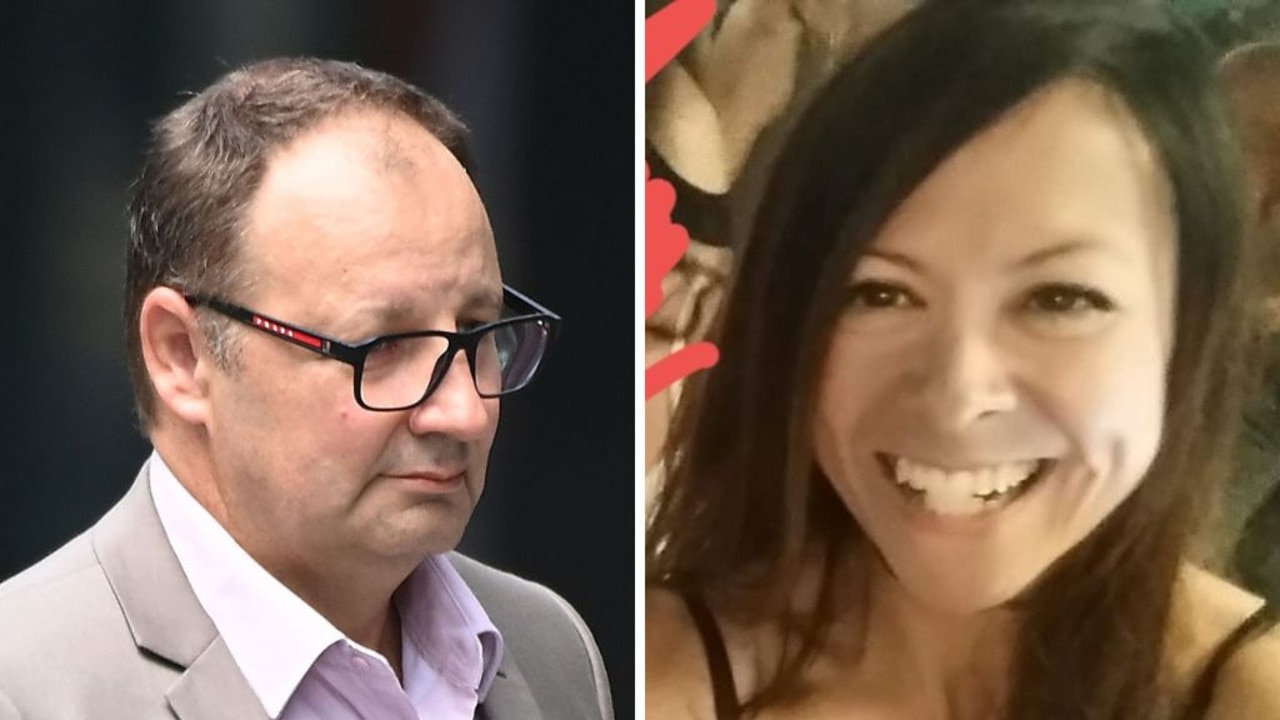
After seven days of dramatic evidence presentation in a high-profile Brisbane Supreme Court murder trial, both prosecution and defence have wrapped their cases, leaving the future of accused killer Mark Sheridan Waden in the hands of a 12-person jury set to begin deliberations Monday. Waden has entered a firm not guilty plea to the 2018 murder of Priscilla Brooten, a US citizen who disappeared without a trace from the Bracken Ridge home the pair shared, with her body never located despite years of investigation.
Crown prosecutors laid out a damning circumstantial case arguing the killing followed a volatile relationship that erupted into a fatal argument on July 5, 2018. Prosecutor Andrew Walklate told jurors Brooten discovered private Facebook messages showing Waden was carrying on a secret relationship with a younger female colleague, triggering a day of tense exchanges between the pair. Phone records, diary entries, and counselling documents obtained by the prosecution paint a picture of a relationship mired in crisis, described by Walklate as a “pressure cooker scenario” that had been building long before that fateful July day. Brooten’s own notebook, left behind at the home after her disappearance, contained a chilling entry: she wrote she had threatened to ruin Waden’s life by exposing his unlicensed marijuana business and publishing details of a prior assault where he had nearly killed her.
Walklate outlined that only four plausible explanations exist for Brooten’s complete disappearance: her former boyfriend Steven Thompson killed her, she remains alive in hiding, she died by suicide, or Waden killed her. He stressed that all available evidence points exclusively to the fourth scenario, adding that all evidence points to a deliberate killing rather than an accidental death. Notably, both the prosecution and defence have ruled out Thompson as a suspect, with Walklate describing him as a kind man who remained close to Brooten after their relationship ended and cared deeply for her well-being. Thompson was the one who first reported Brooten missing when all contact abruptly stopped, and spent months independently searching for clues about her fate.
Key pieces of the Crown’s case include the suspicious timing of a 4-metre trench Waden arranged to be excavated at his property just 24 hours after Brooten vanished. Walklate said the urgent excavation, booked through the gig work platform Airtasker, was intended to hide Brooten’s body, the murder weapon, or other evidence tying Waden to the crime. Prosecutors also point to a series of text messages sent from Brooten’s phone to Thompson the day after she was allegedly killed, which contained text saying Brooten was leaving and that Thompson should not attempt to find her. Walklate argued the messages were a fabrication sent by Waden to create the false impression Brooten had left the country voluntarily.
Further suspicious evidence cited by the Crown includes varying explanations Waden gave to friends and acquaintances for Brooten’s sudden absence – he claimed she had fled Australia over debt with dangerous criminal groups, that she had unresolved immigration issues, and that she had chosen to cut off contact. Prosecutors say these conflicting stories were part of a deliberate campaign to divert attention from the killing. They also point to a mysterious 2018 phone call to the US Consulate made by a man claiming to be Thompson, which alleged Brooten was being held against her will in the non-existent location of “Winchester, Maryland”. Thompson has denied making the call, and Walklate argued it was another false trail planted by Waden to confuse investigators.
Since July 2018, there has been no confirmed trace of Brooten: no banking transactions, social media activity, border crossings, hospital admissions, or credible sightings have been recorded. Walklate noted the complete lack of contact is especially notable because Brooten did not reach out even after her own mother died, an absence that would be unthinkable if she were still alive. Brooten left all of her personal possessions – including clothing, makeup, and identification documents – at the shared home, further undermining any claim she left voluntarily.
For the defence, barrister James Godbolt urged the jury to acquit Waden, arguing the entire case against his client is based entirely on circumstantial evidence that fails to meet the legal standard of proof beyond a reasonable doubt. Godbolt reminded jurors that even if they suspect Waden may have killed Brooten, or think it is probable he did so, that standard is not sufficient for a guilty verdict. “If you don’t get to beyond reasonable doubt, Mark Waden should be acquitted of murder,” Godbolt told the court.
Godbolt pushed back against every key part of the Crown’s narrative, starting with the trench excavation: he said the work was part of a long-planned front-yard landscaping project, pointing out the illogic of burying a body in a front yard along a busy road when a private backyard was available. Testing of soil from the trench turned up no trace of human remains, and no forensic evidence linking Waden to Brooten’s death has ever been found, he added.
The defence laid out alternative explanations for Brooten’s disappearance, noting the US citizen had a long history of severe depression and self-harm, with expert assessment placing her in the severe to extreme range of the condition. Godbolt argued suicide remains a plausible outcome, or alternatively that Brooten – who had been living unlawfully in Australia using multiple aliases – chose to disappear and live off the grid to avoid authorities. He also heavily criticized the police investigation into Brooten’s disappearance, calling it “inadequate to the extreme” for failing to thoroughly explore alternative leads and the possibility she remains alive.
Justice Peter Callaghan is scheduled to deliver his final instructions to the jury on Monday, after which jurors will retire to decide whether the prosecution has proven its case beyond reasonable doubt.