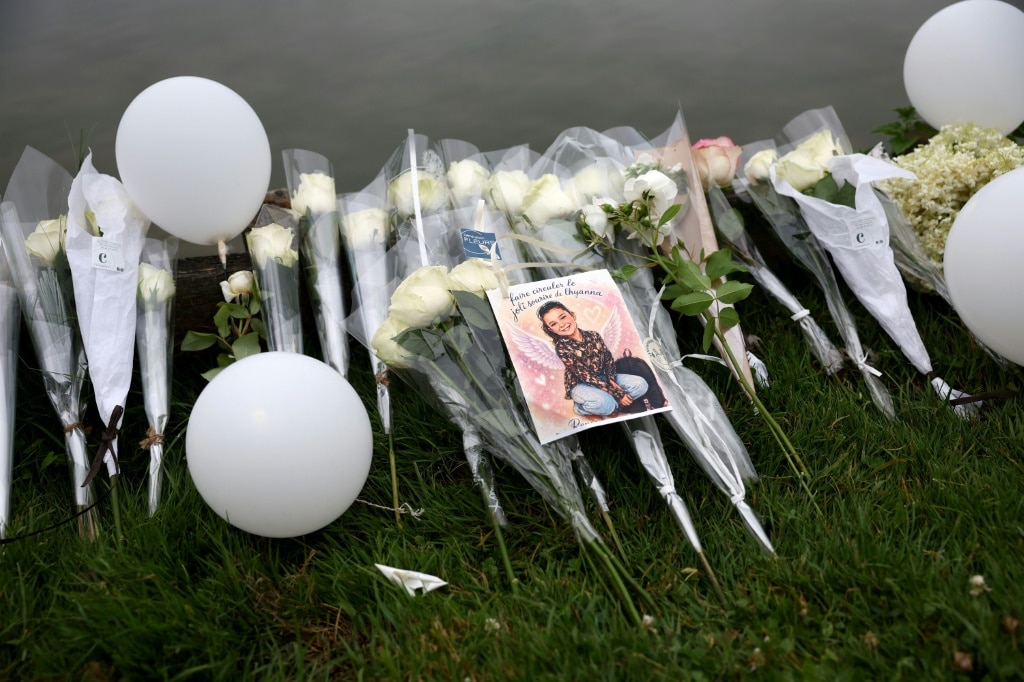
A brutal suspected murder of an 11-year-old girl in southwestern France has ignited nationwide fury, after systemic failures in the country’s child protection and justice systems allowed an alleged offender with a history of past accusations to remain free to strike. President Emmanuel Macron has acknowledged that public faith in France’s state institutions now hangs in the balance in the wake of the tragedy.
The victim, identified only as Lyhanna, went missing from her home in the town of Fleurance on May 29, and her body was recovered by authorities one week later. The primary suspect in the case is 41-year-old Jerome B., a former school worker and father of one of Lyhanna’s classmates, who had previously been accused twice of raping a child. Both prior investigations were either closed without resolution or stalled indefinitely, long before Lyhanna’s disappearance.
Addressing a weekly cabinet meeting on Wednesday, Macron stressed that the crisis extends far beyond the killing itself. Speaking to reporters after the meeting, government spokeswoman Maud Bregeon relayed Macron’s assessment that “it is trust in our institutions that is at stake.” While acknowledging the widespread public anger over the mishandling of prior allegations against the suspect, Macron called for measured response to the tragedy, noting that “We do not respond to a tragedy with shouting.” He added that investigators must now untangle what went wrong: “We must now understand what falls under individual responsibilities and what concerns systemic lapses within all the public services involved.”
Public outrage boiled over on Monday, when an estimated 60,000 people joined silent marches and protests across the country. Many demonstrators called for the resignation of Justice Minister Gerald Darmanin, who has refused to step down but issued a public apology for what he admitted was a “huge failure” in Lyhanna’s case. As of Wednesday, authorities have not yet released results of the forensic examination of Lyhanna’s body, and the suspect has only been formally charged with abduction, pending further investigation. Lyhanna’s funeral is scheduled for Friday afternoon, and will be held in private per her family’s request, according to the family’s legal representative.
The case has already shed new light on the deep, long-running flaws in France’s handling of child sexual assault allegations. Nine months before Lyhanna went missing, another mother filed a formal complaint against Jerome B., accusing him of repeatedly raping her 10-year-old daughter between September 2023 and May 2024. The accusation was supported by a formal medical report, but law enforcement never questioned the suspect before Lyhanna’s disappearance.
Speaking to reporters on Tuesday, the accuser — who requested anonymity to protect her daughter — slammed the justice system for its inaction. “The justice system did not do its job,” she said. “I called every Monday morning, while my daughter was with the psychologist. I called the police. The last time I rang them, they told me that if I kept harassing them, they would press charges against me.”
Independent and government data backs up claims of systemic failure. According to France’s independent commission on child sexual violence, CIIVISE, only 7% of reported complaints of child sexual assault in France result in a criminal conviction. A 2022 government report previously flagged chronic understaffing and limited time allocated to child abuse investigations, and data published by investigative outlet Mediapart this week revealed that 70% of cases end with no additional evidence collection — such as phone record pulls, security camera review or digital device searches — after investigators interview the suspect.
Prime Minister Sebastien Lecornu told the French Senate on Wednesday that the specific investigation into the prior accusations against Jerome B. did not suffer from a lack of resources, but he conceded that the broader justice system does face widespread resourcing gaps. “But that does not mean the justice system does not have a resources issue,” he added.
Lyhanna’s death is far from an isolated incident, and is the latest in a string of high-profile child protection failures that have shaken France in recent years. In Paris, dozens of kindergarten and primary school monitors have been suspended this year over allegations of sexual abuse against pupils in their care; Paris Mayor Anne Hidalgo confirmed Tuesday that 52 staff have been suspended so far in 2025 over suspected “sexual or sexist abuse.” In 2024, a French court sentenced a retired surgeon to 20 years in prison after he confessed to sexually assaulting or raping 299 child patients over a 25-year period between 1989 and 2014 — he continued practicing for decades even after a prior conviction for possessing child sexual abuse imagery.
CIIVISE estimates that roughly 160,000 children experience rape or sexual assault in France every year, the vast majority at the hands of a family member or someone known to the victim. Following Lyhanna’s killing, thousands of French residents joined a silent march Tuesday in Saint-Jean d’Angely, where Lyhanna’s grandparents joined the crowd to call for sweeping reform to France’s child protection laws.