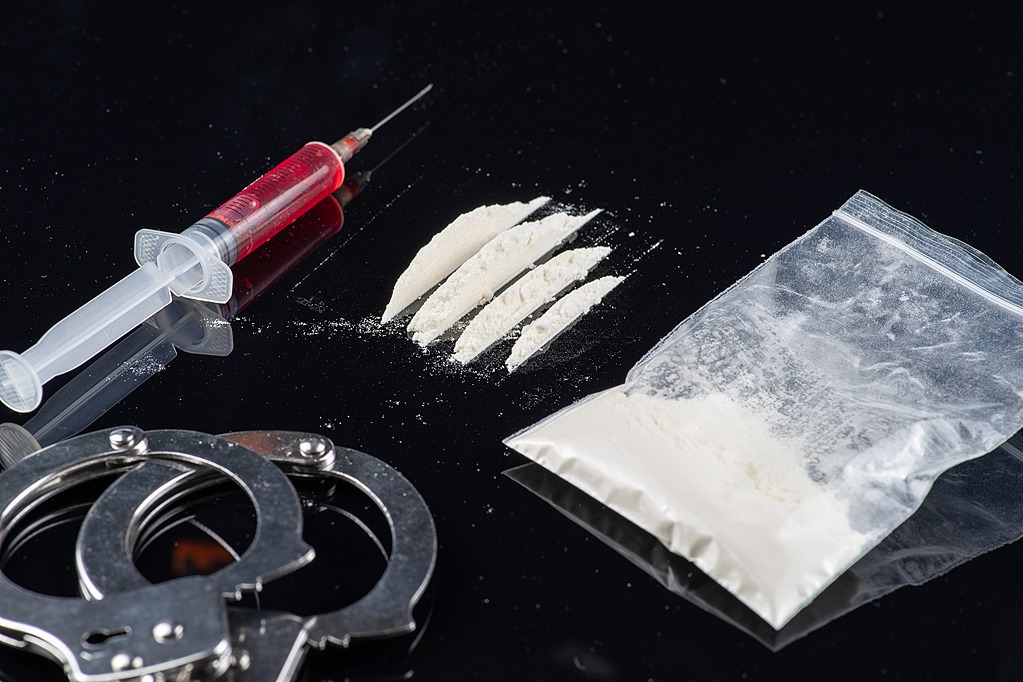
China has significantly strengthened its law enforcement campaign against cross-border illegal trafficking of drug-manufacturing substances and other sensitive chemicals, China’s Ministry of Public Security announced in an official statement released Friday. Since the start of 2025, authorities have resolved 29 criminal cases linked to this illegal trade and taken 157 suspects into custody.
Along with the arrests and case closures, law enforcement seizures have been substantial: authorities have confiscated 720 kilograms of illegal drugs, 1.3 metric tons of new psychoactive substances, 0.9 kilogram of stimulants, and 27.7 tons of uncontrolled precursor chemicals — materials that can be repurposed to produce illicit controlled drugs.
The China National Narcotics Control Commission (CNNCC) has repeatedly issued public warnings to domestic enterprises and individuals, urging them to exercise extreme caution when exporting drug-making substances, new psychoactive substances, and related chemical products to overseas markets, and to remain alert to potential legal risks under foreign jurisdictions.
In a formal notice issued November 10 last year, the CNNCC’s office mandated that all chemical exporters verify that their overseas buyers complete all required import procedures in compliance with local laws and regulations. This requirement applies specifically to unlisted precursor chemicals and production equipment, which have widespread legitimate industrial uses but can also be diverted to manufacture illegal controlled substances.
The notice outlined a series of new regulatory requirements for domestic stakeholders. All companies engaged in the production, sale, transportation, import, and export of these sensitive chemicals and related equipment are required to strengthen internal compliance systems, maintain complete and accurate transaction records, and conduct strict background and identity verification for all overseas purchasers.
Domestic operators have also been warned to watch for illegal recruitment tactics, which often disguise criminal requests as high-value commercial orders or legitimate sample testing requests. Postal services, courier companies, logistics providers, and international freight forwarders have been called on to strengthen screening protocols and assist authorities in intercepting illegal shipments.
New tighter rules for online information dissemination have also been introduced. Private individuals are completely banned from posting any sales information for non-pharmaceutical precursor chemicals on public online platforms, while all entities and individuals are prohibited from publishing any public online advertisements for pharmaceutical precursor chemicals. Any party that posts sales information for unlisted drug-making chemicals or related production equipment on websites, social media platforms, or e-commerce marketplaces is required to complete mandatory real-name registration and comply fully with all domestic and international legal requirements.
This is not the first regulatory warning on the issue: the CNNCC issued similar public notices in November 2023 and May 2024, both of which highlighted the serious legal risks associated with exporting drug-making precursors and new psychoactive substances to overseas markets. Despite these repeated warnings, the Ministry of Public Security noted that some domestic offenders have continued to traffic both controlled and uncontrolled precursors, new psychoactive substances, and other sensitive chemicals abroad, gradually building transnational illegal supply chains that create major global drug-related security risks.
To counter this growing threat, Chinese public security authorities have launched multiple rounds of targeted special law enforcement operations. These operations focus on breaking up major criminal networks, investigating non-compliant enterprises, and holding illegal actors accountable. Officials noted that the campaign has three core goals: eliminating cross-border drug risks, cleaning up non-compliant activity in the domestic online business environment, and protecting the legitimate, healthy development of China’s overall chemical industry.
One of the major cases resolved during the recent crackdown was a large-scale cross-border drug manufacturing and trafficking ring led by a suspect surnamed Tang, which was uncovered by police in December 2025. In this operation alone, authorities arrested 21 suspects, seized nearly 32 kilograms of illegal drugs, 1 ton of new psychoactive substances, and 15.4 tons of raw drug-making materials. Law enforcement also dismantled one illegal drug production facility and one unauthorized precursor chemical production site, froze approximately 6.92 million yuan ($1 million) in illicit funds linked to the ring, and imposed administrative penalties on three domestic chemical companies that failed to comply with regulatory requirements.
Investigations into Tang’s operation revealed that he set up two dedicated websites to advertise sensitive chemicals directly to overseas buyers. After receiving orders, he contracted with chemical manufacturers in multiple domestic regions to develop and supply the controlled chemicals, then smuggled the products overseas via complicit international freight forwarding companies, and accepted payment via untraceable virtual currencies to avoid detection. In January 2026, Tang and a second key ringleader, surnamed Chen, were formally arrested on charges of smuggling, trafficking, transporting, and manufacturing illegal drugs.
In closing, the Ministry of Public Security emphasized that all Chinese enterprises and individuals must strictly comply with domestic and international laws and regulations when conducting cross-border business. It reiterated the importance of proactively guarding against overseas legal risks, to protect both the legitimate rights and interests of Chinese companies and citizens, and global public safety by curbing the transnational drug trade.