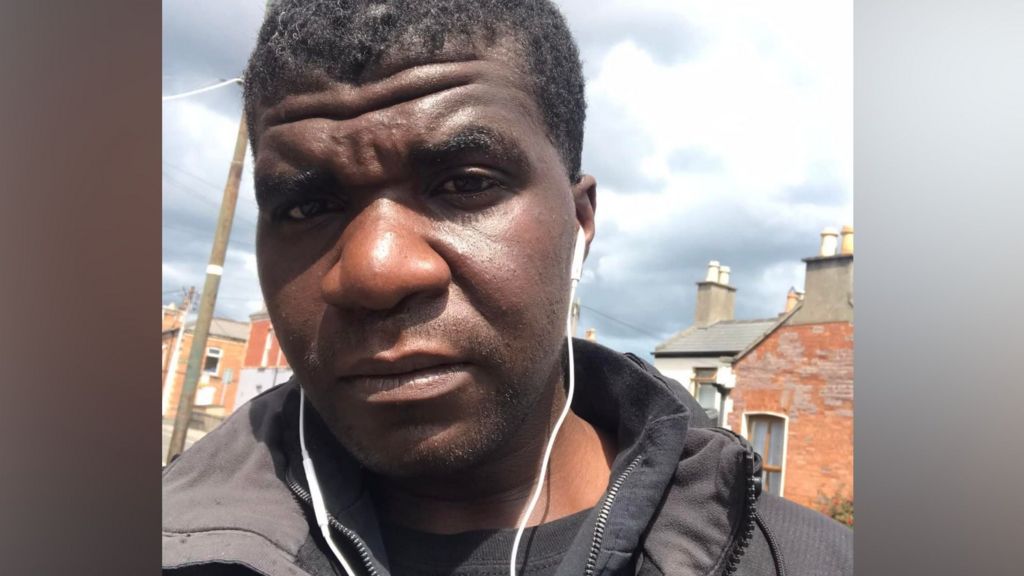
A 35-year-old Congolese-Irish man Yves Sakila has died following his detainment by private security guards over an alleged shoplifting incident in central Dublin, sparking widespread public outrage, demands for independent investigation, and planned mass protests outside Ireland’s national parliament this Thursday.
The fatal encounter unfolded shortly after 5 p.m. local time last Friday outside Arnotts, one of Dublin’s most iconic department stores on Henry Street. According to official details from Gardaí, Ireland’s national police service, security personnel held Sakila in connection with the alleged theft, during which an 82-year-old bystander sustained serious injuries as Sakila allegedly attempted to flee the scene. The older man was transported to a local hospital for non-life-threatening injuries and remains in recovery as of this week.
During the detainment, Sakila lost consciousness, and urgent medical response teams transferred him to Dublin’s Mater Hospital, where he was pronounced dead shortly after arrival. Born in the Democratic Republic of Congo, Sakila had grown up in Galway and Dublin, building deep ties to Irish communities across the country.
Graphic mobile phone footage of the incident has circulated widely across social media platforms in recent days. The recording shows multiple security personnel restraining Sakila while he was held face-down on the public sidewalk. Irish anti-racism advocates have described the video as deeply troubling, with the Irish Network Against Racism (INAR) saying the incident bears clear hallmarks of excessive use of force by security staff.
INAR’s leadership emphasized that the death of a Black man in this context has sparked extreme anxiety among Ireland’s ethnic minority populations, and that a full, unflinching probe is necessary to preserve community trust in the country’s criminal justice system.
Dr. Ebun Joseph, Ireland’s Special Rapporteur on Racism and Racial Equality, echoed those calls, noting that the viral footage has caused profound distress, fear, and anger across Black and minority ethnic communities across Ireland. In an official letter obtained by BBC News NI, addressed to Gardaí, Justice Minister Jim O’Callaghan, and national police ombudsman body Fiosrú, Joseph wrote that the visible disproportionate and unnecessary force used during Sakila’s restraint raises urgent, serious questions that demand comprehensive, independent examination.
The case has already been referred to Fiosrú for independent oversight, while Gardaí confirm that their wide-ranging probe into all circumstances surrounding the incident remains ongoing, with no significant new updates to share as of Wednesday.
In a public statement, a representative for Arnotts department store expressed deep sorrow over Sakila’s passing, extending heartfelt condolences to his family, friends, and the entire Congolese community in Ireland. “No loss of life should ever be the outcome of a retail security incident,” the spokesperson said, adding that the retailer recognizes the deep hurt and public concern this tragedy has caused. Arnotts is fully cooperating with ongoing law enforcement investigations and conducting an internal full review of its partnership with the private security firm that provides on-site protection for the store. The retailer declined to offer further comment while the probe is active, saying it remains committed to seeing all facts of the case fully established.
Community response to the death has grown rapidly over the past week. On Tuesday afternoon, dozens of mourners gathered for a candlelit vigil outside the Henry Street store, singing hymns and offering prayers for Sakila. Among the attendees was Walter Kabangu, former vice president of the Congolese Community in Ireland and a former schoolmate of Sakila. Kabangu told local media that watching the viral footage of his friend’s final moments was incredibly traumatic.
“It’s mostly shocking, just seeing the images and seeing someone you used to see back in school in your younger days and then seeing them have such a demise,” Kabangu said. “It’s just a very sad situation that has taken place and something that I find quite regrettable and something that shouldn’t have taken place. This tragedy has impacted our entire community, and it is a devastating, shocking moment for all Congolese people in Ireland.”
Laure Zoya, a community organizer, told national broadcaster RTÉ that the video and witness testimonies have deeply shocked and traumatized Congolese, African, and Black communities across Ireland and around the world. “Many people are disturbed by the level of force shown during the restraint and are demanding full clarity regarding the circumstances that led to Mr Sakila becoming unresponsive,” Zoya said.
Chris Kibiadi, a Dublin resident who knew Sakila personally, told RTÉ: “It could happen to me, it could happen to you. It’s not a black or white issue, it’s a matter of basic justice. We need justice for our brother. I keep saying my brother, because I knew him.”
Political leaders across Ireland’s partisan spectrum have offered condolences to Sakila’s family and backed calls for a full investigation. Taoiseach and Prime Minister Micheál Martin said he extended his deepest sympathies to the Sakila family and the wider Congolese community. “The situation will have to be thoroughly investigated, and needs to be thoroughly investigated,” Martin said. “I don’t want to prejudice the outcome of that investigation but I think a lot of people are clearly very concerned about what has transpired here.”
Justice Minister Jim O’Callaghan has also confirmed that a thorough Garda investigation is required, while Social Democrats leader Holly Cairns called the circulating social media video deeply concerning, and reiterated that only a full, comprehensive probe into all events can answer outstanding public questions. Organizers say Thursday’s protest outside Leinster House, Ireland’s parliament building, will be the largest public demonstration to date, calling for transparency and accountability over Sakila’s death.