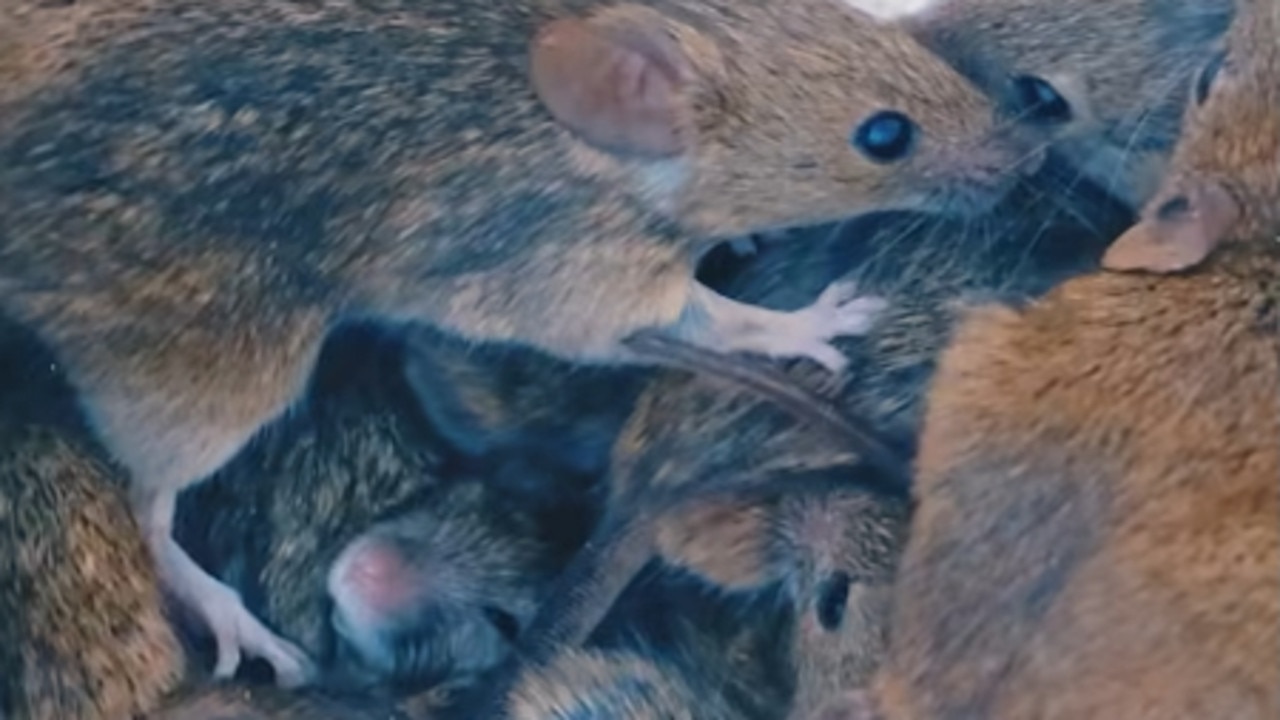
A small regional town in Western Australia’s Mid West region is currently in the grips of an unprecedented mouse plague that has upended daily life for every resident and business owner, leaving them locked in a relentless daily battle against the invasive rodents.
Morawa Shire President Karen Chappel described the ongoing crisis as nothing short of horrifying, noting that communities have grown exhausted from the constant cycle of containment and cleanup. “Every single day, we are picking up carcasses, setting traps, laying bait, and cleaning up the mess the mice leave behind,” Chappel explained in an interview. “You finish clearing the bodies from your home or shop, dispose of them, and get ready to do the exact same thing the next morning. On top of that, there is the constant, cloying stench of mice—both living rodents and decaying carcasses—that never goes away.”
The infestation poses severe public health risks, prompting local leaders to urge residents to maintain strict hygiene protocols that echo the precautions many adopted during the COVID-19 pandemic. “We’re telling people to wash their hands constantly, carry hand sanitiser, and stay vigilant, because these rodents carry a host of dangerous diseases,” Chappel said. She went on to detail just how pervasive the infestation has become: mice have been found nesting in beds, over a dozen rodents poured out of a resident’s oven when opened, they chew through books, gnaw at vehicle wiring, and build nests inside household appliances from washing machines to air conditioners. Beyond the filth, residents face costly damage, forced to repair or replace destroyed appliances and personal property that the mice have ruined. “The psychological weight of this crisis on our community is enormous,” Chappel added.
This outbreak is not an isolated event. Last month, agricultural scientists issued an urgent warning that the growing mouse plague could destroy up to $1 billion worth of grain crops across Western Australia if swift action was not taken. Surveys of cropping regions across the Mid West, Wheatbelt, and Goldfields-Esperance have found up to 4,000 mouse burrows per hectare, with some paddocks hosting as many as 8,000 individual mice per hectare. As rodents have exhausted food sources in agricultural areas, they have migrated into nearby regional towns, turning a rural agricultural crisis into an urban public health emergency. In response, the Western Australian Department of Health has issued an official public health alert for Morawa and surrounding communities, advising residents on how to safely handle dead mice and secure their homes to protect their families.
Steve Henry, a research officer with Australia’s national science agency CSIRO, visited the affected region in March and confirmed the outbreak has worsened dramatically in the months since. “The footage farmers are sending me now is identical to what we saw during the 2021 mouse plague in New South Wales—this is a severe, devastating outbreak by any measure,” Henry said. The 2021 NSW outbreak caused an estimated $660 million in direct economic damage, a figure that does not account for the profound psychological harm inflicted on affected communities. Unlike natural disasters such as drought or heatwaves, where people can find shelter inside their homes, a mouse plague invades every corner of daily life. “These mice get into your food cupboards, your clothing, your linen, they run across your bed while you are sleeping,” Henry explained. “There is no escape from them inside your own home.”
In a major policy shift to address the crisis, the Australian Pesticides and Veterinary Medicines Authority this week approved an application from Grain Producers Australia to allow the use of a stronger, more concentrated mouse bait. The new formulation uses the same active toxin as existing bait, but delivers a lethal dose in every individual grain, which researchers expect will improve kill rates. Still, Henry cautioned that the stronger bait is not a permanent solution to the crisis. “It’s extremely difficult to wipe out an outbreak of this size with bait alone, just because there are so many mice spread across such a huge area,” he said. “The 50-gram formulation is more effective than the 25-gram version we had before, but when there is so much alternative food available for mice across the landscape, it won’t solve the problem entirely. It will, however, reduce localised damage to crops and residential areas.”
Jamie Appleton, who operates the Morawa Roadhouse, explained that the current mouse population explosion was fueled by ideal breeding conditions: this year has produced one of the best grain harvests on record, giving the mice an abundant food supply and mild weather that has allowed their numbers to grow unchecked. Like many local business owners, Appleton now spends an extra hour every day deep cleaning his store to remove mouse waste and carcasses. Though he has spent hundreds of dollars on bait and has kept most of his stock protected, he says the entire community is at breaking point. “People are just over this,” he said. “I’m lucky enough that I can afford to replace damaged items, but a lot of people in this town can’t. This constant stress is unbearable. Imagine coming home to find your pantry food is all ruined, your bedding is destroyed, and you have young kids to care for. This is an intrusion no one should have to deal with.” Local residents are now pinning their hopes on a cold snap, which they hope will kill off much of the mouse population and bring a much-needed end to the crisis.