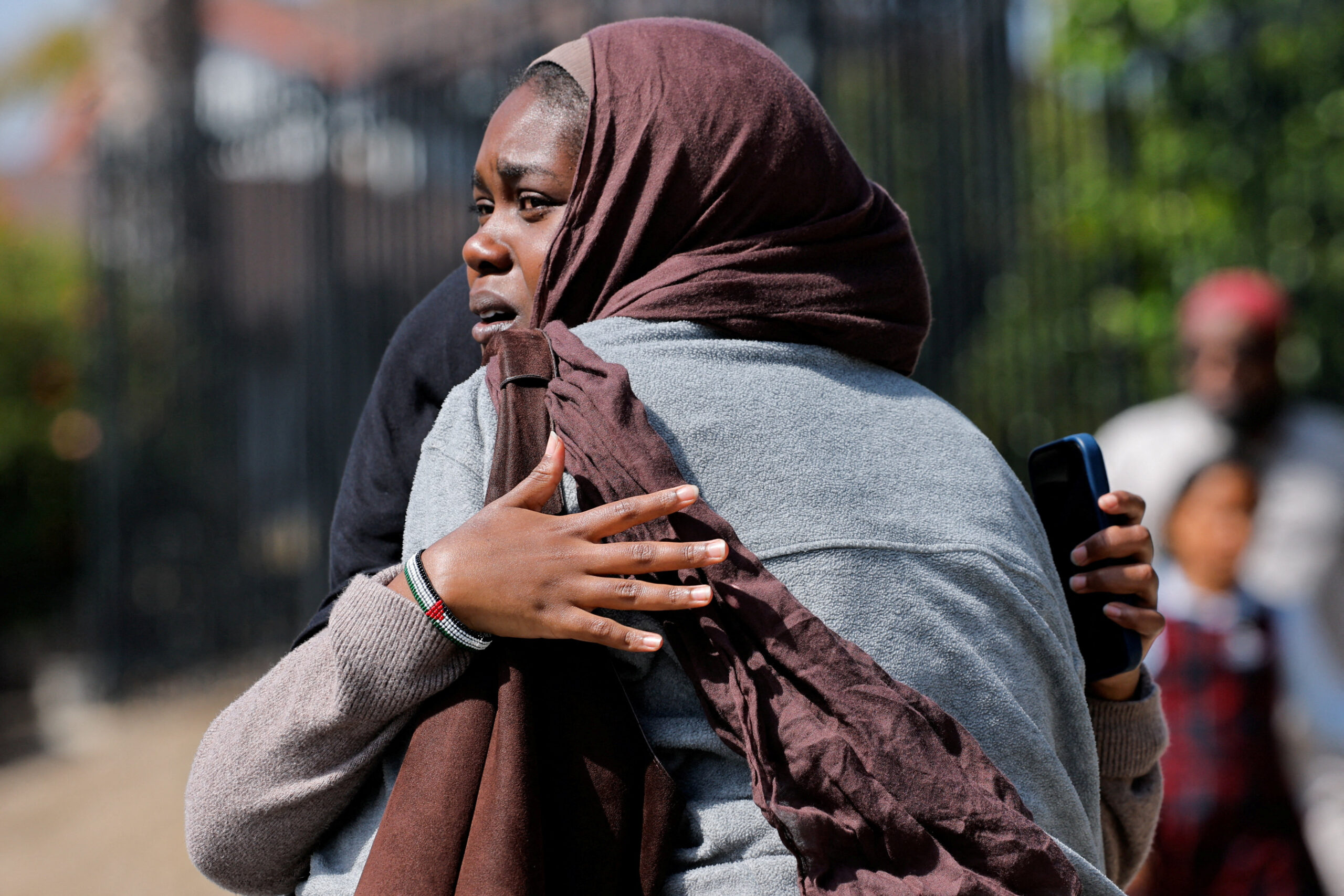
On a sacred holy day in the Islamic calendar, just days ahead of Eid al-Adha, a horrific mass shooting left three people dead at the Islamic Center of San Diego — the largest Muslim place of worship in Southern California — in what authorities have confirmed is an investigated as a hate crime.
Two teenage attackers opened fire at the mosque on Monday, striking congregants gathered for worship and triggering an emergency evacuation of students at the adjacent Al Rashid School, which hosted ongoing classes at the time of the assault. Among the three victims was Amin Abdullah, a long-serving mosque security guard who local law enforcement and community leaders confirm undoubtably saved dozens of lives by intercepting the gunmen before they could reach the school’s children and crowded prayer halls. Following the attack, responding police located both teenage suspects dead inside a vehicle from self-inflicted gunshot wounds, investigators confirmed.
Preliminary investigations uncovered writings tied to one of the suspects filled with generalized hate rhetoric targeting Muslims, cementing the hate crime classification for the attack. The violence comes at a time of documented nationwide spike in anti-Muslim assaults across the United States, with recent academic research linking the upward trend in Islamophobic violence to shifting U.S. foreign policy tensions and hostile political rhetoric targeting Muslim communities.
News of the attack quickly spread across social media, sparking a wave of grief, tribute, and anger from community members, activists, and public figures. Abdullah has been widely hailed as a martyr and hero across online platforms, with countless users sharing reflections on his final public Facebook post, in which he wrote of his desire to return to God with the same pure soul he was gifted at birth.
Beyond mourning, much of the public outrage has centered on what many describe as a long-standing pattern of normalized anti-Muslim rhetoric in mainstream American media and politics, as well as inconsistent institutional responses to hate crimes targeting Muslim communities. Controversy erupted just one day after the shooting when the New York Post, a prominent right-wing tabloid, published a article headlined that tied the mosque to the 9/11 hijackers, a choice that was widely condemned across social media as a blatant act of victim-blaming and dehumanization. One user noted the headline effectively implied the Muslim community deserved the attack, while progressive commentator Hasan Piker argued that while anti-Semitism is widely recognized as an institutional stigma, anti-Muslim bigotry is actively encouraged by major American institutions.
Further criticism fell on conservative media, after a Fox News contributor pushed an unsubstantiated claim that the attack could be tied to Iran, drawing pushback from Iranian-American analysts who condemned the rushing to blame Muslim and Iranian actors even when the perpetrators were homegrown American teenagers. Activists pointed to a long trail of mainstream political rhetoric that normalizes anti-Muslim hatred, naming high-profile figures including Donald Trump ally Laura Loomer and Republican lawmaker Randy Fine, both of whom have a well-documented history of making inflammatory anti-Muslim public remarks.
Local and state political leaders have issued formal condemnations of the violence: San Diego Mayor Todd Gloria stated that “Islamophobia has no home in San Diego,” while California Governor Gavin Newsom emphasized that the state would not tolerate acts of terror or intimidation against faith communities. Speaking at a press conference shortly after the attack, Imam Taha Hassane of the Islamic Center of San Diego described the religious intolerance and hate fueling the shooting as unprecedented in modern U.S. history. “My community is mourning,” he said, adding that “all of us are responsible for spreading the culture of tolerance, the culture of love.”