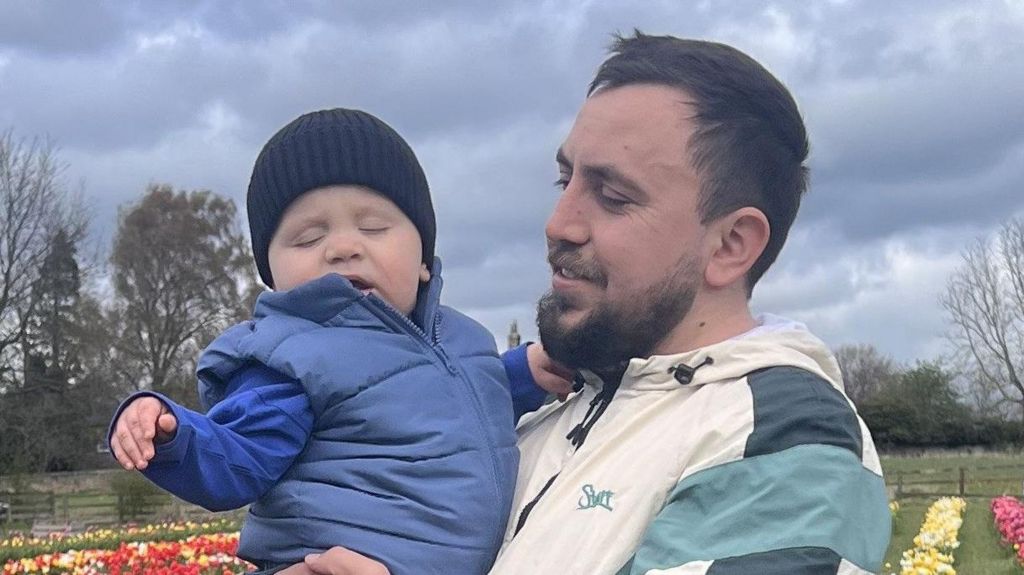
For a Ukrainian refugee family rebuilding their lives in Penrith, Cumbria, February 13 will forever stand as a day marked by unthinkable dual tragedy. On that same Friday, Stepan and Alina Kozariichuk received two shattering pieces of news: their 11-month-old infant son Bohdan was diagnosed with advanced bilateral retinoblastoma, a rare form of eye cancer, and Alina’s father’s home back in Ukraine’s Odesa region had been reduced to rubble by a Russian drone strike.
The couple, who fled the ongoing war in Ukraine to build a safer life in northern England, first noticed troubling symptoms in their son when he was around six months old. Bohdan began squinting frequently and struggled to grasp the toys placed in front of him, prompting the pair to seek urgent medical assessment. After a series of tests, clinicians confirmed the devastating diagnosis: cancer had already affected both of the baby’s eyes, reaching an advanced stage that would demand months of intensive, complex care. The treatment plan includes multiple rounds of chemotherapy, alongside targeted cryotherapy and laser therapy, requiring the young family to travel regularly between Penrith, Newcastle for chemotherapy sessions, and Birmingham for specialized ongoing care.
Compounding this already devastating health crisis was the second blow delivered the same day. Word reached the Kozariichuks from contacts back in Odesa that two Russian drones had directly struck Alina’s father’s property. While the grandfather and his wife escaped the attack without physical injury, their home and personal vehicle were completely destroyed, leaving them with little of what they had built over decades. Alina described the 13th of February as the worst single day of the couple’s lives, telling BBC Radio Cumbria through a translator that “it was very hard” to process overlapping losses on that scale.
For the Kozariichuks, the journey to this point has already been marked by profound grief and longing for the child they now fight for. Alina shared that the couple endured two heartbreaking miscarriages before welcoming Bohdan, making their baby a deeply wanted and cherished member of the family. In the wake of their dual crisis, the couple says they have grieved together, but Bohdan’s unshakable joy has given them the strength to keep going. Despite the exhaustion of constant chemotherapy and endless hospital appointments, the 11-month-old still smiles freely, plays with his favorite toy drum, watches cartoons, and reaches for his toys just as any other baby his age would.
Calling Bohdan their “little hero”, the couple said in a public statement that “his strength gives us strength.” Even when the weight of their challenges leaves them overwhelmed, a single smile from their son is enough to lift their spirits. “We have cried together, but when we see a smile on our baby’s face we smile and joke together, hoping there will be better times,” Alina said. Like many Ukrainian refugees who have built new lives abroad, the family holds onto one core hope: that when the war in Ukraine finally comes to an end, they will be able to return to their home country and rebuild together.