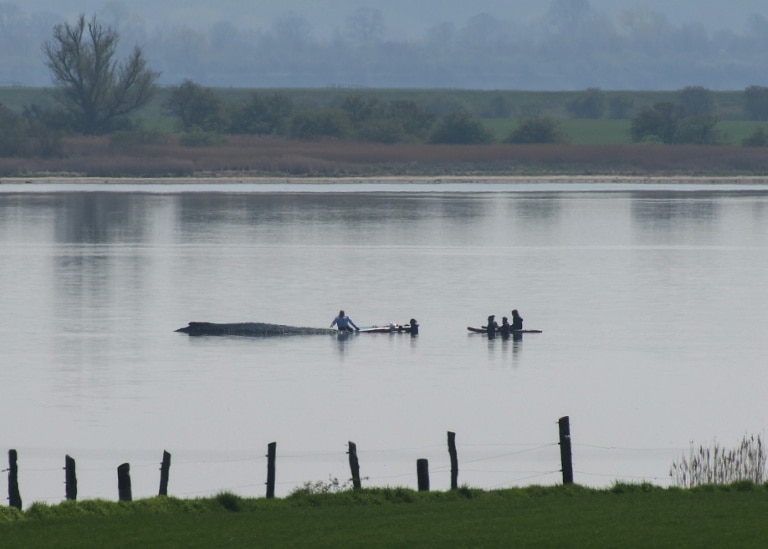
A months-long struggle for survival of a 13.5-meter humpback whale stranded off Germany’s Baltic Sea coast has reached a critical turning point, with a last-ditch private rescue operation entering its decisive phase, regional officials confirmed Friday.
The whale’s ordeal stretches back to late March, when it was first spotted trapped on a sandbank near the northern German city of Luebeck. After managing to free itself from the initial stranding, the large marine mammal only traveled a short distance east along the coast before becoming stuck again near Poel Island, close to Wismar.
By early this month, official observers held a grim outlook: they said the whale had been too severely weakened by its weeks-long displacement from its natural Atlantic habitat to survive, and expected the animal to die. That prognosis shifted dramatically this week, when state authorities approved an unconventional rescue plan put forward by two private entrepreneurs. Unlike earlier proposals that were scrapped over fears they would kill the animal, the new plan relies on inflatable cushions to lift the weakened whale, which will then be transported out to open water on large pontoons.
On Friday, Till Backhaus, environment minister for the state of Mecklenburg-Western Pomerania, announced the operation had entered its decisive window, and confirmed the mammal now has a tangible chance at survival. Rescue teams were spotted Friday approaching the whale’s location to carry out pre-lifting preparations, and observers noted the animal has shown increased activity in recent days, including repeatedly lifting and flapping its tail above the water’s surface.
Backhaus added he was encouraged by the whale’s current state, noting it “is in a better condition than some had suspected.” Rescuers emphasized they are moving at a deliberate, cautious pace to avoid causing additional stress to the animal, and have not set a firm timeline for when the full lifting and transport will be carried out.
The whale, nicknamed “Timmy” by much of the German press, has captured widespread public attention across the country. The prolonged struggle has sparked public demonstrations in support of continuing rescue efforts, though the outcry has also turned extreme in some cases: some social media posts targeting state officials have included violent threats of death. Earlier rescue proposals, including a plan to use a large catamaran to move the whale, were previously rejected after experts concluded the animal would not survive the stress of that method.